

Celebrating the journeys that crossed oceans, the traditions that shaped communities, and the stories we continue to weave in California
Across Generations: Memories of Heritage and Hope by Alonso Robles-Cisneros
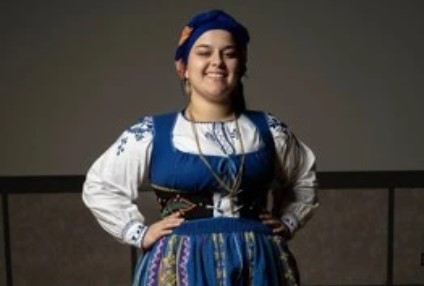
I interviewed Alyssa Margaret Avila Carmo. Her name itself carries the weight of family history. “Alyssa” was chosen by her father, inspired by an actress he admired. “Margaret” honors her grandmother on her father’s side, while “Avila” comes from her maternal grandmother. “Carmo,” finally, is her mother’s maiden name. Each part of her name is a thread tying her to both sides of her family.
Alyssa was born on July 10, 2005, in Manteca, California. Her childhood memories within the Portuguese community are vivid. She recalls attending Monday night bullfights in the sixth and seventh grades, often falling asleep on the drive home only to wake up early for school the next day. These moments—half tradition, half childhood ritual—shaped her earliest sense of belonging.
Her mother immigrated to the United States as a young child in the 1970s, seeking a better life with her family. Her grandfather, originally from Terceira in the Azores, and her grandmother, from Brazil, met in Brazil before emigrating due to poverty. They eventually settled in Turlock, California, where they found affordable land. What began as raising pigeons grew into a farm with pigs, cows, and sheep. For them, the greatest challenge was language. Though they knew Portuguese, they found it easier at first to communicate with local Spanish-speaking customers. Still, the cultural adjustment was difficult.
As a first-generation Portuguese American, Alyssa grew up deeply connected to her heritage. While her father is American, her mother made it a priority to pass on traditions, taking Alyssa to community events, festas, and folklore dances. Unlike her older sisters, who were less involved, Alyssa bonded closely with her mother through this cultural participation. College opportunities arose—including an acceptance to study in Texas—but her mother persuaded her to remain nearby, reminding her that in Texas she would miss the festas and the strong Portuguese community.
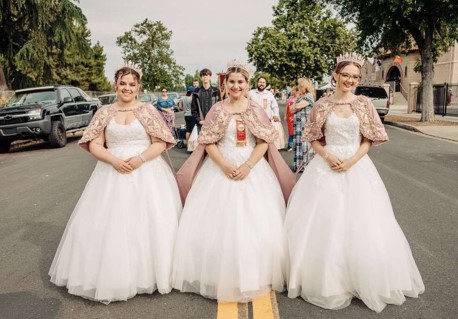
Food, music, and dance are at the center of Alyssa’s identity. She treasures the Brazilian dishes her grandmother prepares, often centered around rice, and enjoys Portuguese music on her playlists. Cooking, too, has become one of her traditions: she makes sopa do Espírito Santo in the summer heat and canja when she is sick. Most importantly, Alyssa dedicates herself to folklore dancing. She is an active member of the Farol group in Turlock, where she also serves as secretary, the youngest ever elected to the board. Through this role, and as a festa director, she has shown leadership and commitment to her community.
Alyssa often reflects on how being Portuguese American has shaped her character. She carries a deep respect for elders, listens carefully, and values conversation. Her involvement in community activities kept her focused and away from trouble during her teenage years. Dance, in particular, has been both an outlet and a source of joy: whenever she feels stressed, she turns to folklore dance to release her emotions.
Looking ahead, Alyssa dreams of visiting the Azores, whether through a study abroad program or with her dance group. Though she has never set foot on the islands, she feels a strong pull to connect with her ancestral home. At the same time, she worries about the fading of traditions in her community. While festas once drew crowds, now many events attract only older generations, with younger people less involved. Alyssa is determined to keep the traditions alive, encouraging friends to join and carrying forward the cultural practices that give her so much pride.
For Alyssa, being Portuguese American is not just a fact of birth—it is a calling. Through music, dance, food, and faith, she lives her heritage daily, finding both identity and purpose in a legacy that stretches across oceans.
Legacy is an oral history continuous publication series by PBBI-Fresno State. It is part of the Central California Portuguese-American Oral History Collection, which is funded in part by the Luso-American Development Foundation (FLAD) in Lisbon, Portugal.
With over 125 stories collected, and two documentaries, Fresno State’s Portuguese Oral History Project is the largest Portuguese-American Oral History Project in a California Public University.

 Novidades - The Islands and the Diaspora