

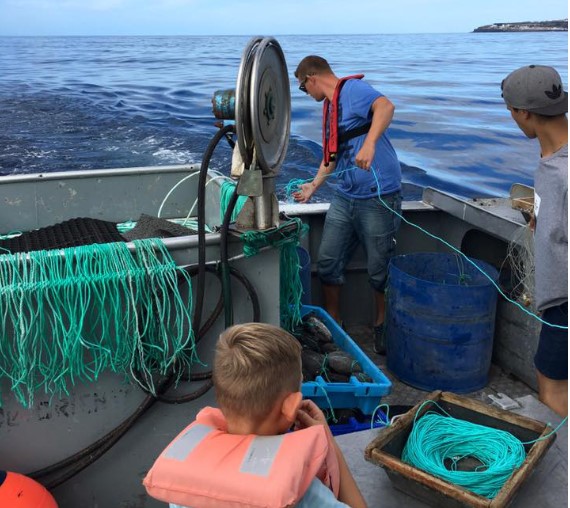
“While visitors can dive, our fishermen, who have been working there for over a hundred years without causing any damage to the ecosystem, are being evicted and treated like criminals, even though their work is the livelihood of many families,” he criticizes. In the statement, APASA issues a warning: “All economies that increase their dependence on tourism tend to be less sustainable, less resilient, and with greater job insecurity. We regret that we are following this path and jeopardizing our survival as a sustainable activity that generates economic and social balance.”
The Board of the Association of Tuna and Similar Producers of the Azores (APASA) has commented on the report broadcast by RTP/Açores regarding the alleged conflict between recreational diving companies and fishing activity in the Princess Alice Bank.
In a statement, the Association begins by emphasizing that it “has always expressed a strong concern for the marine ecosystems and fishery resources of the Azores,” recalling that tuna fishing in the archipelago has been practiced “for almost 100 years” exclusively using the pole-and-line technique, considered internationally “the most sustainable in the world.”
APASA recalls that the Princess Alice Bank “has been visited by our tuna fishermen for many years, especially to catch bonito (and nothing else),” a species that is fundamental to the annual harvest. The association emphasizes that “the Princess Alice Bank does not currently have any specific legislation in place that prohibits tuna fishing with pole and line,” pointing out that this practice “has no negative impact on the environment, sensitive species, or the seabed.”
However, APASA says it feels “perplexed and deeply disturbed by the dismissive, arrogant, and ignorant way in which they have placed a tuna boat, carrying out its fishing activities, in a setting with other vessels and activities that have nothing to do with pole-and-line fishing.”
The Directorate harshly criticizes what it considers an offense against a centuries-old tradition: “It is even more shocking because of the way in which this selective and sustainable fishing activity is being attacked, as the flourishing and lucrative tourism industry in the Azores is threatening artisanal pole-and-line tuna fishing.”
The Association also accuses the tourism industry of having “the complacency of some media outlets and regional authorities,” while “preferring to see Banco Princesa Alice full of tourist boats, which are certainly no less harmful to that marine reserve than our tuna boats.”
“While visitors can dive, our fishermen who have been working there for over a hundred years without causing damage to the ecosystem are being evicted and treated as offenders, even though their work is the livelihood of many families,” it criticizes.
At the end of the statement, APASA leaves a warning: “All economies that increase their dependence on tourism tend to be less sustainable, less resilient, and with greater job insecurity. We regret that we are following this path and jeopardizing our survival as a sustainable activity that generates economic and social balance.”
In Correio dos Açores, Natalino Viveiros-director
Translated to English as a community outreach program from the Portuguese Beyond Borders Institute (PBBI) and the Modern and Classical Languages and Literatures Department (MCLL) as part of Bruma Publication and ADMA (Azores-Diaspora Media Alliance) at California State University, Fresno, PBBI thanks Luso Financial for sponsoring NOVIDADES.


 Novidades - The Islands and the Diaspora