

Another year of uncertainty and much sadness for those who live on our mainland. The flames that seemed to have died down in June and July rose up with violence and destructive certainty from the beginning of August. The heatwave has added to the desire to consume all that remains green in the heart of our country. And the people suffer, desperate to survive and keep some of the meager heritage they have spent a lifetime building, only to see it disappear under a cloud of ashes.
Next year, there will be areas in Portugal where there will be no fires to fight. Everything has already burned. This has been the case for years, marked by interference, turning a blind eye, and, worst of all, financial and administrative support for reforestation companies, logging companies, and other industries that directly benefit from this reality, which, for many people, is apocalyptic.
Forest fires are not a novelty of 2025, nor are they a 21st-century phenomenon. For hundreds of years, Portugal has faced complications with heatwaves, which are deeply aggravated by current climate change, pushing the country to the point of no return. At the same time, we must recognize the presence of arsonists and provocateurs, acting on behalf of economic interests, or simply driven by psychological pathologies that can only be properly identified by professionals, and not by commentators from populist parties, however much some of them may understand psychopathy firsthand.
The reality of summer fires has been growing in intensity, even though the number of truly serious accidents fluctuates from year to year. Nevertheless, it has been a long time since a year has passed without problems with flames and reports dedicated to displaced people, with cries and screams.
On the opposition side, we are used to seeing inflammatory speeches against management and internal administration policies, claiming the right to take power and resolve the issue. When the situation is reversed, we see that measures are rarely taken, and when they are, the situation tends to worsen. Thus, there is a game of musical chairs, once between two parties, now with the presence of a third, even more toxic force, where fires are more important when one can speak ill of the government than when one can do something to prevent and combat them.
We return to 2025 and the chaos that has once again taken hold in Portugal, due to the flames that are ravaging various areas of the mainland. On television, there are increasing cries of revolt from mayors, firefighters, and ordinary people, who roll up their sleeves to try to save their entire lives of work and savings, lost in a spark brought by the August wind. At the headquarters of the opposition parties, the usual conversations take place, with leaders claiming the right to save the country, numbed by the heat.
And in the government, there is an abnormal level of incompetence, which is saying a lot compared to previous years, by the way. Montenegro followed the example of his party colleague and friend from Madeira. He went on vacation and only interrupted it after the first death, as if to say that it is only worth getting up from the beach towel when things get serious.
There was still time for kisses, hugs, and summer dances in Pontal with the party. After all, what good is a prime minister if he doesn’t set an example and go swimming with his family? And shouldn’t the party be ahead of the ordinary citizen? The minister is there to look after the country, isn’t she? The minister, who then came to speak in public, gave us a handful of nothing. As soon as the first question came up, she got up, clutching her pearl necklace straight out of the court of Louis XIV, and ran out the door, announcing that they were leaving. She didn’t say they were going before things turned sour and the guillotines came out, of course.
The prime minister also wanted to give the poor people a piece of his mind, and focused his speech on accusations against criminals, whom he says he will fight with clenched fists, even though there is no concrete data or evidence that these fires, and their severity, are the result of arson. There will be those who do so, we imagine. However, I have serious doubts that this is the primary issue. It is just easier to create imaginary enemies than to admit that you don’t know what you are doing. Your friend Ventura can attest to that, dear Luís.
In fact, the incompetence of these sons of the PAF coalition is nothing new, nor is it exclusive to the fire season. However, these scenarios, which are multiplying and will likely continue to do so until the end of September, are catastrophes that could have been prevented. There is no shortage of experts who have been writing about this issue for decades, calling for environmental education, the creation of concrete prevention plans (beyond mere slogans), and the improvement of firefighting strategies, starting with internal administration, providing tools for local government management, and training true professionals.
In a house of government where Gonçalo Ribeiro Telles’ party was once present—before being purged due to the tragicomic inconvenience of its national leader—it appears that the message of meritocracy only applies to deceive entrepreneurs and to give Europe a false impression. The experience of the experts falls far short of the minister’s pearls of wisdom, the populist rhetoric without substance of the prime minister who has returned from the sidelines, or the cordial solidarity of the president of the Republic at the end of his career. Portugal continues to burn, and those who want to know don’t want it to end. After all, fires bring more money than trouble to big business. And they get more votes than problems for politicians.
Montenegro handed over the country and our future to a party that claims to be financed by one of the heads of the cartel that profits from the fires. But for Montenegro, it’s better this way, as his colleague may give him a place in the staff office.
A hug to all those who are fighting. Solidarity with all the victims of this nightmarish scenario. To the firefighters who are on the front line, risking their lives. They deserve better than these petty people.
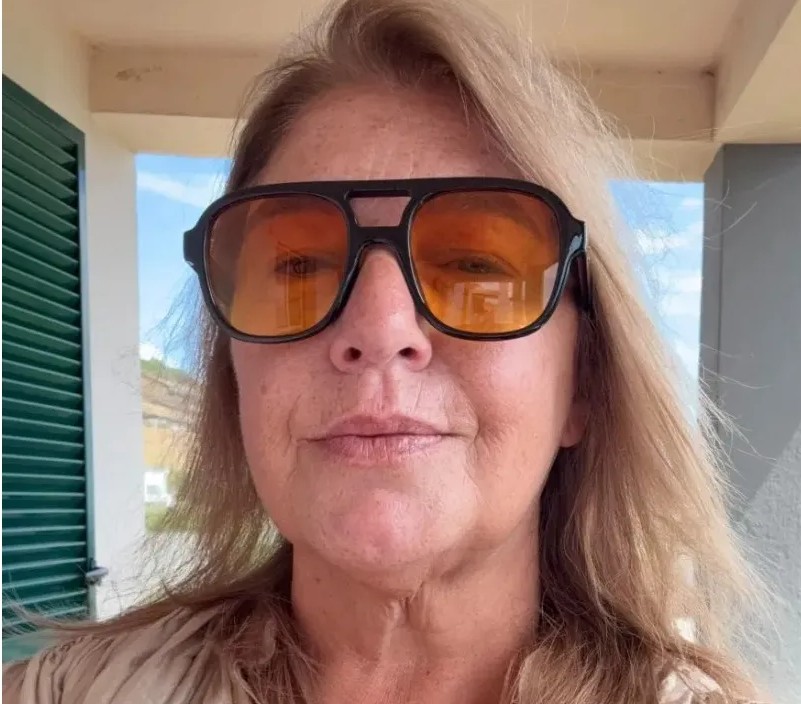
Alexandra Manes is from Flores Island but lives on the island of Terceira in the Azores. She is a regular contributing writer for several Azorean newspapers, a political and cultural activist, and has served in the Azorean Parliament.
NOVIDADES will feature occasional opinion pieces from various leading thinkers and writers in the Azores, providing the diaspora and those interested in the current state of the Azores with insight into the diverse opinions on some of the archipelago’s key issues.
Translated to English as a community outreach program from the Portuguese Beyond Borders Institute (PBBI) and the Modern and Classical Languages and Literatures Department (MCLL).
 Novidades - The Islands and the Diaspora