

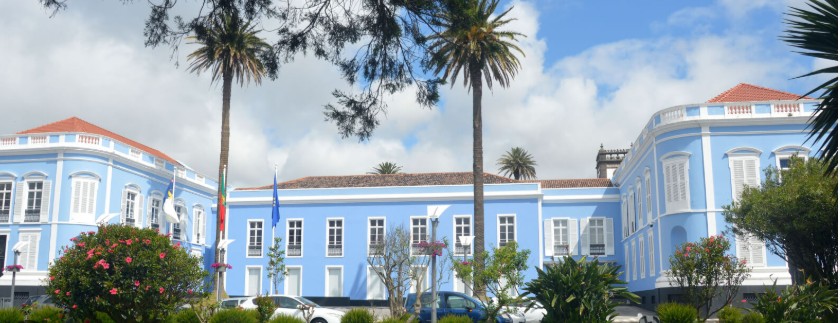
Public employment refers to that which is generated by the State, in this case, by regional public administration bodies. Public employees may be elected (by the population to hold government positions), political (appointed by government officials), or career (workers who work in some area of public administration, with or without hierarchical functions). They are also referred to as civil servants or, more commonly, “those who work in the government.”
In the Autonomous Region of the Azores, how many civil servants are there, and under what conditions do they work? How much do they earn?
The answer can be found in the Statistical Summary of Public Employment, published by the Directorate-General for Administration and Public Employment, which refers to June 30 of this year. In that month, the total number of public sector jobs in the Azores, which includes regional public administration, municipal councils, security forces, and the military, was 25,768, accounting for approximately 20% of the region’s working population. Ten years ago, in 2015, there were 3,342 fewer. The analysis now focuses on Regional Public Administration, specifically the regional government, related bodies, and the Regional Legislative Assembly. Together, the two structures employ 19,724 people (8.3% of the resident population, one of the highest figures ever). Of the total, 18,877 are civil servants in the common understanding of the term. Of these, 16,952 are permanent staff, integrated into the respective staff structures, and 1,925 are precarious workers on fixed-term contracts.
Additionally, there are 108 people appointed to the regional public administration and 793 who are on secondment, by mandate, or hold political office. In terms of gender parity, the question to be asked in this case would be the opposite of what is normally claimed. In terms of numbers, 13,019 women work in regional public administration. There are 6,705 men. Parity is also safeguarded at the management level, with 61 male and 60 female senior managers. Reinforcing the leading role of women in the Azores administration is the fact that three of the four regional secretariats with the largest workforce are led by women. By governance sectors.

As already mentioned, there are two governing bodies in the Azores: the Regional Government and the Regional Legislative Assembly (ALRA). The latter alone accounts for 33.4% of regional administration employment, from the President of the Regional Assembly to the simplest task worker, including, of course, the deputies. 6,588 people (including services and funds) are assigned to it, comprising 5,460 permanent employees and 1,128 fixed-term contract employees. The remaining 121 hold political positions and/or perform mandates. The ALRA is not limited to the city of Horta, having delegations on other islands as well.
A total of 13,136 people work in the different bodies of the Regional Government, divided between the Presidency, Vice-Presidency, and nine regional secretariats. The largest regional secretariat in terms of jobs is that of Education, Culture, and Sport, which therefore manages the regional education system. It oversees three regional directorates, two regional inspectorates, and school funds. It employs 8,845 people, including 5,607 teachers and early childhood educators. In terms of employment status, there are 7,560 permanent staff and 824 staff on fixed-term contracts. Eight are appointed, and the remaining 53 are on secondment/political office/mandate.
The Regional Secretariat for Health and Social Security employs 2,211 professionals, spread across four regional directorates and one regional inspectorate, also overseeing the Azores Social Action Institute and the Oncology Center. In this regional secretariat, 67 hold political positions, either by appointment or on secondment. Of the remainder, 2,074 are permanent employees and 67 are on fixed-term contracts. In the area of health, the total number is 1,729 nurses, 717 doctors, 457 diagnostic and therapeutic technicians, and 39 senior health technicians. In terms of size, the Regional Secretariat for Agriculture and Food follows, comprising three regional directorates and two institutes that employ a total of 1,844 people. 1,724 are permanent staff, 39 are on fixed-term contracts, and 81 are on secondment, hold political positions, or are serving a term of office. The Regional Secretariat for Tourism, Mobility, and Infrastructure can also be considered a “mega-secretariat” due to the areas it oversees. Comprising four regional directorates, two funds, and a regional inspectorate, along with the management of the Regional Civil Engineering Laboratory, it processes 1,056 pay slips per month. The staff consists of 959 permanent employees, plus six workers on fixed-term contracts. There are a total of 71 political/service commission mandate positions. The cross-cutting Regional Secretariat for Finance, Planning, and Public Administration comprises 666 jobs, which ensure the functioning of four regional directorates, a regional inspectorate, the RIAC, and the Regional Statistics Service (SREA). There are 582 employees (575 permanent), plus 11 appointed and 73 on service commission/political office/mandate.
The Regional Secretariat for the Environment and Climate Action oversees a regional directorate, a regional inspectorate, a regulatory body, and civil protection services. It employs 629 people, six of whom are appointed and 49 of whom hold political positions, are mandated, or are on secondment. Services are provided by an additional 533 workers with permanent contracts and another 41 with fixed-term contracts. The Regional Secretariat for Youth, Housing, and Employment oversees nine entities. These include three regional directorates, two regional inspectorates, the Regional Employment Fund, the Employment and Professional Qualification Observatory, the Employment Qualification Center, and the Regional Handicraft Support Center. These are run by 475 employees, of whom 373 are permanent staff, 48 are appointed, and 54 are seconded or hold political office. In turn, the Regional Secretariat for the Sea and Fisheries occupies 121 jobs and oversees four bodies, including two regional directorates, one regional inspectorate, and Fundopesca. Eighty-one employees are permanent and eight are on fixed-term contracts. Another eight are appointed, and 24 are on secondment, mandated, or hold political office.
The smallest regional secretariat is that of Parliamentary Affairs and Communities, which employs 54 people. All of them have permanent contracts, except for 14 who hold political office, are appointed, or are on secondment. This regional secretariat oversees a regional directorate and the Azores Space Mission Structure. The regional administration also includes the so-called business sector of public administration. The Autonomous Region of the Azores participates, directly and indirectly, in twenty-five companies, six of which it has a minority stake in, five in which it has a majority stake, and fourteen in which it owns all the capital. A total of 3,718 citizens are professionally active in these companies. In this sector, precarious employment is considerable (24.8%), with 925 workers on fixed-term contracts and 2,746 on permanent contracts. There are a total of 47 positions, mandated, service-based, or politically appointed.

The top of the hierarchy
At the top of the regional public administration pyramid are, naturally, the Presidency of the Government and the respective Vice-Presidency. The latter has a staff of 166. Of these, 36 are on a service commission/political office/appointment, and 130 are under contract, with six of these contracts being fixed-term. Finally, there is the office of the President of the Regional Government of the Azores. It is composed of 135 people. There are 99 permanent staff, one appointee, and 35 who hold political positions, are on secondment, or are mandated. These accounts also include sovereign bodies (dependent on the State, not the Region) and, similarly, independent entities. On the islands, they comprised 204 jobs, 135 of which were political appointments, secondments, or mandated positions. Entries, exits, and remuneration. In the first two quarters of this year, 1,128 people left the regional public administration, with 248 departing permanently, 201 due to retirement, and 879 due to mobility or other circumstances. During the same period, 230 new employees were recruited, and an additional 802 positions were filled through mobility and other means. In total, 1,032 individuals joined the regional civil service in the first six months of 2025. Last year, 462 employees out of a total of 1,489 permanent departures retired. To these are added 2,249 due to mobility and other situations. In the same year, 2024, 467 individuals were recruited, and 2,083 filled positions through mobility and various conditions, resulting in an overall balance of 1,616 jobs. Last April, the average monthly earnings of full-time workers in regional public administration were €2,191, varying according to their respective positions, sub-sectors, and other factors. Thus, in regional directorates, the average monthly earnings were €1,726, whereas in public business entities, they were around €2,545.
Other examples: In the offices of regional government members, the figure rose to €3,245. In regional inspectorates, the average monthly salary was €2,537; in public institutions, it was around €1,753; and in independent bodies, it was €3,017. In turn, the general secretariats received €1,714, public limited companies received around €1,698, and health units received €2,148. By position/career/group, the following average monthly earnings were recorded: representatives of the legislative branch: €5,111; senior managers: €4,638; middle managers: €3,340; senior technicians: €2,125; administrative technical assistants: €1,399; and operational assistants/workers/auxiliaries: €1,276. IT specialists earned an average of €2,237 per month, while kindergarten teachers, primary and secondary school teachers, and inspection staff earned € 2,819 and €2,958, respectively. In the health sector, average monthly earnings were €5,379 for doctors and €2,527 for nursing professionals. Diagnostic and therapeutic technicians earned €2,170 per month, and senior health technicians received €2,982, according to data from April. Governments change… When governments change, there are changes in their structure and, as a rule, in those responsible for the different departments. When an elected government is of a different political party than its predecessor, these changes are naturally more evident.
This situation occurred most recently when the 12th Regional Government, led by the Socialist Party, gave way to the PSD-CDS-PPM coalition executive, which took office on November 24, 2020. Naturally, the 13th Regional Government took office with a new structure, in which portfolios were transferred between regional secretariats, some were abolished, and others were created. Even more naturally, the incumbents and other “trusted personnel” of the different bodies of the Regional Government changed. Specifically, what implications did this change of government have in terms of the number of jobs in the public administration services? Between September 30, 2020, when the outgoing PS Government was in office, and December 31, 2021, when the coalition government had been in office for over a year, the public administration grew from 19,284 to 20,069 jobs, an increase of 785, or 4%.
One case that saw significant growth in the number of people employed was the Regional Legislative Assembly (ALRA), considering the considerable increase in the number of parties with seats in parliament at that time. There, between one legislature and the next, autonomous services and funds increased from 6,596 to 7,077 jobs. As far as the Regional Government is concerned, there was a 2.3% increase in staff, equivalent to 304 more employees. In this case, with a substantially different configuration from the previous government team, some bodies reduced their staff numbers. In contrast, others increased them, either by creating new jobs or, in the case of regional secretariats, by consolidating or reorganizing portfolios and supervised services.
The Presidency of the Government was one of the bodies that reduced its team, from 147 to 137 members. In contrast, the Vice-Presidency increased the number of jobs from 124 to 148. As for the regional secretariats, the largest in terms of staff numbers is the one responsible for Education, Culture, and Sports, as it encompasses the teaching staff of the regional public education system, as well as other personnel assigned to educational establishments. In terms of total jobs, this regional secretariat experienced few changes after the first year of the PSD/CDS/PPM government, given its size, which increased from 8,146 to 8,449 employees. Here, there was a decrease in the number of staff on fixed-term contracts (from 1,141 to 987) and a consequent increase in permanent staff (435 more). This secretariat also saw an increase in the number of staff on secondment/in political office/on mandate. The body responsible for Health and Social Security, which covers professionals working in the Regional Health Service, remained virtually unchanged during that period, with an increase of 55 jobs. The third regional secretariat that employs the most is Agriculture and Food, with the number of people assigned to it also changing little during the initial months of the first government led by José Manuel Bolieiro, showing a decrease in employees from 1,903 to 1,850. Another department that also reduced the number of jobs was the Environment and Climate Action department. At the end of 2020, there were 415 employees, and fifteen months later, the number had decreased to 386. In this case, the only indicators that increased were those for jobs by service commission/political position/mandate and by appointment (up 6).
Returning to the large regional secretariats, the one comprising Tourism, Mobility, and Infrastructure had, at the end of the last socialist government, 1,161 employees, 71 of whom were on service commission/political office/mandate, 1,053 on permanent contracts, and 14 on fixed-term contracts. Compared to December 2021, the total number of jobs increased by 36, with one fewer on commission/political office/appointment, five fewer on fixed-term contracts, and 39 more permanent staff. Despite its importance, one of the regional secretariats that “slimmed down” during the transition from socialist to coalition-led governance was the one responsible for finance, planning, and public administration. The number of posts and assigned work decreased (-16) to 629, which did not affect different types of employment relationships, but rather the number of positions by mandate, commission, or political office, which at the end of the first year of the 13th Regional Government’s term were 67, 13 more than at the end of the last government led by the socialist Vasco Cordeiro. The Regional Secretariat, with portfolios including Youth, Housing, and Employment, had 439 employees, rising to 504 a year later.
The number of staff increased, as did the number of political positions, appointed or on commission (+10). The secretariats with the fewest jobs are those of the Sea and Fisheries, Parliamentary Affairs, and Communities. In the former, the change in the political color of the regional executive brought little to no change in numerical terms (four more staff members), and even less in the latter, where the only change in staffing was a reduction of one staff member. It remains to analyze what has happened in the public administration business sector (SER). Here, the differences between the two moments are significant: a total of 3,869 jobs rose to 4,268, the number of employees with permanent contracts rose from 3,092 to 3,148, employees with fixed-term contracts rose from 720 to 1,057, and service commission/political office/mandate positions rose to 63, when in September 2020, there were six fewer.
Rui Leite Melo is a journalist for Diário dos Açores. Paulo Viveiros is the director.
NOTE: The numbers represent public employees at the Regional Level; this does not include those who are national government employees in the Azores, such as those in defense and security, the courts, and other sectors.
Translated to English as a community outreach program from the Portuguese Beyond Borders Institute (PBBI) and the Modern and Classical Languages and Literatures Department (MCLL) as part of Bruma Publication and ADMA (Azores-Diaspora Media Alliance) at California State University, Fresno, PBBI thanks Luso Financial for sponsoring NOVIDADES.

 Novidades - The Islands and the Diaspora