


The Regional Secretary for Parliamentary Affairs and Communities, Paulo Estêvão, pointed out that countries such as Canada, Australia, New Zealand, Denmark, Malta, and Spain have applied similar restrictions, but warned of the existing legal limits. He stressed that the European Union considers such measures incompatible with the free movement of capital and freedom of establishment, and that fiscal competence belongs to the State and not to the Region.
The Legislative Assembly of the Autonomous Region of the Azores unanimously accepted Petition No. 26/XIII/1.ª, which calls for the creation of restrictive measures on the purchase and sale of property by foreign citizens or non-residents in the archipelago. The document, delivered on June 2 and signed by 536 citizens, has Manuel Garoupa Albergaria Bicudo as its first signatory and was analyzed by the Standing Committee on General Policy, which considered the initiative admissible, highlighting that the issue should be debated in plenary given its social and economic relevance.
The petitioners’ central request is for the creation of restrictions on the acquisition of real estate in the Azores by foreigners or non-residents. Among the proposals are the requirement to prove permanent residence and employment in the region to purchase a home, the exclusion of the Azores from the Golden Visa scheme, the limitation of the areas or types of real estate that can be bought, the mandatory establishment of joint ventures with resident Portuguese citizens as a condition for purchase, and the application of increased taxation aimed only at foreigners and non-residents.
The petition’s signatories cite as grounds the alleged loss of national sovereignty, noting that on some islands up to 60% of properties have been acquired by foreigners, the escalation of real estate prices (estimated at 20 to 30% since 2022), the social exclusion and difficulty of young Azoreans in buying their own homes, the cultural and community decharacterization of localities, and the increased pressure on social housing.
During the parliamentary proceedings, steps already taken in a previous petition of similar content, signed by the same first signatory, were resumed. Manuel Garoupa Albergaria Bicudo was heard in April, reaffirming his concerns, and the debate included interventions by deputies from various parties, who recognized the relevance of the issue.
In May, the Regional Secretary for Parliamentary Affairs and Communities, Paulo Estêvão, recalled that countries such as Canada, Australia, New Zealand, Denmark, Malta, and Spain had applied similar restrictions, but warned of the existing legal limits. He stressed that the European Union considers such measures incompatible with the free movement of capital and freedom of establishment, and that fiscal competence belongs to the State and not to the Region.
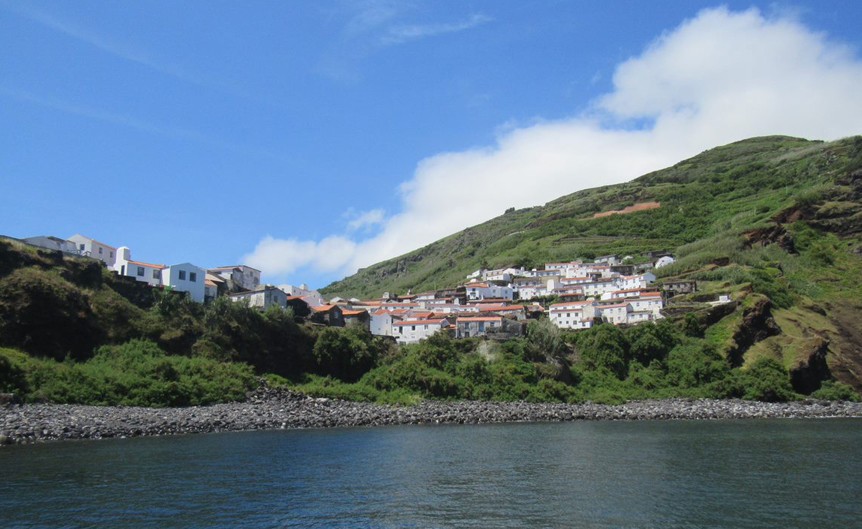
He added that although only 6% of real estate transactions in Portugal in 2024 involved foreigners, the effects can be significant on small islands. He also pointed out that, in some cases, foreign investment has had positive impacts, such as the restoration of real estate on the island of Corvo.
Written opinions were also collected from various regional entities, including the Association of Civil Construction and Public Works Industrialists of the Azores and the Association of Consumers of the Autonomous Region of the Azores.
José Henrique Andrade is a journalist for Correio dos Açores, directed by Natalino Viveiros.
Translated into English as a community outreach program by the Portuguese Beyond Borders Institute (PBBI) and the Modern and Classical Languages and Literatures Department (MCLL), in collaboration with Bruma Publication and ADMA (Azores-Diaspora Media Alliance) at California State University, Fresno. PBBI thanks Luso Financial for sponsoring NOVIDADES.

 Novidades - The Islands and the Diaspora