


On the 50th anniversary of the São Miguel Agricultural Association, Jorge Rita, its president for over twenty years, recalls its history, praises the legacy of its founders and workers, and emphasizes that the future of the sector will depend on its ability to attract young people, value its workforce, and ensure strong agriculture as an example of sustainable development in the region. He also emphasizes the importance of education and the need to enhance this sector in universities. And, reflecting on the current global situation, he states: “The defense of any region or country begins with food autonomy.”
Correio dos Açores – How have you followed the evolution of the Agricultural Association during your years as President?
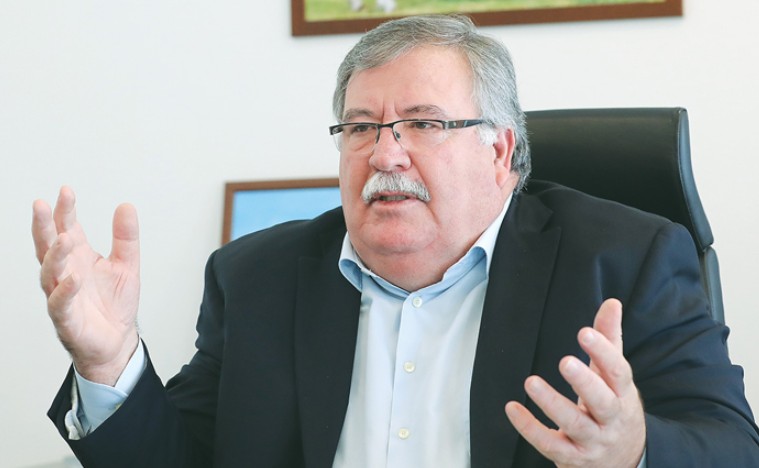
Jorge Rita (President of the Agricultural Association of São Miguel) – I have been president for 23 years, in addition to serving three years as vice president. That’s 26 years, more than half the life of the Association. As a president, member, or citizen, I believe that the Association’s evolution has been tremendous at all levels. We have made known everything that the institution represents in the lives of farmers, members, and cooperators. I would like to highlight the work of my predecessors, which will never be forgotten. Without them, the Association would not exist. My predecessors had the courage and dedication to form an organization that gave voice to the problems and demands of agriculture in a region where this sector had been, for many years, dominant in the economy and employment.
It is essential to recall those early days, characterized by economic and financial challenges. The creation of the cooperative was a crucial moment in ensuring this autonomy and not leaving the Association dependent on state aid. This economic and financial independence was very important in giving us a strong and credible voice. At the same time, in terms of production factors, from the feed factory to fertilizers and other commercial areas, the Association expanded and established structures that helped regulate prices in the regional market, always with the Association serving as a reference point.
Not to mention the sharp increase in the number of employees that the Association has, resulting from the various areas of activity that have been created, some in the commercial area and others in the service area. Today, the Association is a major employer in the region.
It is important to recognize the merit and excellence of our employees and staff. Without them, without the members, without the founders, and without these workers who have been here for many years and who were practically trained in-house, we would have many difficulties, and I would have much more difficulty being the face of a large organization such as the Agricultural Association of São Miguel.
Currently, the Association serves as a benchmark. It has credibility in the communication and discussion of issues, proposes measures and strategies, and is respected at the regional, national, and European levels. Our demands are heard and considered, which is a source of pride for all members, including those who formed the Association, as well as for all those who work in agriculture, with a positive impact on the entire Azores and even at the national level.
At this 50-year milestone, it is important not to forget many of the founders who are no longer with us, as well as the directors who accompanied the presidents and who also deserve great credit for their work over the years in support of the association movement. Some are no longer with us, as are family members and friends. And, obviously, these 50 years are also a time of nostalgia for many of those who contributed directly to the enormous success of the Agricultural Association, in its communication, its dissemination, and its notoriety.
How has the agricultural sector evolved in the region over the past few years?
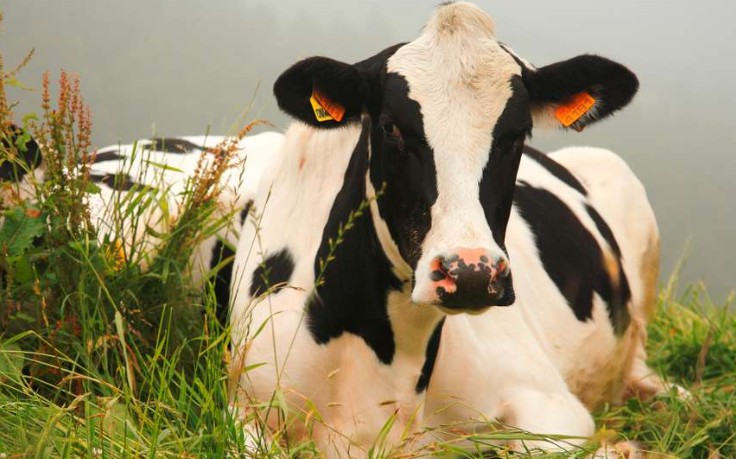
If we want to discuss specific sectors, the dairy sector has evolved the most in the RAA (Autonomous Region of the Azores) over the last 50 years. Interestingly, despite the numerous realities imposed by the European Union, many of which have made life very difficult for the sector. First, there was the limitation of production, followed by quotas, and then the abolition of quotas, along with the negative impacts this has had over the years. Because we know that agriculture, and in this specific case, the dairy sector, began from a very low base many years ago, without infrastructure, roads, a water supply, or electricity on farms. At the same time, in other parts of Europe, these things already existed.
In terms of support, which is much talked about today, most European countries had much more support than Portugal and the RAA. So there has been a dramatic evolution. Clearly, many farmers have been lost; that is a fact. But the region of the country, and perhaps of Europe, that has lost the fewest producers is the Autonomous Region of the Azores.
This is also the result of measures that successive regional governments had to implement. It was necessary to carry out some restructuring, allowing some to leave with dignity, through buyouts and pensions, and enabling young farmers to take over the farms handed down by their parents through young farmer projects. This was the result of restructuring carried out over the years.
There are many interesting dynamics in agriculture. Today, agriculture in the Azores, and specifically the dairy sector, is highly modernized, as is well known. It is a sector with a lot of training and knowledge in all areas. Those who visit us, even from the agricultural industry and who like to know how their land is doing, are amazed when they come here by the scale that some farmers have achieved, by the quality and excellence of our animals, and by the quality and excellence of our processed dairy products.
There has also been a very significant leap forward in the meat and vegetable sectors, which should focus more on specialization and mechanization. Today, numerous monitoring tools are available for each agricultural area in the region.
Obviously, we have many limitations, but sustainable development in the RAA can be taken as an example, and the greatest example we have is, essentially, agriculture.
You mentioned that the region has lost some farmers. How can we combat this labor shortage, which is common to all sectors?
The labor shortage is a significant problem for the RAA across all sectors of activity, but it is particularly noticeable in the agricultural industry. Let me give you an example: at the university itself, there are very few applications in areas related to agriculture. This is a warning sign and a point for consideration, not only for the Azores, but also for the country, Europe, and the world: we cannot always criticize agriculture and blame it for everything that is not right. When we talk about climate change, farmers always seem to be the culprits. In any abnormal situation, there is always a scapegoat, and that scapegoat is often the farmer.
Farmers’ children and other young people are growing increasingly frustrated with this discourse and others that significantly damage the sector’s image, particularly when it comes to subsidies. It seems that no one understands that support for farmers exists so that consumers can have the prices they have on their tables. If this were not the case, the food situation in society would be much more dramatic. This discourse against agriculture, repeated by many people, including the media, due to environmental and other issues, ultimately alienates people from agriculture. It seems that many people still do not realize that farmers play a fundamental role in our society.
The defense of any region or country begins with food autonomy. Today, there is a lot of talk about defense and military investment, but you can invest as much as you want; if we don’t have agriculture with the capacity to produce, all defense falls apart. If there is no food to feed the military, there is no defense possible. The best defense is to have food available for everyone.
I challenge any politician to have the courage to make this speech, not only in words, but also in actions.
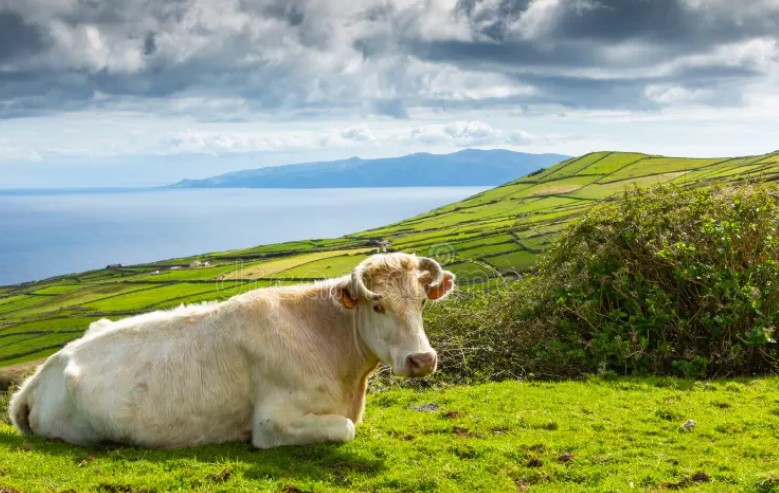
That is why I say: to combat the exodus of young people, we need to do something different, something that gives them confidence, sustainability, and some peace of mind, because we know that it is a very difficult life; agriculture is demanding and it is 365 days a year.
We must also consider whether we are going to continue in a region where festivals dominate the entire summer. Young people want to be at festivals, and young farmers are no different; however, those who produce milk, who work in the dairy sector, cannot attend festivals. And they clearly feel discriminated against, because we are talking about young people who have friends with free time, and they cannot, because they have to go to work. This also deserves reflection, because I think we have too much leisure time in the region.
Agricultural work must be well paid because it is hard. Only then can we attract more people. However, this also requires responsibility on the part of the dairy industry, which has not yet recognized the impact we will feel in a few years if we do not have a labor force or young farmers to continue what families have been creating. If they do not think about paying well, this will have negative repercussions.
We need to rethink the issue of young people not enrolling in agriculture-related courses. We urgently need more university training to keep pace with the sector, in vulgarization, rural extension, daily farmer lives, organizations working in the field, and, above all, in farm management. People with more training and knowledge are better equipped for the challenges ahead: the energy transition, the digital transition, and artificial intelligence. These are all tools that farmers will have to work with. And those who are better prepared will have a different capacity to do so.
Therefore, there are many challenges and much internal reflection to be done to understand the sector we have and where we are going. The Association’s 50-year mark is a historic milestone, a testament that has endured throughout these years, always to advocate on behalf of farmers, based on the essential principles of income and dignity.
How can the Government contribute to the stability of the agricultural sector?
The Regional Government must always be attentive and responsive to our demands, as our concerns are the primary concerns of farmers. We realize that there are other important sectors of economic activity emerging, but they are also very volatile, as we all know. The industry that has guaranteed sustainability for many years in the RAA is agriculture. Some like it more, others like it less, but it has been the agricultural sector. A strong agricultural industry also boosts other activities, including tourism.
Therefore, the attention and investment of any regional government in the agricultural sector always have economic, territorial, and social returns. This is something that everyone recognizes. Governments have had the opportunity to communicate about this, with some having more vision than others. This regional government, partly because of the partnership we have, also has this vision, and it is important to maintain it.
To what extent have constant failures to pay farmers caused problems for their management?
Any delay in payment always has a negative impact. If a person does not receive their payment at the end of the month, it has a negative effect. If the institutions that are waiting also do not receive their payments, the impact is the same. In other words, any delays in payments always have negative effects, from employees to institutions and farmers.
Does the Agricultural Association continue to function as a bank for small and medium-sized enterprises in the sector?
We have a strong and dynamic commercial area. Within this dynamic, there is the possibility that our cooperatives and the organizations that work with us can also benefit in terms of credit. But this is part of a purely commercial situation in which we have this sensitivity. Although we also operate somewhat like a company, we are a cooperative and have different social obligations than a private company.
Frederico Figueiredo/Daniela Canha – Journalists for Correio dos Açores-Natalino Viveiros, director.
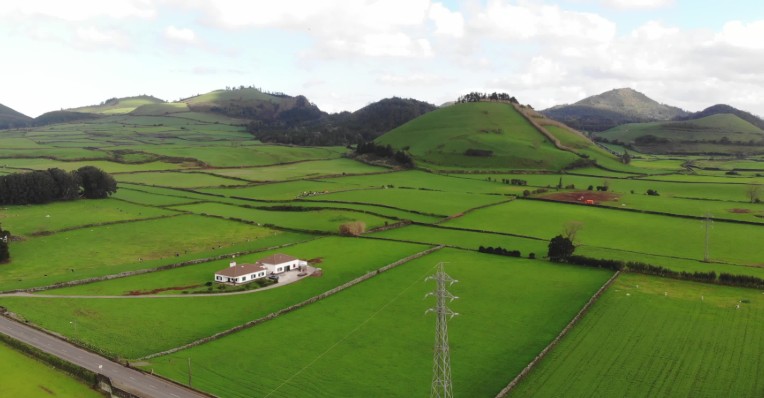
Translated into English as a community outreach program by the Portuguese Beyond Borders Institute (PBBI) and the Modern and Classical Languages and Literatures Department (MCLL), in collaboration with Bruma Publication and ADMA (Azores-Diaspora Media Alliance) at California State University, Fresno. PBBI thanks Luso Financial for sponsoring NOVIDADES.

 Novidades - The Islands and the Diaspora