

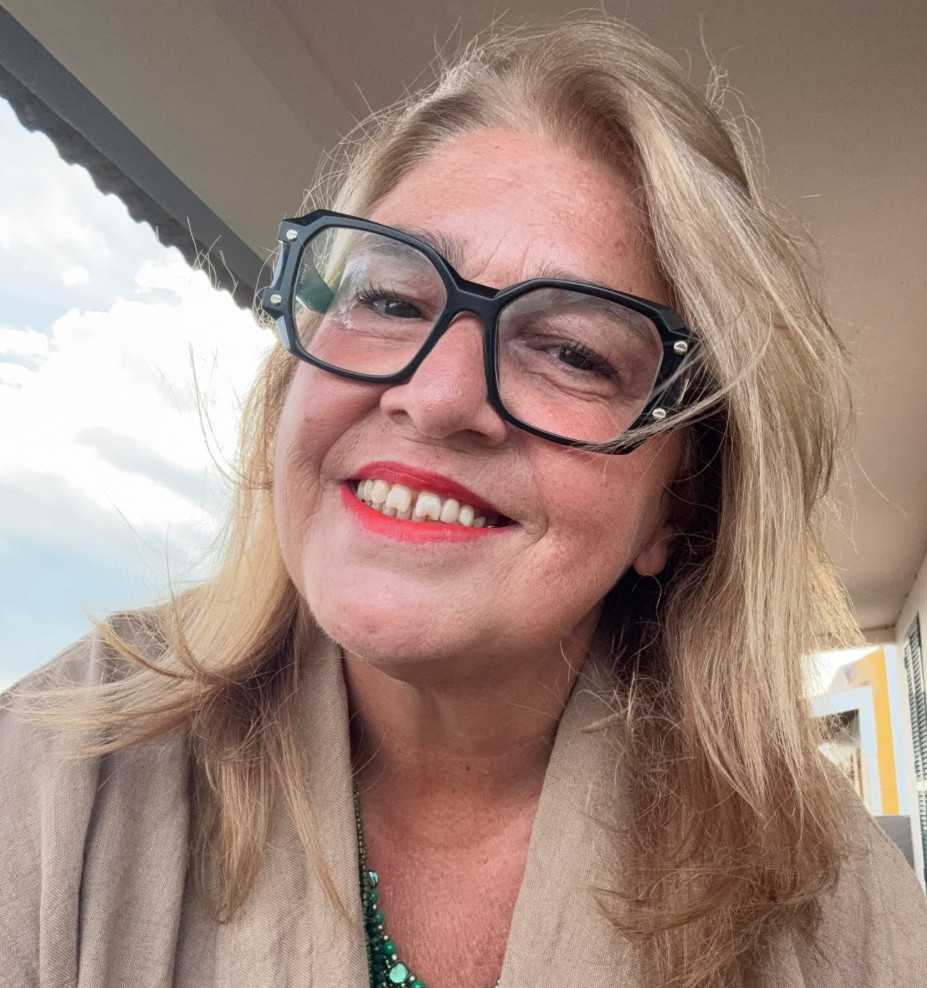
Fernando Alexandre, the current Minister of Education, Science, and Innovation, as well as a pimba music artist who performs at the parish’s summer festivals, presented a comprehensive proposal for reforms to the Portuguese educational system, based on what he called a unifying vision of the public apparatus.
It is nothing new for the electorate in our country to vote for a party or coalition and then find that, once it comes to power, it has no intention of fulfilling its manifesto. There are shadow programs that are always kept in reserve, ready to be implemented if they happen to be elected. What is printed and made available to the public rarely corresponds to the intentions of the major parties. And the poison party is even worse, but that is a topic for another day.
Regarding the Minister’s changes, we imagine a cabinet full of deputies and secretaries-general nodding their heads in agreement, even if many do not understand what has been said and will be done. At the same time, others do understand but also recognize the need to keep their positions and the lifestyle associated with them. This is also a well-known reality, already portrayed in many fictional narratives, which only err on the side of being too gentle with the truth. When the Minister speaks, it is to comply, even if it means harming people. The boss’s word is harsh, but it is the boss’s word.
Thus, we are witnessing the disastrous extinction of a series of government offices and projects with positive results for the country, in the name of money and the neoliberal ideology that governs the corridors of power. Several voices immediately rose in defense of two of the institutions at risk of disappearing: the National Reading Plan and the School Library Network.
Archiving and education professionals continue to appeal to the heart of a government that does not want to know, in defense of a basic human right that now appears more
threatened than ever. Reading is a necessity that should be elementary, because it is in words that we find the knowledge necessary to escape the obscurantism of populism.
We live in desperate times in this regard. We read less and less, and when we do read, our brains are atrophied by the modernity of social media, formatted for headlines and soundbites, almost incapable of going beyond the network of misinformation that reigns among us. To combat this growing ignorance, which is reminiscent of the times of Salazar and his henchmen, we need more reading and increased access to it. We need a plan that shows us the way forward and highlights reference works capable of educating the younger generation and promoting their sustainable growth. That was what the national plan did, more or less, and now it is in danger of disappearing if the Minister does not wake up in a good mood.
As for the library network, the situation is even worse. The existing work has proven successful, with indicators showing greater success in terms of school results and literacy in areas that have adequate libraries, managed by professionals who are properly trained for the purpose. Removing access to these tools will place new obstacles in the way of the future and our children, opening the door to easier access to other solutions, such as the infamous Artificial Intelligence. I do not deny its importance.
But I realize, as anyone with half a brain would, that the use of applications that read for us, think for us, and then present proposed answers could prove to be deeply harmful.
Artificial Intelligence is manipulable, as Elon Musk has already demonstrated. It is also a source of mass control. Removing reading from our free-thinking circuit opens the door to the conquest of a new society where questioning the ruling power will not only be prohibited. But also, it will not even be imagined, because children will lose the power to imagine. I cannot imagine a sadder reality than this.
Not that the current one is particularly better. The results of access to higher education are beginning to emerge, and what we are seeing is disastrous, in the sense that it is starting to erode the democratic corridor of knowledge. Fewer and fewer students from financially unstable family situations can access these opportunities.
Montenegro’s promises regarding the refund of tuition fees still seem to be unfulfilled. Peripheral institutions, such as our University of the Azores, are doomed to abandonment due to very low enrollment rates, which will inevitably lead to the closure of some courses and a narrowing of thought and its application.
These scenarios seem impossible, but they are already underway. The ministers of Luís dos fogos e maus vinhos tell us that nothing will change. They have abolished the Foundation for Science and Technology, but its powers remain in effect. They have dismissed the teams that manage the national reading plan and the school library network, but everything will stay the same. They are throwing sand in our eyes.
We know that reality is never like that. When they take something away from us, they rarely give it back, and even if they do, it never comes back the same. Montenegro sought to eliminate troublesome leaders. And for that, it is children, teenagers, and young people who will suffer.
Besides, the procession is still in the churchyard. Any day now, someone will remember to rebuild a Portuguese-style youth. Mark my words. Or do something to prevent them from coming true.
Alexandra Manes is from Flores Island but lives in Terceira Island, Azores. She is a regular contributing writer for several Azorean newspapers, a political and cultural activist, and has served in the Azorean Parliament.
NOVIDADES will feature occasional opinion pieces from various leading thinkers and writers from the Azores, providing the diaspora and those interested in the current state of the Azores with a sense of the significant opinions on some of the archipelago’s issues.
Translated to English as a community outreach program from the Portuguese Beyond Borders Institute (PBBI) and the Modern and Classical Languages and Literatures Department (MCLL).
 Novidades - The Islands and the Diaspora