

The population of Terceira Island had not felt any earthquakes for some time. However, the earthquakes have started again. What does this return mean?
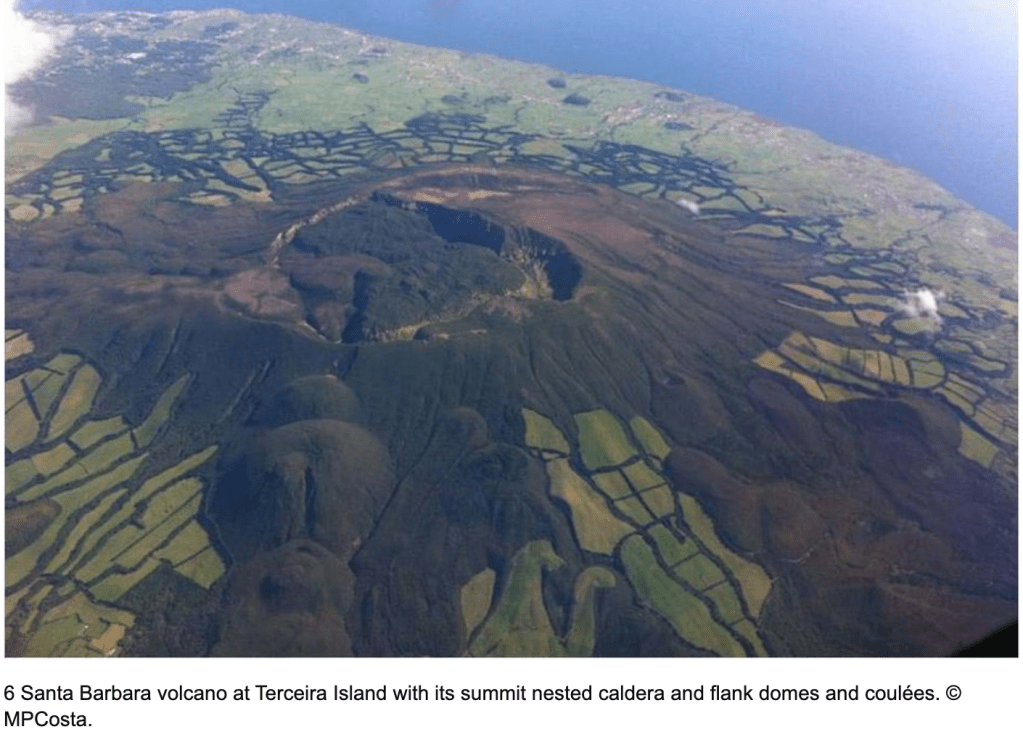
Although seismic activity on Terceira Island has decreased compared to last year, the fact is that it has never ceased, remaining clearly above reference levels. This September, seismic activity has increased again, both in terms of the number of events recorded and their magnitude. As the earthquakes in this crisis have usually had their epicenter on the perimeter of the Santa Bárbara Volcano and in the adjacent volcano-tectonic structures, i.e., very close to inhabited areas, it is natural that the events of greater magnitude are felt. The increase in the number of earthquakes felt at this stage, therefore, means that we are going through another period of intensification of the crisis.
In addition to the earthquakes felt, how is the ongoing crisis in the Santa Bárbara volcano system evolving? Are there many earthquakes every day? What paths is the magma presumed to be taking? How has the expansion of the mountain range and other areas of significance to the crisis evolved?
Since its onset in June 2022, this crisis has shown fluctuations marked by alternating periods of greater or lesser activity. The seismicity and deformation pattern that continue to be recorded at the Santa Bárbara Volcano (VSB) indicate that the process of deep magmatic intrusion is ongoing. However, at this stage, it is weaker than that observed a year ago and perhaps slightly shifted to the eastern flank of the volcano. As a result of this phenomenon, the active structures adjacent to the volcano have also undergone readjustments, which is why events have also been recorded in a strip extending between Mistérios Negros and the golf course, or even in the vicinity of Angra do Heroísmo, particularly in the segment between Cinco Ribeiras and Terra Chã.
Apparently, the ongoing crisis has spread to several areas on the islands and especially at sea, as the reported occurrences seem to show. Is this the same crisis? Are these separate occurrences? What explanations does science offer for what is happening?
As we have been saying since the beginning of this seismic-volcanic crisis, the phenomenon we are observing on Terceira Island is part of a wider volcanic-tectonic episode that has particularly affected the central group. In this context, I recall, for example, the recent seismic activity recorded northwest of Faial Island, on São Jorge Island, and in the underwater structure where the 1980 earthquake was located, in addition to the occasional activity recorded in the vicinity of Graciosa Island or Pico Island. This area of the Atlantic is a recurring stage for this type of regional phenomenon, given the geological context marked by the presence of three lithospheric plates and the existence of magma at depth. Thus, phenomena such as the one we are currently observing on Terceira Island most likely occur more frequently than we are aware of. What happens is that they are only properly detected and monitored when they are centered on the islands or in their vicinity, taking on another dimension and requiring further attention.
Given that the crisis centered on Santa Bárbara has been going on for so long (since 2022), does this allow us to draw any conclusions about a possible outcome? Should the scenario of an eruption still be considered a possibility?
At this stage, it is most likely that earthquakes will continue to occur, the impact of which will depend on their epicenter location and magnitude, and that slope movements will be recorded on steeper slopes and cliffs, triggered by the seismic action itself and/or exacerbated by adverse weather conditions. However, the possibility that the situation could evolve into a volcanic episode cannot be ruled out. Apart from seismicity, mainly of a tectonic nature, and some crustal deformation, we have not yet recorded any significant seismic signs of volcanic origin, nor any anomalies in the physical-chemical parameters of gases and water, but the situation may change.
What can be done to reduce the existing risks, even if only in terms of probabilities?
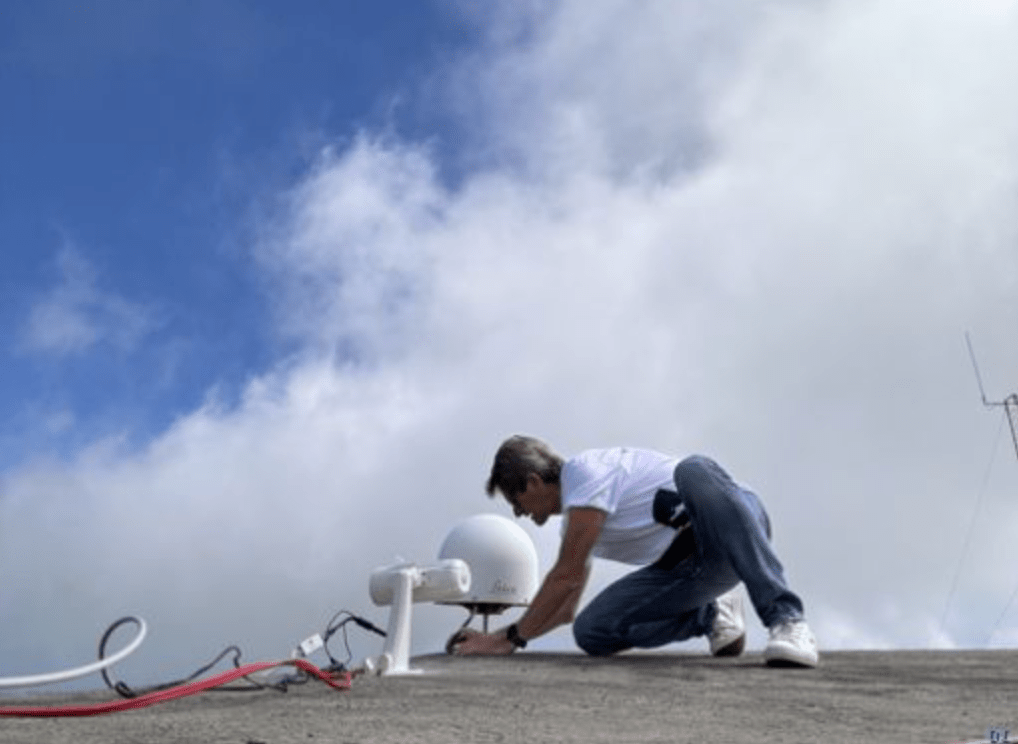
In scientific terms, it is important to continue to monitor the phenomenon through the permanent monitoring network and field campaigns so that, if the observed pattern changes, warnings and alerts can be issued. As is well known, we have an important geophysical, geodetic, and geochemical observation network on Terceira Island to monitor the volcano 24/7, a task that has greatly benefited from the support of the Azores Regional Civil Protection and Fire Service, municipal councils, in particular, naturally, the Angra do Heroísmo Municipal Council, and even private individuals.
In the field of civil protection, authorities must continue to ensure that emergency planning actions are based on scientifically validated scenarios and test the response mechanisms outlined. In this regard, I can add that we are beginning to develop two master’s theses focused precisely on emergency planning for seismic-volcanic activity on Terceira Island, which could be an important contribution to future civil protection actions on the island.
Finally, regarding the population, individuals must be aware of the risks they are exposed to and adopt measures and behaviors suitable for the specific situation.

In a recent civil protection exercise (evacuation of the parish of Biscoitos, on Terceira Island), out of a resident population of around 1,500 individuals, around 40 turned up. What can be said to make the population understand that this is not a joke and that their lives can be safeguarded by training in various practices, including evacuation to safe areas?
Although we often hear that the Azoreans are used to dealing with natural phenomena and are therefore prepared for any occurrence, we know that this is not the case, because there is no culture of civil protection rooted in each of us or in the organizations we belong to. The lack of participation by the population in this civil protection exercise is a testament to this.
All actors must be aware that the response to an imminent or ongoing eruption is significantly different from what occurs when an earthquake, landslide, or even a storm happens. And in the Region, there is no widespread experience in this regard, because fortunately, there have been no volcanic eruptions on land in recent decades. I have emphasized that it is extremely important to train all civil protection agents, including authorities, communication professionals, and the general population, on the risks associated with volcanic activity, as well as the prevention and protection measures to be considered. The University of the Azores offers courses in these areas, and the Institute of Volcanology has, over time, provided some training and short courses for this purpose, but without this being part of a comprehensive and consistent strategy that reaches everyone regularly. It is urgent to change this situation.
Apparently, we have little history of monitoring seismic-volcanic crises. That being the case, is it possible that the increase and sophistication of equipment, without such a history, are only highlighting a more or less normal situation in the Azores and especially in certain areas, such as Santa Bárbara?
The seismic-volcanic monitoring data do not indicate that this is a normal situation; quite the contrary, and for this reason, we are currently at Alert Level V2 at the Santa Bárbara Volcano, after having already been at V3. The activity is not constant, and for this reason, the alert issuance process is dynamic.
Situations such as the one we are experiencing on Terceira Island, as I mentioned earlier, have been rare on land. Still, I recall, for example, the seismic-volcanic crisis that recently hit the island of São Jorge, during which we even reached V4, or the seismic-volcanic crisis of the Fogo Volcano and the surrounding area of Lagoa do Congro, on the island of São Miguel, between 2003 and 2005. That is why monitoring cannot be neglected because, as I have already emphasized on other occasions. However, more than 80% of the time these crises do not culminate in a volcanic eruption; in some cases, the outcome is different…
It is this reality that will continue to determine the actions of CIVISA and the Institute of Volcanology, in close collaboration with the civil protection authorities.
In Diário Insular-José Lourenço, director.
Translated into English as a community outreach program by the Portuguese Beyond Borders Institute (PBBI) and the Modern and Classical Languages and Literatures Department (MCLL), in collaboration with Bruma Publication and ADMA (Azores-Diaspora Media Alliance) at California State University, Fresno. PBBI thanks Luso Financial for sponsoring NOVIDADES.

 Novidades - The Islands and the Diaspora