

The tragic accident involving the Glória funicular railway in Lisbon highlighted the traditional, inadequate, and obsolete management approach taken by public companies to the safety of their infrastructure. We do not have a culture of prevention; on the contrary, we cultivate a Portuguese culture of taking the easy way out and muddling through. Often, it is not even the fault of the managers, but of the State itself, which does not provide or neglects the resources necessary for good performance.
In the Azores, the difficulties faced by public companies in performing their mission fully and with quality are well known, especially in the current climate, with the regional administration’s coffers practically empty. The regional public business sector is known for the ease with which it recruits and appoints political clients, swarming with people from the ruling party, neglecting investment in equipment and other resources that contribute to better public service. For example, I recently had the opportunity to verify the persistent lack of maintenance on cranes in several fishing ports on our islands, some of which are rusty and in need of replacement. The fishermen who use this equipment are always on tenterhooks and, in the event of breakdowns, as happens regularly, the schedules of Lotaçor’s technicians do not coincide with the fishermen’s work, especially at weekends. In fact, Lotaçor must be the only company in the world that does not adapt its schedules to those of the fishermen, even forcing them not to fish due to overcrowding in cold storage.
There is even this ridiculous situation of forcing fishermen to catch bonito only every other day!
It is as if the government decided that the Azoreans could only work every other day, with the consequent loss of income, because it does not have the capacity to store so much production and wealth. Where have you ever seen a country or a region hinder the creation of wealth? Negligence and incompetence in public management never have consequences. Do you remember the ruinous management at SATA with the hiring of unsuitable aircraft, such as the “cachalote”? Do you remember the rusty mooring bollard at the S. Roque do Pico port, which caused a fatal accident in 2014, with Portos dos Açores washing its hands of the problem? And the recent fire at HDES, which could have been avoided if the equipment had been different?
There are critical infrastructures that require extra attention from public management, but this is not what we see.
In public management, responsibility always dies unmarried, and there is no shortage of examples of mismanagement with ruinous consequences for the public budget and the taxpayer’s pocket.
Do you remember the Sinaga deal? Do you remember Saudaçor? Do you know what a public company called Ilhas de Valor does? Do you know how many observatories there are in the region, what they do, and how many people they employ? Do you know that the current government wants to create more observatories? And how many millions do useless public companies cost the region? Saudaçor alone defaulted on more than €800 million.
Even EDA, which makes a profit and distributes dividends to its shareholders, immediately goes to the bank to take on debt for investments. Its liabilities are already close to €400 million!
If we add the liabilities of the SATA Group companies (Holding €200 million in debt, Azores Airlines €223 million, and Air Açores €55 million), Portos dos Açores (€149 million), Lotaçor (€21 million), Ilhas de Valor (€9.9 million), and Atlanticoline (€2.9 million), the total is already around one billion in debt. Add to all this chaos the debts of municipal companies, which are also proliferating like mushrooms, and we have a perfect storm.
On another level, as Diário Insular questioned a few days ago, what is the point of an Atlantic Center and an Air Center, which are not even based in the Azores? Any day now, we will also create a public company to manage the 17 million euros that the painful Regional Assembly will cost this year.
May there be someone with the courage to put the house in order.
****
BUREAUCRATIC MANAGEMENT – There are people in the regional administration who only serve to complicate matters.
The Ribeira Grande Volunteer Firefighters Humanitarian Association (disclosure: I am a member) decided to help the excellent Azores Burning Summer Festival, on the beautiful Praia dos Moinhos beach, by transporting people in non-urgent patient vehicles, with payment from the organization.
This is a commendable initiative, similar to others aimed at raising funds, as the regional administration is unable to finance all the firefighter associations in the region. But then the public bureaucrats step in: “Oh, this is against the law!” Civil Protection made a fool of itself by rebelling against this type of fundraising, arguing against an absurd and obtuse law, against which – here, yes – it should raise its voice in protest. This region is full of bullshit bureaucrats.
****
MANAGEMENT BY INACTION – Here is another recent example of poor public management by our regional administration.
The Escola do Mar (Sea School) and the Azores Government have promised, on more than one occasion, to restore the old and beloved “Espalamaca” from the island of Pico and put it back into service. This has been an aspiration for several years, to which the Associação dos Amigos do Canal (Friends of the Canal Association) has devoted itself heart and soul, successfully carrying out the restoration with an investment of more than €100,000.
The Association has now reported that the Azores Government has done nothing and has not provided the necessary resources to the Sea School to complete the restoration of the “Espalamaca,” donated to the Regional Directorate for Culture (again), which has never updated its registration with the Horta Port Authority or established its navigation category.
The “Espalamaca” lies in the Madalena shipyards, further disrepair, with a container holding the two generously donated engines as its final resting place. This is how our regional public administration manages our heritage.
****
DISASTROUS MANAGEMENT – It is not only in public management that political parties surprise us.
In their own management of appointments and candidates for positions, they never cease to surprise us. Chega, which claims to be different from the others, has also learned to “import” complete lists of candidates from the mainland for the Azores local elections.
There is no shortage of examples, but take a look at this gem, which I have transcribed from this week’s “Jornal do Pico”: “Jornal do Pico also wanted to interview Chega’s candidate for the S. Roque City Council, as it did with the other candidates, but the party’s regional representative, Olivéria Santos, said in a telephone conversation that she did not feel comfortable doing so. As such, Chega’s press officer sent a photograph of the candidate, Lúcia Alpalhão, along with the following information about her: Lúcia do Carmo de Jesus Alpalhão is 42 years old and is a funeral assistant.”
They hide the fact that she is from Amadora.
She is six feet six inches away from S. Roque do Pico.
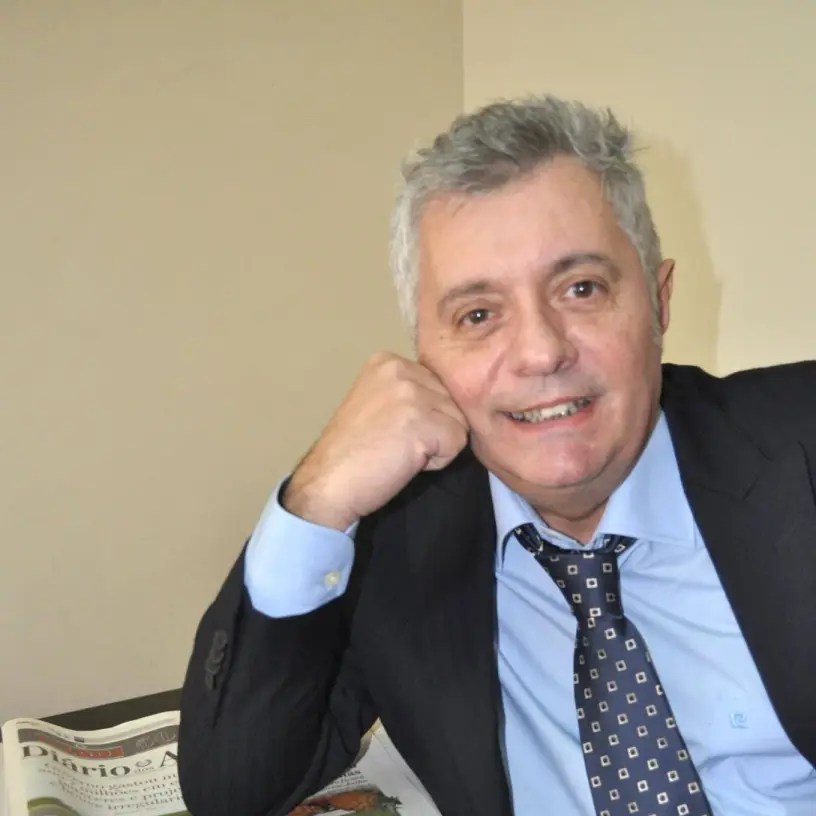
Osvaldo Cabral is an emeritus journalist with over 40 years of experience covering the Azores. He was the director of RTP-A (the public television station) and the Diário dos Açores newspaper. He is a regular columnist for many newspapers throughout the Azpres and the Diaspora.
NOVIDADES will feature occasional opinion pieces from various leading thinkers and writers in the Azores, providing the diaspora and those interested in the current state of the Azores with insight into the diverse opinions on some of the archipelago’s key issues.
Translated to English as a community outreach program from the Portuguese Beyond Borders Institute (PBBI) and the Modern and Classical Languages and Literatures Department (MCLL).
(This op-ed was published in Portuguese in the following newspapers: Açoriano Oriental, Diário Insular, Portuguese Times USA, LusoPresse Montreal)
 Novidades - The Islands and the Diaspora