

Preserving Azorean heritage and carrying it into the heart of the diaspora in the 21st century.

Introduction
Islands of Memory: People, Places, and Traditions is a new and ongoing series of writings by Gualter Furtado, one of the Azores’ leading economists and intellectuals. Through his reflections, readers will be invited to rediscover the flavors, customs, and resilience of Azorean life — from its kitchens and festas to its villages and people. Published in Novidades from Bruma Publications at the Portuguese Beyond Borders Institute (PBBI) at Fresno State, this series aims not only to preserve memory but also to raise greater awareness of the Azorean people, traditions, and culture among the diaspora and the wider world. It is both a celebration and a bridge, carrying the richness of the islands into the 21st century. We thank Dr. Gualter Furtado for his collaboration.
TARA ROOTS: A GOOD STARCH-AN AZOREAN STAPLE
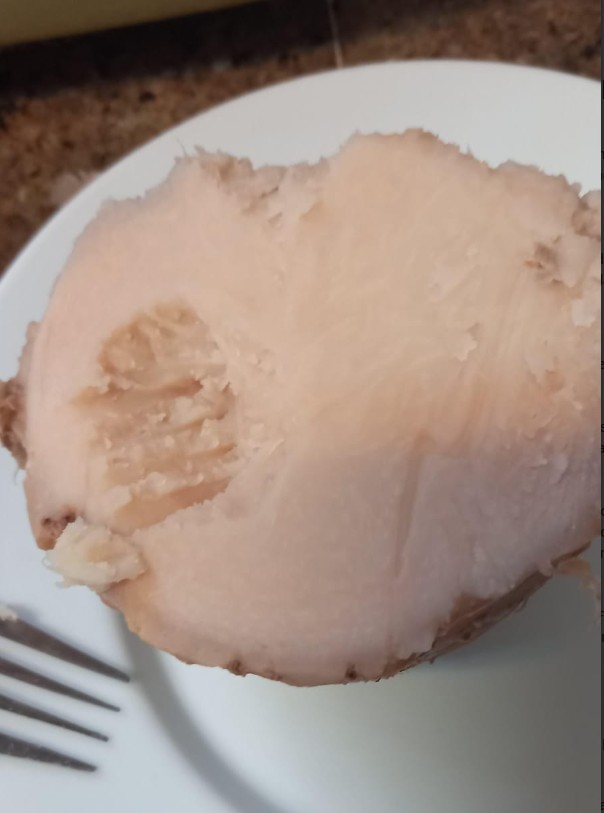
In Furnas, São Miguel Island, we have several types of tara roots (inhames in the Azores): hot water, cold water, moist soil, and even pumice stone. We also have “minhotos,” which are a variety of small tara roots, usually associated with the area of Bretanha, also in São Miguel.
We usually say that good-quality yams are like butter. Good yams do not have a fibrous texture; they are like the one in the photo, which is of excellent quality.
On average, the tara roots from Furnas take 1 hour and 15 minutes to 1 hour and 30 minutes to cook in a pressure cooker. However, on other islands, such as Flores, they take hours to cook.
In gastronomic terms, good tara roots go with everything (meat, fish, eggs, and can even be eaten on their own), and can be served boiled or fried after cooking.
They are an excellent food due to their nutritional properties, and their health benefits are well known.
A meal with tara roots provides energy, which is why it was part of the diet of peasants who worked from dawn to dusk, particularly on the island of São Jorge.

Translated into English as a community outreach program by the Portuguese Beyond Borders Institute (PBBI) and the Modern and Classical Languages and Literatures Department (MCLL), in collaboration with Bruma Publication and ADMA (Azores-Diaspora Media Alliance) at California State University, Fresno. PBBI thanks Luso Financial for sponsoring NOVIDADES.
 Novidades - The Islands and the Diaspora