

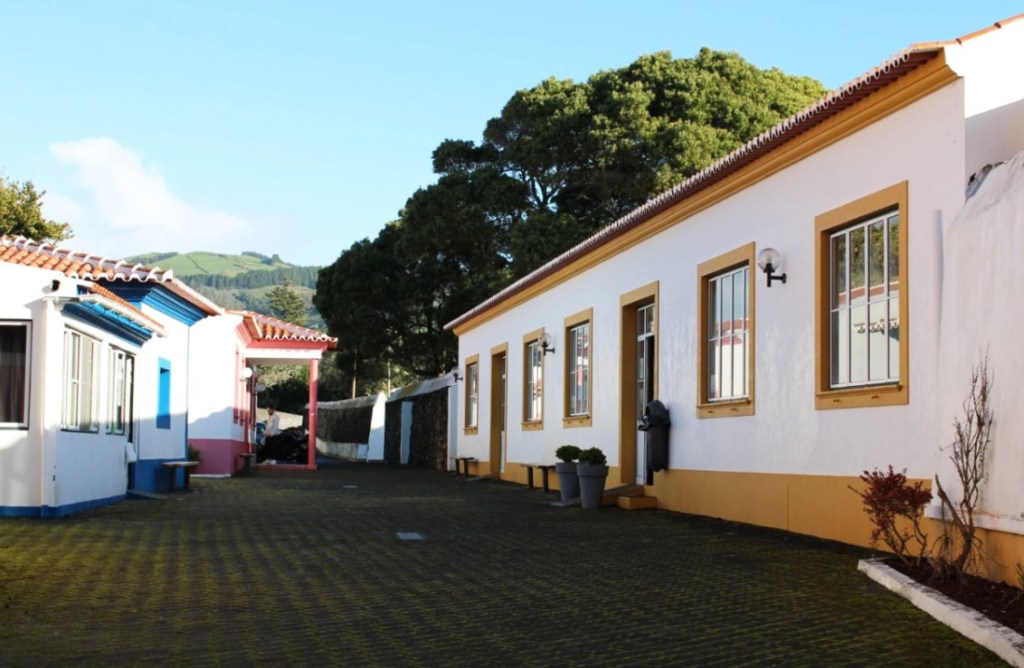
The Professional School of Santa Casa da Misericórdia of Angra do Heroísmo offers a solid educational program, focusing on areas such as health, pharmaceutical sciences, social work, tourism, electronics, and computer science. The institution stands out for its investment in specialized laboratories, encouragement of critical thinking, and direct support to students. For the school’s Pedagogical Director, Carla Campos, “we believe in a strong component of training and technical and personal development throughout the course, even after its completion.”
Correio dos Açores – What training programs are currently offered by the school?
Carla Campos (Pedagogical Director) – We begin the 2025/2026 school year with the following new courses: Family and Community Support Technician and Computer Systems Technician. In the 2nd year, we continue with the Educational Action Technician and Health Care Assistant Technician programs, and in the 3rd year, with Electronics, Automation and Computer Technician, and Tourism Information and Animation Technician.
Still within the area of Tourism, this year we are offering the Tourism and Leisure course, covered by the QUALIFICA.IN measure, an intensive program with workplace practice, aimed at qualifying and retraining both employed and unemployed individuals, to respond more effectively to the needs of the labor market.
What differentiates you from other vocational schools in the Azores? What are your main features?
The Professional School of Santa Casa da Misericórdia of Angra do Heroísmo (EPSCMAH) offers programs tailored to the needs of the local business sector, with a particular focus on Health, Pharmaceutical Sciences, and Social Work and Guidance—areas that serve the Santa Casa da Misericórdia institution specifically, and, more broadly, all institutions providing health and social care services.
At the same time, we have opened courses in priority areas, including Tourism, Electronics, Automation and Computers, and Computer Science. We provide laboratories where students can develop their skills. We are a school committed to offering students meaningful learning experiences and encouraging critical thinking. This academic year, we were able to transform an underutilized space into a laboratory equipped with materials specific to the area, including an examination table, hospital bed, and meal support table, among other complementary elements.
In terms of support, what is the school’s current situation?
We receive community funding from the European Social Fund and have modernized our laboratory equipment, particularly in computing and the workshop for Electronics and Computer Automation courses, within the framework of the Recovery and Resilience Plan.
Generally, after completing their vocational course, do students continue to higher education?
Students may apply to higher education through the Special Admission Competition for Professional Pathway Graduates or through the National Higher Education Access Competition.
Over the past five years of study cycles (three-year terms), we had an average of 11% of students who continued their studies. The courses with the highest number of candidates pursuing further studies were Game Management, Electronics, Automation and Computers, and Computer Systems.
Interestingly, there have been few applications to higher education in Health, Sales, and Tourism, likely because students’ first goal is to work in the field, which indeed happens. In fact, the school contacts all graduates six months after completing their course and confirms that the vast majority are employed in their training areas.
How does the Professional School contribute to graduates’ entry into the labor market?
We believe in a strong component of training and both technical and personal development throughout the course, and even after its completion, our Psychology and Guidance Office continues to support graduates—whether in the context of the Estagiar T program, or by helping with doubts related to CV preparation, for example. If a student has dropped out, we refer them to the Employment Center or, if necessary, coordinate with another institution suited to the specific case.
What are the primary challenges the school faces at the moment?
The real challenge is reaching a broader audience of candidates, reaching public schools, and clearly presenting to all 9th-grade students what it truly means to choose Vocational Education—explaining the advantages and opportunities of this pathway, which is highly valued in the wealthiest European countries, and increasingly valued by both companies and national universities. It makes sense, since students bring with them to university a range of practical skills that their peers don’t have.
What are the main areas of investment planned for the coming years in terms of equipment and infrastructure?
As mentioned, we already have good computer equipment, supported by the RRP, and we have been upgrading our health area laboratories. In this context, we will continue to invest in this area.
José Henrique Andrade is a journalist for Correios dos Açores-Natalino Viveiros, director.
Translated into English as a community outreach program by the Portuguese Beyond Borders Institute (PBBI) and the Modern and Classical Languages and Literatures Department (MCLL), in collaboration with Bruma Publication and ADMA (Azores-Diaspora Media Alliance) at California State University, Fresno. PBBI thanks Luso Financial for sponsoring NOVIDADES.

 Novidades - The Islands and the Diaspora