

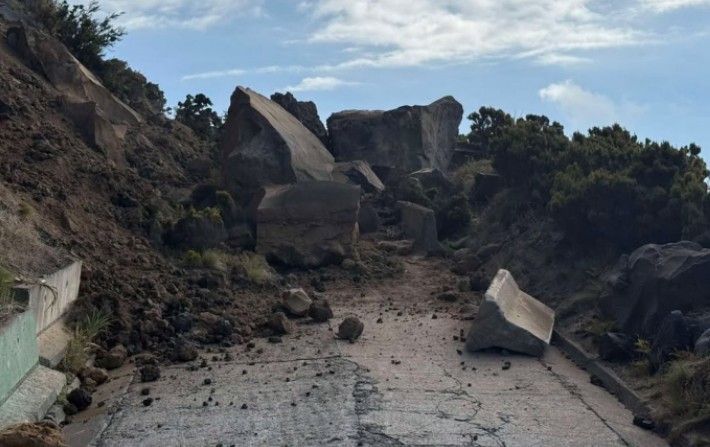
Access to Ferraria was reopened on Tuesday only to remove vehicles that were trapped after the landslide on September 15. Still, it remains restricted pending the final technical report from LREC, which will determine the consolidation measures and the decision on definitive reopening. The Ponta Delgada Chamber of Commerce and Industry has meanwhile warned of the impact of this landslide on mobility and the image of the Azores as a destination, and is calling for a structured plan of investment in tourist infrastructures throughout the island.
Access to Ferraria was reopened on Tuesday, allowing those with vehicles stuck there to remove them, according to the Ginetes Parish Council. According to preliminary analysis by the Regional Directorate of Public Works and the Regional Civil Engineering Laboratory, the slope is not yet safe, so until further notice, access remains “restricted and not recommended.”
The landslide on the access road to Ferraria occurred on Monday, September 15, at around 2:30 p.m. The landslide at the foot of the embankment threw large boulders onto the road and blocked access. There were no injuries, but approximately 100 people and dozens of cars were stranded in the parking lot.
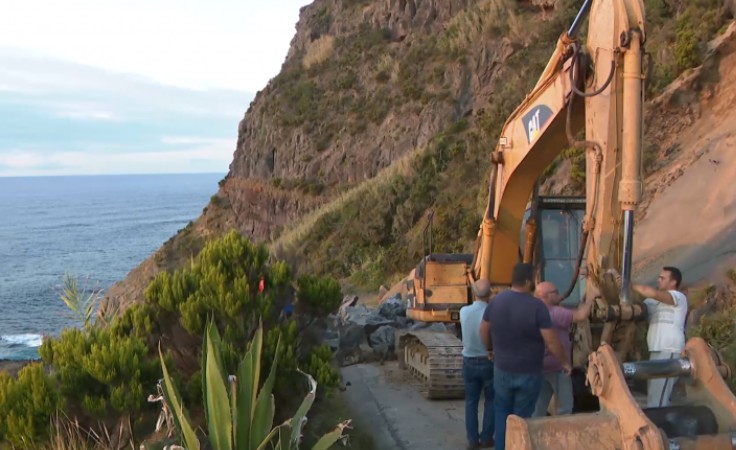
Following the collapse, the Regional Directorate of Public Works mobilized various machines and equipment, including a truck, a backhoe, and a rotary, to remove blocks of earth and rock, reposition concrete barriers, and open a parallel road to allow vehicles to exit. The clearance operation continued until early Tuesday afternoon, allowing the trapped cars to be freed.
According to João Paulo Medeiros, president of the Humanitarian Association of Volunteer Firefighters of Ponta Delgada and former president of that municipality, the Parish Council used its vehicle and personal vehicles, with the support of municipal vans, to transport tourists to various points on the island, with the parish president being the last to leave. The president also mentions that workers from Termas da Ferraria, despite being off duty, volunteered to provide meals and support those present.
According to the note issued by the Regional Government, on the morning of September 16, technicians from the Regional Directorate of Public Works and the Regional Civil Engineering Laboratory conducted an inspection of the site. The preliminary analysis concluded that it is not only the exact point of the landslide that poses a risk, but the entire adjacent slope was considered “unstable and dangerous.” The same document also notes that the landslide occurred in an area not covered by the slope stabilization work carried out in 2019 and 2020.
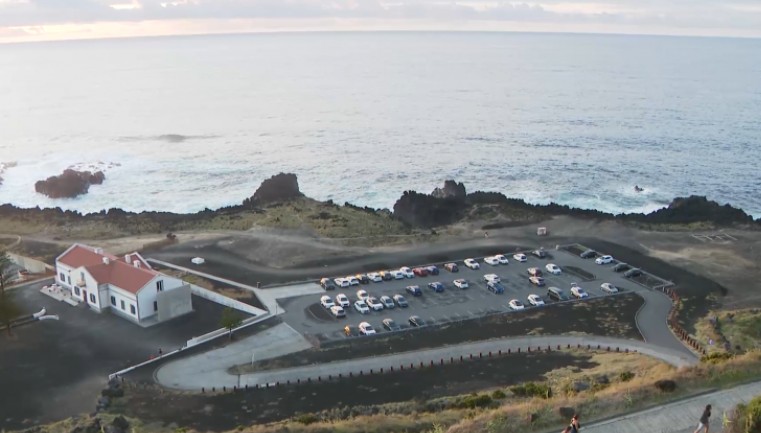
The final technical report from the LREC is now awaited, which will determine the necessary consolidation measures and the decision on the definitive reopening of access to Ferraria.
The Ponta Delgada Chamber of Commerce and Industry has expressed its concern about the landslide, pointing out that, although there were no casualties, the incident had an immediate impact on the mobility of residents and visitors and on the image of the Azores as a destination.
In a statement, the business association warns that the situation is the result of reduced monitoring and insufficient investment in tourist infrastructure, recalling the increased costs for tourists, particularly due to the immobilization of rental cars. The CCIPD emphasizes that Ferraria is an anchor product of Azorean thermalism, a segment capable of “combating seasonality and generating added value,” but which is at risk if there is no continued investment. “The risk of losing competitiveness, if there is no sustained investment, is real and could leave marks on the destination’s reputation,” the statement reads.
The same note also points out that the collapse at Ferraria is not an isolated case and cites recent episodes such as “the closure of the Vila Franca do Campo islet, trails without adequate signage where tourists get lost, requiring successive interventions by rescue services—as happened recently at Lagoa do Fogo— polluting discharges at Praia do Monte Verde, in Ribeira Grande, and the temporary closure of thermal spas by order of the competent authorities.“ According to the CCIPD, ”all these episodes weaken the image of the destination, generate insecurity, and convey a perception of lack of planning and inability to respond in a timely manner.”
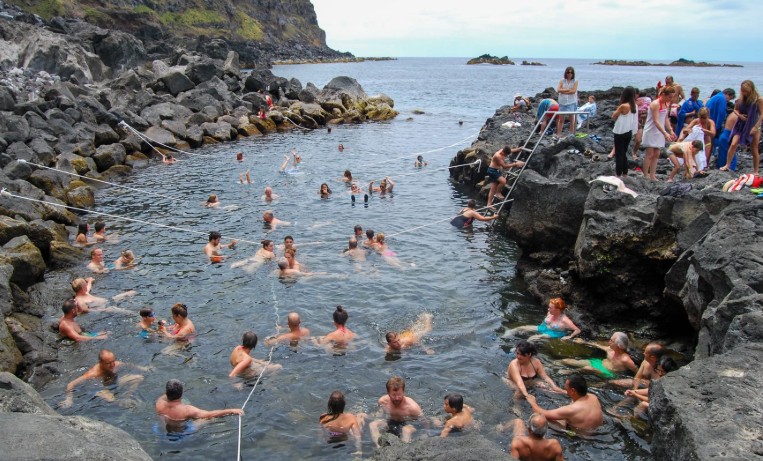
The association reiterates the urgent need for a structured and continuous plan of investment in tourist infrastructure to guarantee safety, confidence, and competitiveness in the sector.
Before the CCIPD statement reached our editorial office, Correio dos Açores contacted the Regional Directorate of Public Works, but the director was not available to comment by the time of going to press, nor was there any contact or indication that another member of the Regional Government would be heard.
Daniela Canha is a journalist for Correio dos Açores. Natalino Viveiros is the director.
Translated into English as a community outreach program by the Portuguese Beyond Borders Institute (PBBI) and the Modern and Classical Languages and Literatures Department (MCLL), in collaboration with Bruma Publication and ADMA (Azores-Diaspora Media Alliance) at California State University, Fresno. PBBI thanks Luso Financial for sponsoring NOVIDADES.

 Novidades - The Islands and the Diaspora