

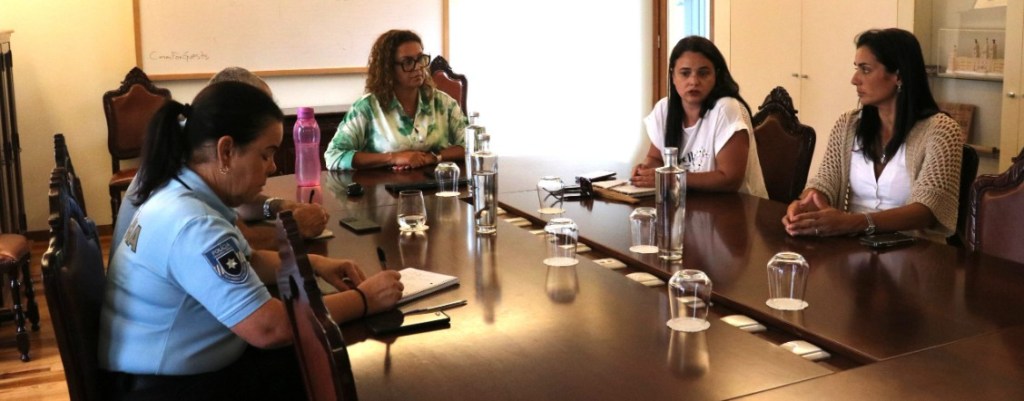
On Wednesday, the Mayor of Madalena met with the current owner of COFACO, the PSP (Local Police), the Pico Island Health Unit, and the Azores Social Security Institute, all parties committed to working together to find a definitive solution to the problem of homelessness in the municipality.
In a statement, the Municipality of Madalena announced that, in collaboration with several municipal entities, it has developed an intervention plan to address the issue of homeless people residing in vacant buildings within the municipality, particularly at the former COFACO factory, where it is currently estimated that more than 30 people are staying overnight. Concerned about the situation, Catarina Manito met with Lux Hotels, which acquired the former factory in 2022, the PSP, the Pico Island Health Unit, and the Azores Social Security Institute. By consensus, two stages of intervention were defined, and a working team was created.
“First, we will inspect the space and notify its owner of the need to demolish it, as it shows clear signs of danger and unsanitary conditions. At the same time, the homeless people occupying the property will be approached and referred, if they agree, to social services in this area,” said Catarina Manito, Mayor of Madalena, quoted in the note.
In a second phase, the building will be demolished. “By notifying the owner of the need to demolish the building, we are speeding up the process from an administrative and legal point of view,” explained the mayor, assuring that Lux Hotels was open to the proposal put forward by the municipality.
It should be remembered that the problem of homelessness is a concern for the Azorean authorities on several islands in the archipelago. Also in July, the Regional Secretary for Health and Social Security, Mónica Seidi, presided today in Ponta Delgada over the presentation of the First Regional Plan for the Inclusion of Homeless People – PRIPSSA 2025-2030.
The Plan, which was based on a previous technical study, aims to reduce the number of homeless people in the Azores archipelago, with “preventive” action by the Regional Government and institutions. The plan was drawn up by Norma Açores, who, in April 2023, reported that there were 386 homeless people in the Azores, with the highest prevalence on the island of São Miguel (66% of cases) and Terceira (20.2%).
The problem affects, to a greater extent, people aged between 30 and 59, and the main causes are related to the use of psychoactive substances and alcohol abuse.
“Taking into account what the other plans have been, both the Regional Plan for Social Inclusion and Citizenship and the program itself to combat addiction, prevention is the key,” argued Mónica Seidi, speaking at the event held at the Ponta Delgada Public Library and Regional Archive.
The Plan will mobilize public and private entities, with its strategic axes encompassing intervention, risk prevention, resource management, accommodation and housing, monitoring and rehabilitation, social integration and knowledge, and communication and social participation.
The document was made public online to gather contributions and suggestions, and the final version is expected to be completed by this September, before being submitted to the Government Council for approval.
Nélia Câmara is a journalist for Correio dos Açores-Natalino Viveiros, director.
Translated into English as a community outreach program by the Portuguese Beyond Borders Institute (PBBI) and the Modern and Classical Languages and Literatures Department (MCLL), in collaboration with Bruma Publication and ADMA (Azores-Diaspora Media Alliance) at California State University, Fresno. PBBI thanks Luso Financial for sponsoring NOVIDADES.

 Novidades - The Islands and the Diaspora