

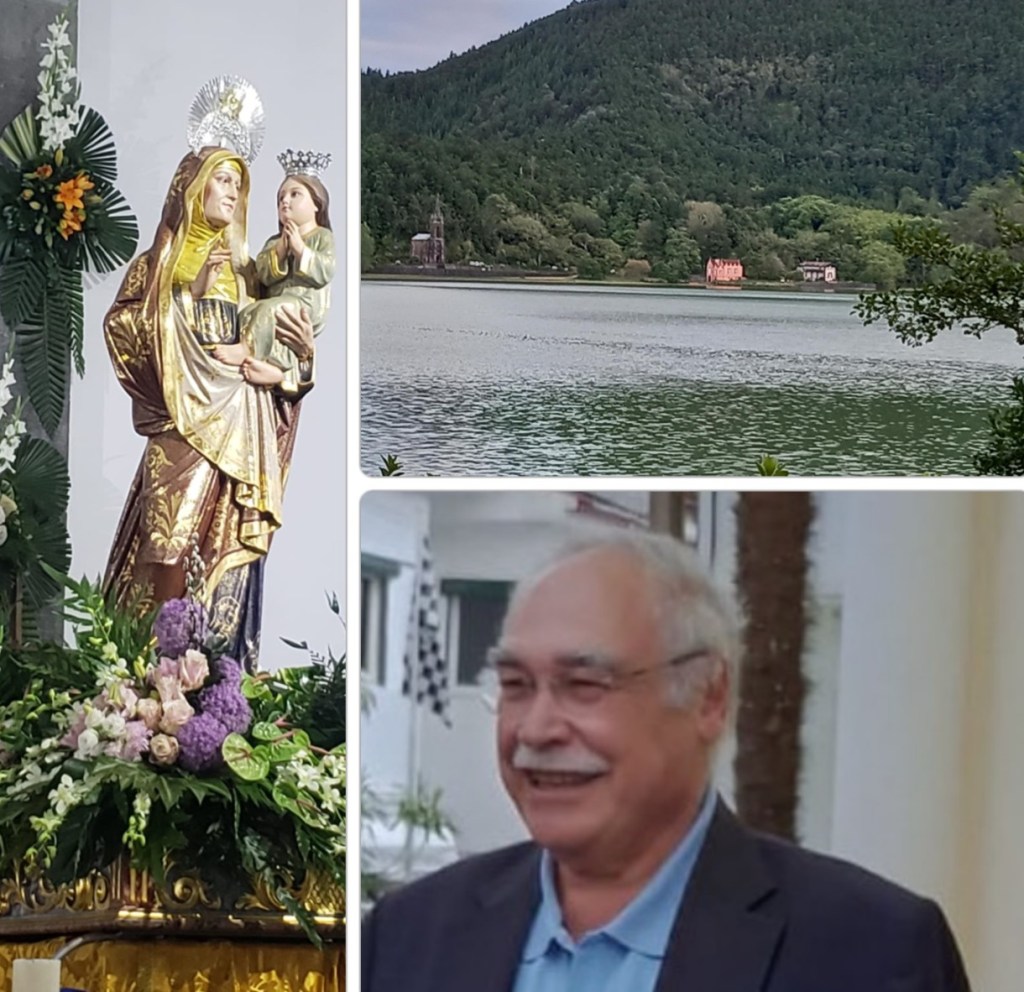
For various reasons, Vale das Furnas plays a prominent role in promoting tourism in the Azores, particularly on the island of São Miguel:
Its natural beauty, its immense wealth of water springs, with varied chemical compositions, different temperatures, and flavors, its lagoon, its calderas, its extraordinary parks and gardens, its gastronomy, its history, etc., make Furnas practically close to needing promotion. What it needs is conservation, renovation, and intelligent investment, as well as the planning and preservation of its tangible and intangible heritage. And it is in the smart investment and preservation of its intangible heritage that it is urgent to publish a rigorous but comprehensible, concise, small, and properly illustrated work on the three pillars that contribute greatly to making the Furnas Valley a unique place close to the world.
The first pillar is its waters, which give the Furnas Valley the status of being one of the most important hydropolises on the planet, justifying a chapter in this book dedicated to its different springs, compositions, and locations.
The second pillar is the mountains that surround Furnas and give it its valley characteristics, the best known of which are commonly identified as Pico de Ferro and Salto do Cavalo.
A valley that was immortalized in the lyrics of the Hymn of Furnas, written by Father José Jacinto Botelho, first Vicar of the Church of Sant’Ana, in which the role of the mountains takes on a prominent place, cannot remain unknown to most residents and visitors, but let us remember the Hymn of Furnas:
Between Mountains Dug
Smiles, the Homeland of Flowers.
Our Beloved Land,
Nest of Our Loves!
If one day, to your delight,
black fate should take me away,
may God allow me to return to your bosom soon!
Therefore, our mountains deserve to be featured in this book in a separate chapter, identifying the name of each one, its height, location, and characteristics.
The third pillar is the serenades that give the Furnas Valley a heritage of musical and human life and culture of excellence. The extraordinary voices of the people of Furnas over several generations, including both genders, are famous and have been immortalized in the walks to Água Azeda. Recently, in a tribute paid to me by the Duo Top in Furnas, which I was deeply honored by, a colleague from the mainland told me that he had been impressed by the fact that most of the people present knew the lyrics and music of the serenades that closed the event. To ensure that this valuable intangible heritage is not lost, it is important to record in this book, in a separate chapter, the lyrics and sheet music of the highly valuable songs conceived and written by true musical geniuses, such as Benjamim Rodrigues and Viriato Costa. However, this chapter should also include the lyrics and music of the Furnas Anthem and the Anthem of Senhora Sant’Ana, the patron saint of the Furnas Valley.
With the publication of this small book, the Parish Council of Furnas, the Municipal Council of Povoação, and the Government of the Azores would pay fitting tribute to a valley that has given so much to the Azores, and it would certainly be a valuable contribution to the knowledge of the present and future generations.
The culture of a people is also measured by the boldness and achievements of its political decision-makers, whether at the local or regional level.
Gualter Furtado
Sunday of Sant’Ana das Furnas
Translated into English as a community outreach program by the Portuguese Beyond Borders Institute (PBBI) and the Modern and Classical Languages and Literatures Department (MCLL), in collaboration with Bruma Publication and ADMA (Azores-Diaspora Media Alliance) at California State University, Fresno. PBBI thanks Luso Financial for sponsoring NOVIDADES.
 Novidades - The Islands and the Diaspora