

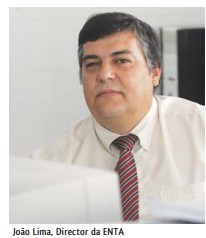
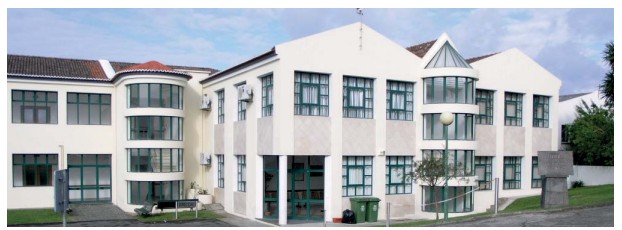
The Azores School of New Technologies, in São Miguel, offers specialized training in areas such as programming, computer systems management, food quality, laboratory analysis, and cybersecurity. The institution is characterized by its proximity to companies in the region, its commitment to international certifications, and its status as an “international examination center for industry.” João Lima emphasizes that “students who complete courses at this school are in high demand in the market, as there is a strong demand for them at the end of their courses.”
Correio dos Açores: What training courses does the school currently offer?
João Lima (Director of ENTA) – Currently, the Azores School of New Technologies offers training in two different modalities: three-year professional courses (level IV training) and technological specialization courses (CET – level V training), which run for 16 months (with a strong training component in the workplace).
Concerning technological specialization courses, which require entry in 12th grade, the school currently offers training in Laboratory Analysis and Food Quality, as well as Cybersecurity.
Concerning three-year professional courses, ENTA offers professional courses in Laboratory Analysis, Food Quality and Safety, Logistics, Programming, and Computer Systems Management.
What sets you apart from other professional schools in the Azores? What are your characteristics?
ENTA is a school that specializes in the areas in which it provides training and has close ties to the business world, as its governing bodies include entities directly linked to the market, such as Cimentaçor, Fábrica de Tabaco Micaelense, INOVA, the Ponta Delgada Chamber of Commerce and Industry, and IAPMEI, at the national level.
Several characteristics set us apart from other schools. We would like to highlight the following: we are a specialized and recognized industry leader, we hold quality certifications, and we serve as an international examination center for the industry (Pearson Vue). Additionally, our school operates five international academies, including Microsoft, CISCO, KNX, RED HAT, and AWS.
In terms of government, institutional, and European support, what is the current situation of the school?
Like other vocational schools, ENTA finances its activities through applications to the European Social Fund. The enormous delays in the timely availability of European funds have been a major obstacle to the school’s activities.
Fortunately, the Regional Government has been sensitive to this situation and has supported vocational schools in the Azores by assuming the bank interest on the inevitable loans that schools have resorted to. It is estimated that this situation will be resolved by the end of this year.
In general, do trainees enter higher education after completing their vocational course?
Students who complete courses at this school are under great pressure from the market, as demand for them at the end of their courses is very strong. The various programs promoted by the Regional Government are also a factor that favors this rapid transition to the labor market. Despite everything, on average, about 15% of our students ultimately apply for higher education.
How does the Professional School contribute to graduates’ entry into the job market?
From the first day they enter our school, students are welcomed into a training program designed to prepare them, first and foremost, for the profile of the course they have chosen and, at the same time, to meet the demands of the job market. Throughout this process, we emphasize close ties with companies and the development of practical projects on topics relevant to those organizations.
What are the current challenges or issues facing the school?
The biggest challenge facing the school at the moment is the progressive decline in the number of students leaving 9th grade in the Azores. This is a serious problem for a region like ours, which is increasingly aging.
Another problem for a specialized school like ours is the existence of several competing vocational schools, with a very diverse, unspecialized educational offering, which disperses students across educational options that allow them to complete the 12th grade with ease, unlike more technical courses.
I believe it is high time to devote some attention to the nature and type of vocational courses developed in the Azores. Many courses consume high levels of public financial resources but are of dubious usefulness for the labor market.
What are the main areas of investment planned for the coming years in terms of equipment and infrastructure?
At the moment, in terms of equipment, and thanks to the PRR and the support of the Regional Government of the Azores for vocational education, the School is well equipped for the training areas in which it works, both for face-to-face and distance learning.
In terms of infrastructure, we aspire to a new, more spacious building, designed from scratch for training. However, given the progressive annual reduction in the number of students in the Azores, we are aware that this dream is unlikely to come true.
José Henrique Andrade is a journalist for Correio dos Açores-Natalino Viveiros, director.
Translated into English as a community outreach program by the Portuguese Beyond Borders Institute (PBBI) and the Modern and Classical Languages and Literatures Department (MCLL), in collaboration with Bruma Publication and ADMA (Azores-Diaspora Media Alliance) at California State University, Fresno. PBBI thanks Luso Financial for sponsoring NOVIDADES.

 Novidades - The Islands and the Diaspora