

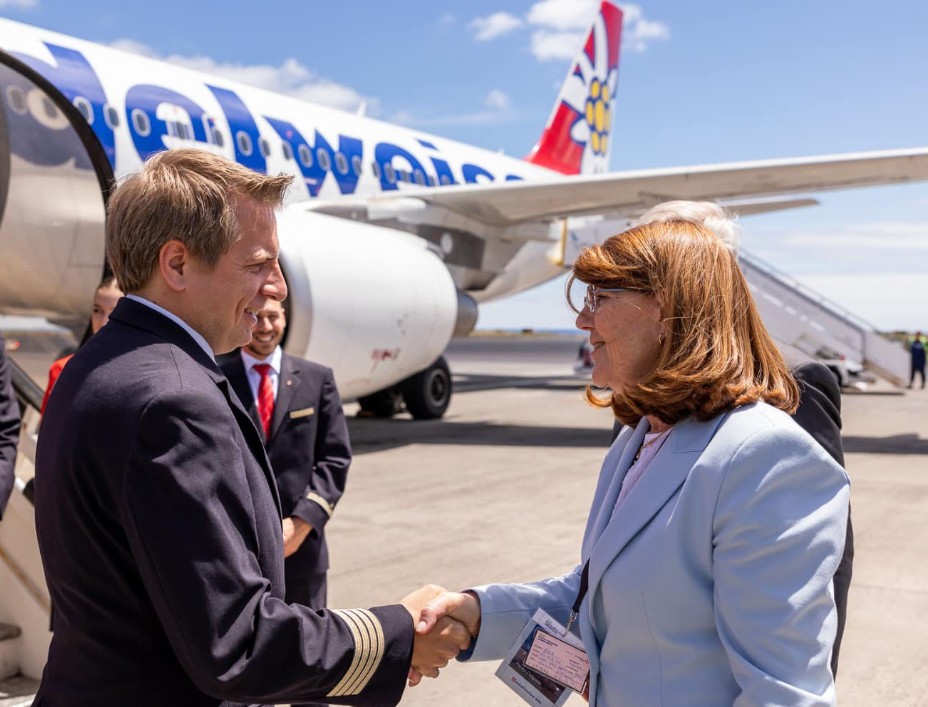
World Tourism Day 2025, officially celebrated on September 27, has this year’s theme “Tourism and Sustainable Transformation,” chosen by the World Tourism Organization (UNWTO) to highlight the role of tourism as an agent of positive change, with a focus on environmental sustainability, social inclusion, and innovation.
Symbolically marking this date, established by the UN to raise awareness of the importance of tourism as a driver of economic, social, cultural, and political development on a global scale, the Regional Secretary for Tourism, Berta Cabral, highlights the sector’s essential contribution to the achievement of the Sustainable Development Goals (SDGs) in the Azores.
Berta Cabral recalls that this is the first World Tourism Day to be celebrated in the Azores since the archipelago obtained Gold Level certification as a “Sustainable Destination” from Earth Check.
“The Azores are the first archipelago in the world to achieve this level of certification, which was attained at the end of 2024. In addition, the success and growth of tourism in the Azores continue to evolve in a healthy and sustainable manner, with the significant growth in overnight stays being permanently surpassed by the growth in revenue,” she emphasizes.
According to the minister, tourism is currently “one of the most important sectors of the regional economy, with the capacity to leverage all others across the board. Tourism already contributes more than €1 billion in wealth created on the nine islands, representing about 20% of regional GVA, 17% of GDP, and 17% of employment.”
Berta Cabral recalls that, in the last two years, the Azores have been considered the Best Adventure Tourism Destination in the World and in Europe by the World Travel Awards, among several other prizes and awards, which “guarantees its status as one of the most attractive destinations internationally.”
Reinforcing that the main objective of the Azores Government is “year-round tourism on all islands,” Berta Cabral says: “We are working to reduce seasonality and create conditions for airlines to progressively expand their operations to the mid and low seasons.”
She continues: “We have carried out selective promotional campaigns during the winter, as presented in October last year, and we have given priority to initiatives, promotions, and events held in the low season.”
On the other hand, she said, the government has sought to promote the dispersion of tourist flows across all the islands, working on and diversifying the product, such as the Azores Routes, walking trails, thermalism, and the Azores What’s On Agenda.
The Azores, as the minister points out, “are essentially a nature destination, and in this sense, it is worth highlighting the increased focus on an area as important as walking trails.”
“In 2025, we will reach the milestone of 100 officially approved trails in the Regional Network of Walking Trails, reinforcing the offer of one of the products that most contributes to positioning the Azores as a world-class destination for sustainable nature tourism,” she said.
This is a milestone that “represents not only a celebration of the work carried out, but also the reinforcement of the commitment of the Regional Government and local authorities to enhancing the territory, promoting quality tourist experiences, and responsible management of visitor flows.”
However, she maintains, “this is an ongoing challenge, which requires safety conditions, trail maintenance, land use planning, and user awareness.”
That is why the certification of the Regional Network of Walking Trails is “a fundamental pillar of regional policy for nature tourism, which combines the authenticity of the destination with the excellence of the experience. Walking in the Azores means discovering, at the right pace, the uniqueness of its natural and cultural heritage. Each trail is an invitation to contemplation and respect for the time of nature.”
On the other hand, the Regional Secretary points out that the Government of the Azores’ structural investment decisions also aim to respond to relevant UN objectives for sustainable tourism.
Berta Cabral cites, in particular, the promotion of quality training, valuing education and the development of professional skills in the sector, which is happening in accessible tourism and the Azores Routes; investment in sustainable infrastructure, with a focus on decarbonization, green transformation, and climate resilience, evident in the trail network, mobility solutions, road infrastructure, and electricity production; and the encouragement of innovation, technology adoption, and entrepreneurship, strengthening the competitiveness and sustainability of tourism, as seen in the new smart tourist flow monitoring project. The minister also emphasizes the importance of the work carried out by the entire tourism sector, offering words of congratulations for the excellent progress made in the Azores in recent years. “Working together and collaboratively has made us a destination of choice worldwide and a benchmark for all those who aspire to sustainability,” she concluded, quoted in the note published on the Regional Government’s website.
In Correio dos Açores-Natalino Viveiros, director
Translated into English as a community outreach program by the Portuguese Beyond Borders Institute (PBBI) and the Modern and Classical Languages and Literatures Department (MCLL), in collaboration with Bruma Publication and ADMA (Azores-Diaspora Media Alliance) at California State University, Fresno. PBBI thanks Luso Financial for sponsoring NOVIDADES.


 Novidades - The Islands and the Diaspora