

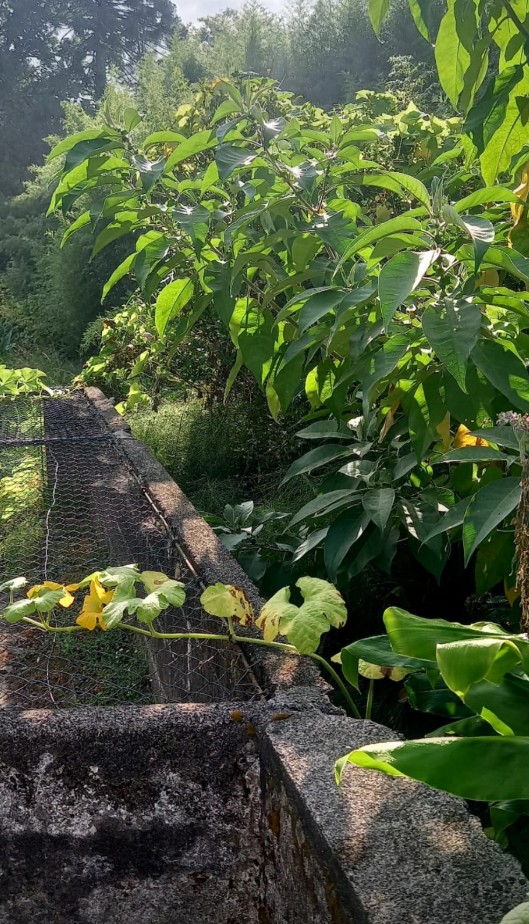
I would like to start by stating that I am not a biologist, nor do I have any technical expertise related to invasive plants. I am simply an Azorean, a native of Furnas, born at the mouth of a volcano that favored nature and provided many and varied qualities of water, to which I was fortunate enough to have grown up with some of the endemic plants of the Azores. However, this limitation of not having technical training in this area does not prevent me from speaking out about this serious problem in the Azores, which is invasive plants, not least because as a user of our land, as the owner of woods, small orchards, and backyards, I am confronted every day with the damage caused by invasive species and the losses that result from them. However, more important than my particular problem is the Azores. You don’t need to be a scientist to conclude that invasive plants in the Azores are becoming more and more aggressive and are occupying more and more land. It is not primarily the Azorean farmers and growers, garden owners, and public authorities in protected areas. Still, the scale of this problem has already taken over the entire territory of our islands.
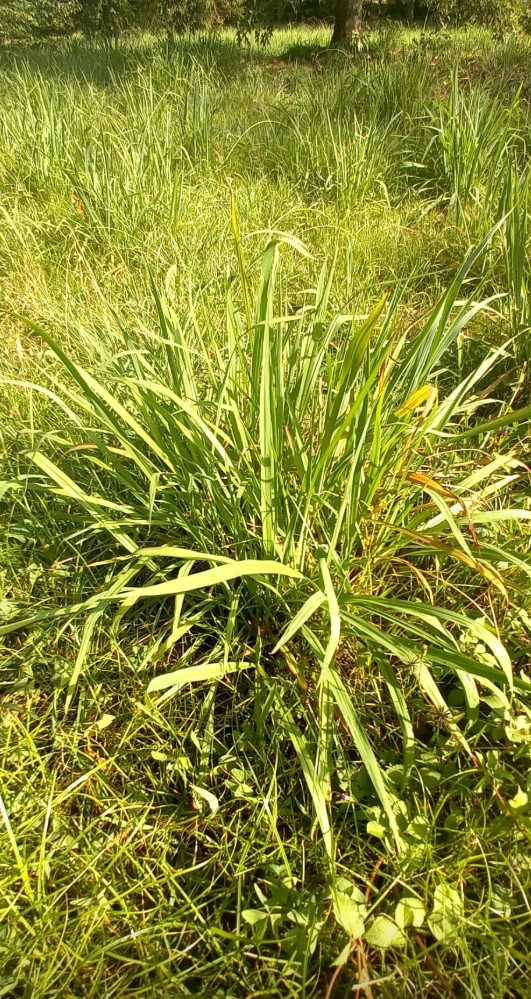
Even today, Professor Raimundo Quintal, in a timely publication, states that in Madeira “The Advance of Invasive Plants in the Laurissilva is Frightening,” to which I would add “and in the Azores too, to the detriment of our already weakened endemic nature, but also with enormous economic losses.” No tourist with any interest comes to the Azores to see: brambles, conteiras, giants, incense, smelly algae, silva-mansa, castor oil plants, etc., etc., etc. In fact, the frequency with which new species of invasive plants are detected and their rapid spread in our limited territory is truly alarming.
The situation is so serious that there are experts and individuals with great sensitivity among us who claim that controlling the appearance of new invasive species and the spread of those already existing in our Azores territory is a lost battle. Still, the worst thing that can happen to us is to give up fighting and defending our nature and our environment. In this regard, the Government of the Azores, local authorities, environmental organizations, farmers, the University of the Azores, and the Azoreans, who despite everything still exist, must join forces to defend our natural heritage and take advantage of the diagnoses already made and even some experiments carried out in the Azores to combat invasive species. It is certain and well known that failing to prioritize this issue will have a very serious impact on the Autonomous Region of the Azores.
Gualter Furtado is an economist and a leading intellectual in the Azores.
In Jornal Açores 9 – Paulo Melo, director:
Translated into English as a community outreach program by the Portuguese Beyond Borders Institute (PBBI) and the Modern and Classical Languages and Literatures Department (MCLL), in collaboration with Bruma Publication and ADMA (Azores-Diaspora Media Alliance) at California State University, Fresno. PBBI thanks Luso Financial for sponsoring NOVIDADES.
 Novidades - The Islands and the Diaspora