

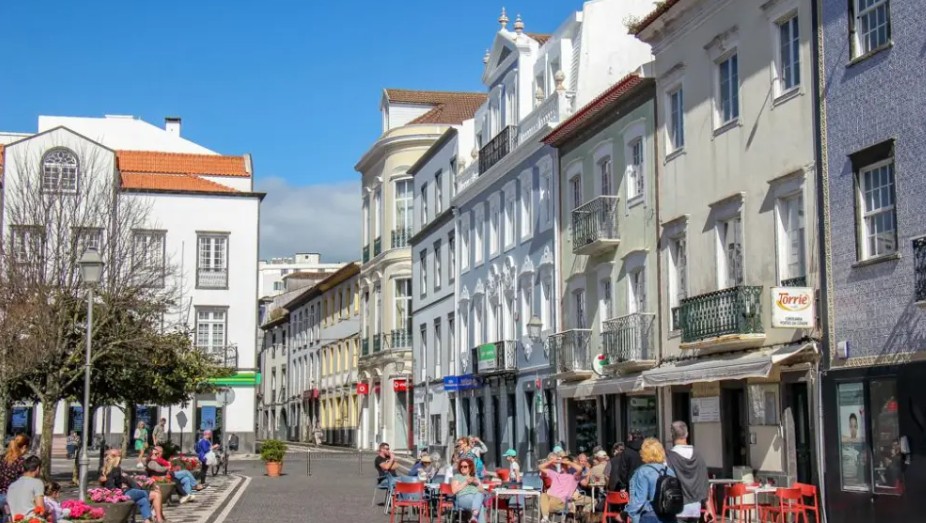
A study released yesterday by Informa D&B reveals that, in the Azores, 22% of employment and 27% of Gross Value Added (GVA) are generated by companies linked to tourism. The archipelago thus ranks among the regions with the greatest relative weight of the sector in the local economy. Specifically, in the district of Faro, tourism-related employment accounts for 33%, followed by Madeira at 27% and the Azores at 22%. These companies also generate the most wealth in these parts of the country, with Faro accounting for 34% of GVA (an economic indicator that measures the wealth generated). At the same time, the Azores surpass Madeira, with 27% and 21%, respectively.
The study reveals that the recovery of companies in the sector across the archipelago has accelerated since the pandemic period, aligning with the national trend. In the country, “the performance figures show that tourism companies have grown more in recent years than the business sector as a whole,” says Informa D&B, a company specializing in business information and risk analysis.“Starting in 2020, they began a robust recovery in turnover of 31% per year, more than double that of the business fabric, where annual growth was 14%,” it adds.
The study examined approximately 66,000 companies in the areas of catering, transportation, accommodation, tourism services, and cultural and recreational activities. It also points to lower resilience among companies in the sector, which have lower levels of financial autonomy and solvency.
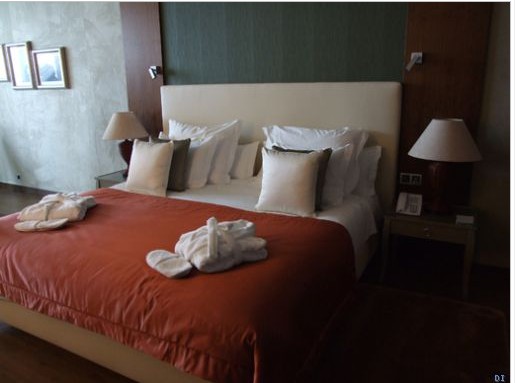
According to a nationwide analysis, only 64% of tourism companies have a minimal or reduced risk of ceasing activity, compared to 74% for the entire business sector. In 2023, these companies represented 17% of the business fabric, with a turnover of €42 billion and 416,000 employees (12% of the total). Nearly 60% of the 66,000 companies in the sector are located in Greater Lisbon and the North.
“Tourism has seen significant growth in Portugal, becoming one of the sectors with the greatest direct weight in the country’s GVA,” summarized Teresa Cardoso de Menezes, director general of Informa D&B, in a statement. Informa D&B’s work is to be presented publicly on the 7th of this month.
A study referred to by the Regional Government in March, prepared by the consulting firm EY, already indicated that tourism accounts for 17% of the Azores’ GDP (Gross Domestic Product) and contributes 19.6% of the Gross Value Added. “Quantitative growth should be growth that enhances and accelerates qualitative growth,” argued José Manuel Bolieiro, president of the Regional Government, who participated in the CNN Portugal Summit – Portugal Tour.
Translated into English as a community outreach program by the Portuguese Beyond Borders Institute (PBBI) and the Modern and Classical Languages and Literatures Department (MCLL), in collaboration with Bruma Publication and ADMA (Azores-Diaspora Media Alliance) at California State University, Fresno. PBBI thanks Luso Financial for sponsoring NOVIDADES.

 Novidades - The Islands and the Diaspora