

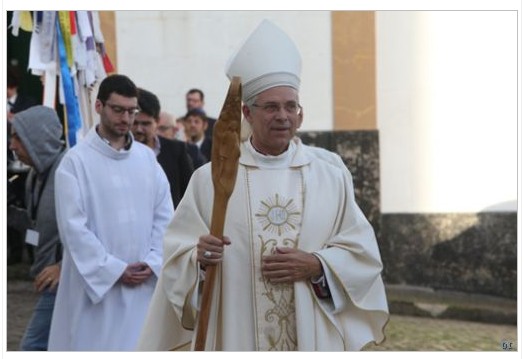
Bishop wants Pastoral Councils to be more involved in decisions.
The Bishop of Angra wants Pastoral Councils to be established in all parishes in the region by 2026 and for these bodies to “actively participate in decision-making processes.” The measures are contained in the first Pastoral Letter of D. António Esteves Domingues, entitled “Baptized in Hope.”
“By the end of this pastoral year of 2025/2026, Pastoral Councils, basic structures of ecclesial co-responsibility and fundamental spaces of synodality, should be established in all parishes and, in some specific cases, interparochial and deanery areas,” appealed the prelate.
D. António Esteves Domingos argued that the Pastoral Councils that already exist should be “enriched by the presence of other members of the community, even if they are not from the ecclesial sphere,” so that they have an eminently “representative character of the People of God.”
He also emphasized that “the consultative nature of the Councils cannot relegate them to the secondary sphere of being merely a repository at the service of the Bishop, the Parish Priest, or the Ombudsman.”
“Without contradicting what the law establishes, we can create expanded consultative bodies and processes of shared discernment. In this way, the voice of the People of God becomes more audible also in decisions that affect the life of the Diocese, a sign of a Church that walks united in co-responsibility,” he pointed out.
In this sense, he considered that the consultative nature of pastoral councils should have “a broader dimension, from a pastoral point of view,” which means that these bodies “actively participate in decision-making processes.”
The Bishop of Angra also argued that “the possibility of more effective participation by lay members of the Councils in the coordination and moderation of the working sessions of those Councils” should be opened up.
“Intermediate pastoral councils (interparochial, ombudsman, and island councils), which are less legally bound to the parish or diocese, may go even further. I therefore see as an important step in pastoral co-responsibility the possibility of a lay person, given the circumstances and if deemed appropriate, being able to chair these intermediate Pastoral Councils. Taking this and other perspectives into account, I will arrange for a commission to be set up to review the statutes of the various Pastoral Councils,” he said.
D. Armando Esteves Domingues also proposes that by the end of the pastoral year 2025/2026, “in each parish, deanery, or pastoral zone, a Baptism Preparation Center Team (CPB) be established” and that, “as in the Marriage Preparation Centers, these teams may be formed by lay people with pastoral responsibility in the zone or deanery, whose testimony of living Baptism is important to others, and accompanied by a spiritual assistant, priest, or deacon.”
He also wants the Catechumenate to be organized “in accordance with the Rite of Christian Initiation of Adults (RCIA), which provides for well-defined stages during the formation process for adults who wish to receive the Sacraments of Christian Initiation: Baptism, Eucharist, and Confirmation.”
In the first of three three-year periods of implementation of the Diocesan Pastoral Project, which runs from 2025 to 2028, the Bishop of Angra calls for “the Schools of Christian Formation of Ouvidoria to be fully operational,” accompanied and evaluated by the Diocesan Pastoral Coordination Service.
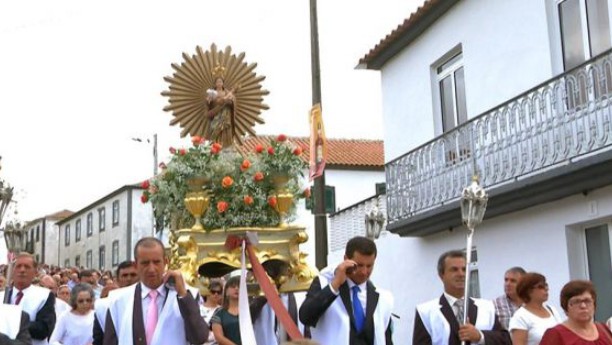
Popular piety
D. Armando Esteves Domingues also asks that “all Pastoral Councils may have representatives of popular piety, so that it may be an integral part of the pastoral planning of the Parish, Ouvidoria, or Diocese.”
“I propose that a dialogue be held with those ‘responsible’ for relevant initiatives in the field of Popular Piety and that the possibility and opportunity of establishing a Diocesan Pastoral Service for Popular Piety be studied, so that the popular faith of the people and the diocesan pastoral care can be increasingly harmonized,” he stressed.
The primary objective of Bishop Armando’s first Pastoral Letter was to “call everyone to hope” and to “highlight the most salient aspects of the Journey, thus helping to clarify its meaning.”
“It is my duty to ensure that the Church in the Azores walks together, with its differences, in a project that is intended to be synodal: everyone, everyone, we are all invited to contribute to and benefit from the guidelines and broad outlines of the Pastoral Project,” he stressed.
According to the bishop of Angra, despair is “one of the great challenges facing the Church” and “the future is a dark and dangerous place.”
“This hopelessness, which is experienced almost sweetly, without anguish or commitment, can also affect the Church in its members. And this is a serious danger, because hopelessness easily disguises itself as good intentions and beautiful ideas, but it destroys all the dynamism of the Spirit in the heart of the Church itself. It can lead to the habit of always seeing only what is wrong, feeding pessimism and blame, and shying away from contributing to the building up of the body of Christ within the Mother Church. It is in this sense that I invite all Christians to constantly rekindle hope, in the launch of this Pastoral Project,” he pointed out.
The Diocesan Pastoral Project, presented by Bishop Armando Esteves Domingues, runs until 2034, the date on which the Diocese celebrates its 500th anniversary, and comprises three three-year periods: the first dedicated to Proclamation, the second to Action, and the third to Celebration.
In the third triennium, the need for the Catholic Institute of Culture to “promote and accompany dialogue between the Church and the world” is highlighted.
“We are aware of the need for a new theological and cultural language that enables us to establish a constructive dialogue with the world, a revival of Pentecost, in which the diversity of languages does not prevent encounter,” said the prelate.
D. António Esteves Domingues also left a request to the priests to allow themselves to be “seduced by Jesus Christ, who came not to be served, but to serve.”
“On our synodal journey, priests are asked to live their ministry in an attitude of closeness, welcome, and listening to all,” he emphasized.
The bishop of Angra pointed out that the Diocesan Pastoral Project “is essentially subsidiary and suggestive” and “does not seek to impose itself on the intermediate structures of the Diocesan Church, ombudsmen, parishes, services, or movements,” ensuring that “each of these structures will always be responsible for adapting their pastoral objectives based on the inspiration of the Pastoral Project.”

CHALLENGE OF THE DIOCESE OF ANGRA
Serious decline in sacramental practice
The Bishop of Angra admitted that there are fewer faithful in the Diocese practicing the sacraments and participating in the life of the Church.
“Our Diocese, like many others, has been suffering a serious decline in sacramental practice and a painful impoverishment of lay participation in the life of the Church itself. This phenomenon is one of the great challenges facing the whole Church, including ours,” he said in his first Pastoral Letter, entitled “Baptized in Hope.”
Bishop Armando Esteves Domingues expressed his desire that the Church in the Azores “understand itself in a perspective of communion.”
“The Church that lives in the Azores, communing with the Universal Church, has, however, its own unique characteristics. We emphasize, first of all, its archipelagic condition, stretching over 600 kilometers and with nine islands, each with its own very typical identity,” he pointed out.
The bishop of Angra highlighted “the social dimension of faith” of the Azorean people, “deeply rooted in traditions,” recalling that they are “a people of migrants” and emphasizing “the endemic cultural, social, and economic poverty,” which “is perhaps the most serious of all the problems in the region.”
“These and other characteristics of Azorean identity must necessarily be taken into account when we embark on the journey proposed by the Pastoral Project, because it was in the Azores and for the Azores that it was conceived,” he stressed.
In Diário Insular-José Lourenço, director.
Translated into English as a community outreach program by the Portuguese Beyond Borders Institute (PBBI) and the Modern and Classical Languages and Literatures Department (MCLL), in collaboration with Bruma Publication and ADMA (Azores-Diaspora Media Alliance) at California State University, Fresno. PBBI thanks Luso Financial for sponsoring NOVIDADES.

 Novidades - The Islands and the Diaspora