

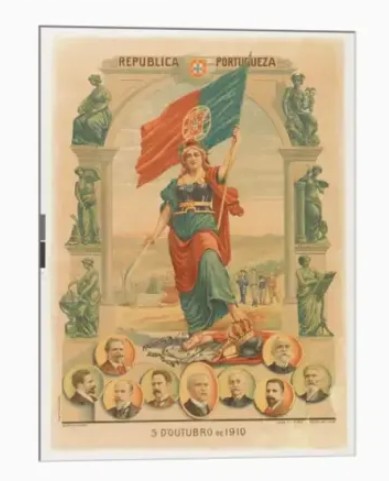
Every year, on October 5th, Portugal celebrates the Implantação da República, or Republic Day, marking the overthrow of the monarchy and the establishment of the First Portuguese Republic in 1910. This date represents far more than a change in political regime. It symbolizes a profound rupture with the traditional structures that had governed the nation for centuries—political, religious, and social—and an attempt to redefine Portuguese identity through civic, secular, and republican principles. The revolution that unfolded in Lisbon in early October 1910 was not a sudden explosion of discontent but rather the culmination of decades of crisis, frustration, and aspiration. To understand the significance of that day, one must trace the forces that weakened the monarchy, the ideals that animated the revolutionaries, and the reforms—as well as the disillusionments—that followed in its wake.
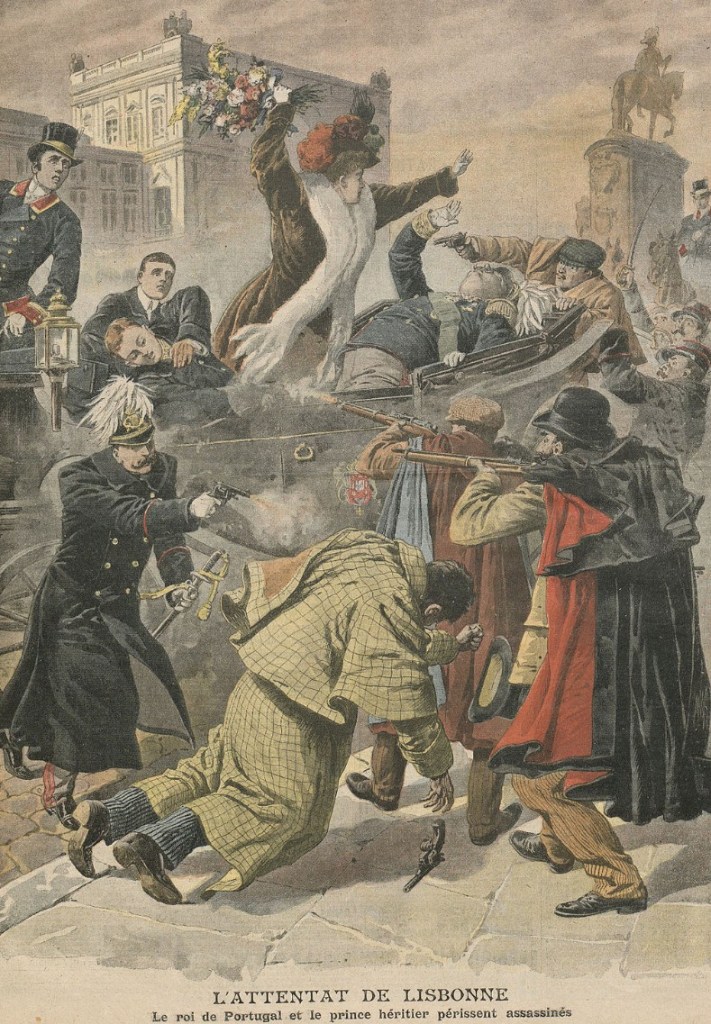
By the dawn of the 20th century, the Portuguese monarchy was in a state of deep decline. The system that had once projected imperial glory was beset by internal decay and a loss of confidence. The humiliation of the 1890 British Ultimatum, in which Portugal was forced to abandon its colonial ambitions between Angola and Mozambique, ignited widespread resentment and was seen as evidence of royal weakness and national subservience (Portugal.com). Economic difficulties compounded the malaise. Chronic deficits, dependence on foreign loans, and administrative inefficiency eroded faith in the Crown’s capacity to modernize the country (Britannica). The alternating rule of the Progressive and Regenerator parties, whose power-sharing arrangement had become little more than ritualized stagnation, bred cynicism among both the elite and the emerging middle class. The 1908 regicide—when King Carlos I and the Crown Prince Luís Filipe were assassinated in Lisbon’s Praça do Comércio—shocked the nation and extinguished whatever moral authority the monarchy still possessed (Wikipedia). The young King Manuel II inherited a fractured and disillusioned country. In this atmosphere, the Portuguese Republican Party, founded in 1876, gained momentum by advocating secularism, civic education, and modernity. By 1910, large segments of urban professionals, soldiers, and intellectuals viewed the monarchy as an obstacle rather than a guarantor of progress.
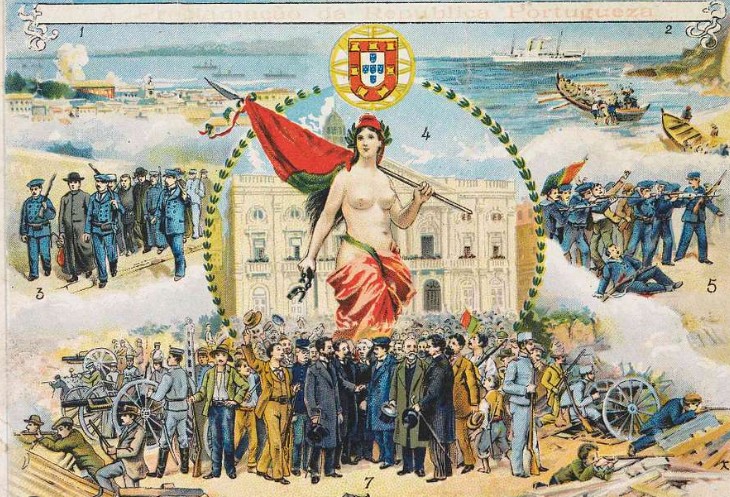
The revolution that overthrew the monarchy was swift but decisive. Though discontent had been brewing for years, the Republican Party carefully prepared for its moment. In the August 1910 legislative elections, Republicans achieved modest representation, but the monarchy’s authority had already begun to crumble (Wikipedia). On the night of October 3rd, military units and naval forces sympathetic to the Republican cause started their uprising in Lisbon. Over the next two days, battles flared in several parts of the city, but royal forces hesitated. Some regiments refused to fire on the rebels, a sign that the dynasty’s grip had loosened even within its own army. By the morning of October 5th, 1910, the tide had turned irreversibly. From the balcony of Lisbon’s City Hall, José Relvas proclaimed the Republic before a gathering crowd. The proclamation, made around nine in the morning, marked the symbolic and political end of the monarchy (Portugal.com). King Manuel II, realizing resistance was futile, fled to exile in England. The revolution’s casualties were relatively few—roughly three dozen dead—but its consequences were immense. In a single act, Portugal joined the ranks of Europe’s republics.
Within hours of the proclamation, a Provisional Government was established under the leadership of Teófilo Braga, a scholar, writer, and long-time advocate of republicanism. His cabinet began to draft the legal and institutional framework for the new regime. The first elections to a Constituent Assembly were held in May 1911, and by August, the new Constitution was promulgated. It established a parliamentary system, enshrined civil liberties, and confirmed Manuel de Arriaga as the first elected President of the Republic (Britannica). The new government sought not only to replace monarchical structures but to reshape national identity itself. On October 15, 1910, a committee was convened to redesign Portugal’s symbols. The blue and white royal flag was replaced by a green and red banner—green for hope, red for the combative spirit of republicanism (Wikipedia). The anthem “A Portuguesa”, composed in 1890 as a protest song against the British Ultimatum, was officially adopted to replace the “Hino da Carta”. These emblems were intended to proclaim the birth of a modern, assertive, and forward-looking nation.
The break with the past extended far beyond symbols. The new Republic moved quickly to secularize the state and diminish the influence of the Catholic Church, which Republicans associated with monarchy and conservatism. On October 8, 1910, religious orders were dissolved, convents were closed, and Jesuits expelled. In April 1911, the Law of Separation between Church and State was enacted, eliminating religious instruction in public schools and ending state subsidies to the clergy (Britannica). The law also secularized marriage and authorized divorce for the first time in Portuguese law. These measures aimed to liberate the public sphere from clerical control and establish the supremacy of reason, science, and civic education. At the same time, the Republic introduced reforms aimed at social modernization, including improvements to labor laws, decentralization of administration, and expansion of access to education (Portugal.com). These were the practical expressions of a dream that Portugal could finally shed its feudal residues and step into the modern world.
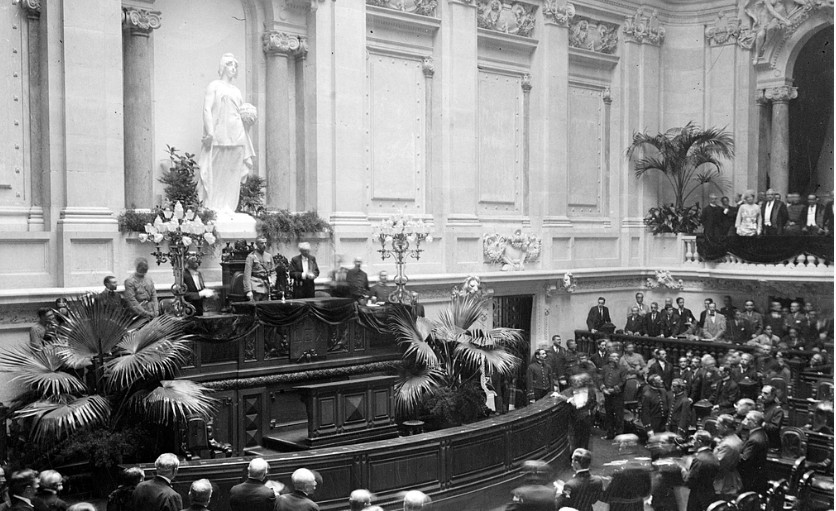
Yet, the idealism of 1910 soon collided with the harsh realities of governance. The First Republic was born into turbulence and remained unstable throughout its sixteen-year existence. Factionalism within the Republican movement—between radicals, moderates, and various splinter groups—undermined coherent policy-making. Governments rose and fell with dizzying speed: between 1910 and 1926, Portugal had eight presidents and dozens of cabinets (Wikipedia). Social unrest intensified as monarchists in the countryside resisted the secular reforms and workers in the cities organized strikes to demand better working conditions. Economic problems persisted, aggravated by Portugal’s entry into World War I in 1916, which drained resources and deepened national exhaustion. Monarchist attempts to restore the crown, such as the 1911 rebellion led by Paiva Couceiro, kept the Republic in a state of permanent alert (Britannica). Despite its early enthusiasm, the regime struggled to secure legitimacy and stability. In May 1926, a military coup—the Revolução de 28 de Maio—ended the First Republic, paving the way for decades of authoritarian rule.
Even after its fall, the ideals of 1910 continued to shape Portugal’s political consciousness. The 5th of October remained a public holiday, commemorated with civic ceremonies, school lessons, and public speeches reminding citizens of the Republic’s values: liberty, secularism, and democracy (Portugal.com). The date also became a lens through which later generations interpreted their own struggles—against the Estado Novo dictatorship of Salazar (1933–1974) and in the democratic transition that followed the Carnation Revolution of 1974. The relationship between the Church and State, one of the most contentious legacies of the 1910s, continued to evolve. While the Estado Novo reinstated certain privileges for the Catholic Church, it never entirely reversed the separation of church and state. The 1976 Constitution reaffirmed religious freedom and the neutrality of the state, preserving the secular foundations first laid by the Republic (Britannica).

Over a century later, historians continue to debate the meaning of the 1910 Revolution. Some view it as a radical break—a decisive step toward modernization and a deeper sense of democratic consciousness. Others argue that it merely replaced one unstable elite with another, leaving the deeper structural problems of Portuguese society unresolved. What is clear is that the Republic sought not only to transform political institutions but also to reimagine the nation’s cultural fabric—to create what some scholars have called a “cultural republic,” where citizenship, education, and civic virtue would supplant divine right and inherited privilege. The revolution’s success was partial, its trajectory tumultuous, yet its aspirations remain a vital part of Portuguese historical identity.
The proclamation of the Republic on that October morning in 1910 was an act of courage and imagination. It sought to align Portugal with the modern world and to assert that political legitimacy arises from the will of the people, not the grace of kings. The republic that followed was imperfect, often chaotic. Still, its legacy endures—in the green and red of the national flag, in the strains of A Portuguesa, and in the continued belief that progress requires both reason and courage. Each year, the 5th of October calls Portugal back to that founding vision: a vision of freedom rooted in memory, of renewal grounded in history, and of dialogue as the truest measure of national dignity.
Works Cited
Britannica, The Editors of Encyclopaedia. “Portugal: The First Republic (1910–26).” Encyclopaedia Britannica, 2024, https://www.britannica.com/place/Portugal/The-First-Republic-1910-26.
“5 October 1910 Revolution.” Wikipedia: The Free Encyclopedia, Wikimedia Foundation, updated 2025, https://en.wikipedia.org/wiki/5_October_1910_revolution.
“The Portuguese Revolution of 1910.” Portugal.com: History and Culture Series, 2024,
https://www.portugal.com/history-and-culture/the-portuguese-revolution-of-1910.
All Images are in the public domain

 Novidades - The Islands and the Diaspora