


One of the first initiatives undertaken by Denmark since it took over the presidency of the Council of the European Union on July 1, which will run until December 31, was to organize a visit by the Heads of Mission from Member States accredited in Lisbon to the Azores (S. Miguel and Terceira). What was the significance of this visit, and why was this choice made? Are there concerns about the outermost regions?
The Danish Presidency of the Council of the European Union aims to address four key challenges: the EU’s relative global weight is declining, our security is under pressure with war on European soil, our competitiveness is being challenged, and there is pressure on transatlantic relations. The strength of the EU lies, among other things, in European unity, a solid economic base, stable democracies, and socially balanced societies.
Therefore, considering these challenges in light of Portugal’s geopolitical reality, it seemed intuitive to visit the region, allowing the Heads of Mission of the EU Member States accredited in Lisbon to gain insight into the reality of this outermost region.
The motto chosen for the Danish Presidency is “A strong Europe in a changing world,” focusing its action on security, competitiveness, and ecology. One of the main challenges currently facing Europe is its defense. Investment in this sector is likely to be the priority. Could this option be detrimental to other sectors, particularly the social sector, especially in smaller countries such as Portugal?
The Danish Presidency emphasizes the importance of ensuring that Europe is capable of defending itself; continued support for Ukraine in all aspects; working towards new and transformative solutions to prevent irregular migration and reduce arrivals in the EU; building comprehensive and equitable partnerships with third countries; and strengthening the EU’s geopolitical role.
However, it is essential to demonstrate that the EU can achieve higher ambitions in an economically sustainable and socially balanced manner, ensuring cohesion within our society. During this visit, we can see the concern of the Azoreans to ensure that this equation does not devalue the outermost regions and their specific characteristics.
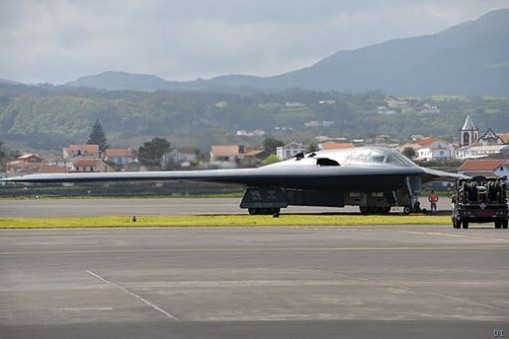
Still on the subject of security, what role can the Azores play, given their geostrategic position and the presence of the Lajes Air Base, where the Americans are stationed?
Portugal and the Azores are part of NATO and, as such, contribute to transatlantic and European security. The US Lajes Air Base is also one of the vectors of this security, which, as history shows, has played an important role within the Alliance throughout its history. Thus, the geostrategic position of Lajes is relevant within the Alliance, contributing daily to its goal of safeguarding the freedom and security of all its members.
Russia’s war against Ukraine has demonstrated the urgent need for the EU to accelerate the development of the European defense industry and production. The EU must also address critical capability gaps in Europe more effectively. The Danish Presidency will work to ensure that the EU can protect European interests by strengthening its resilience, robustness, and deterrence against complex and hybrid threats. Lajes, not only as a US base, can play a significant role in this endeavor.
One of the other central themes of the Danish Presidency is ecology – a greener Europe. In São Miguel, they visited the Ribeira Grande geothermal station, an example of the use of geothermal energy that is also replicated in a station on Terceira Island. Despite these examples of green energy production, which are supplemented by some wind farms, energy production, especially on the smaller islands, remains heavily dependent on fossil fuel-fired thermal power plants. Considering the archipelago is composed of nine islands, which vary in size, population, and development, wouldn’t it be advisable for the larger islands, which are better suited for clean energy production, to “export” and supply the smaller ones? Are there any examples in Europe that could serve as a model for the Azores?
In Denmark, there are examples of energy export projects, as well as plans for cooperation with neighboring countries. In February 2025, the Danish government concluded a broad political agreement to establish a hydrogen pipeline from Esbjerg (a city in Denmark) to Germany, known as “Syvtallet.” The deal is a crucial step towards harnessing Denmark’s offshore wind potential, supporting green hydrogen production, and ensuring energy security in Europe. In addition to the hydrogen pipeline, the government also reached a broad political agreement in May 2025 on the new tender for 3 GW of offshore wind capacity. These three new wind farms will more than double Denmark’s offshore wind production.
However, the technical specifics of these projects must be taken into account. While the examples are certainly inspiring and demonstrate the level of ambition that can be aspired to, they are not necessarily applicable to the Azores in their current form due to technological, environmental, and climatic constraints.

In Terceira, they had a briefing on Cohesion Policies, specifically on the framework of European Union support programs and the competitiveness of the regional economy, which is heavily influenced by two key sectors: agriculture (farming) and, more recently, tourism. In our view, given the distance, the difficulties center on access to markets, both for exports and for imports of production factors. Transport is vital. While human mobility is satisfactorily resolved, both from the Azores to the outside world and internally between the islands, through the practice of social pricing for travel, the maritime transport of goods, whether internal or connecting with the Portuguese mainland, is at the mercy of the market, with regional authorities limited to imposing a few rules. For freight prices to be roughly the same for all islands, the final cost of the container is exorbitant, the service is irregular, and this undermines the competitiveness of the economy, both in exports and imports. A “POSEI Transport” program has been requested from the EU to promote territorial cohesion. Could you share your perspective on this issue?
POSEI currently focuses on agriculture, and in the Azores, there is a desire to extend the program to transportation. During the trip, we observed that all policymakers are aligned on this expansion and view it as an imperative priority for the region’s future development. Good transport links between all parts of the EU are crucial for mobility and cohesion within the Union, thereby benefiting a competitive single market in the EU.
However, our role as the Presidency is clearly to be a mediator for all Member States’ priorities. It is therefore necessary to examine the Cohesion Policy and subsequently the expansion of the POSEI program as a prerogative of the European Commission, which is currently outlining its budgetary priorities for the future.
Denmark’s role in the EU’s overall policy in this area will certainly take into account the specific needs of the EU’s outermost regions and, as we can experience firsthand, the central role of transport in the region’s economy and well-being.

They also visited the Civil Protection Service in Terceira, which shows sensitivity to the importance of this department in a territory prone to earthquakes, volcanoes, and storms, in terms of safeguarding the lives of the population and their property. More resources are always needed and welcome, and we believe that investment options depend more on national than European decisions. However, we feel that there is still a need to instill a culture of risk awareness in the population, which should begin in schools and continue from there. There is a Portuguese expression that characterizes us in this regard, with people saying that “we only remember Santa Bárbara when the thunder strikes.” And, incidentally, the Santa Bárbara volcano on Terceira has been showing signs for more than two years. Are there examples from other European countries that have made progress in this area of risk culture that could be useful to us?
Preparation is the central element of any response to safeguarding the territory and its populations. Events such as the widespread power failure in southern Europe underscore the importance of citizens being well-prepared with, among other things, water, alternative energy sources, and alternative payment methods. In Denmark, we have a solid emergency response system in place as a society. However, to maintain a safe and secure society, we must prioritize the overall capacity of society to respond to crises and incidents. And to protect functions that are vital to society.
This will require sustained efforts through a holistic approach, involving government authorities, private companies, civil society, and citizens. During our visit to the Azores Regional Civil Protection and Fire Service, we can see the investment being made in the region, with the support of European funds, to develop these efforts, which are even more crucial in an isolated area such as the Azores, which will have to come from a capacity to respond to possible seismic events, among others.
If we all prepare well now and follow established recommendations, we can better care for our vulnerable groups and become stronger as a society and community.
In summary, what did we take away from this visit to the Azores?
First of all, for myself and some of my colleagues, this was my first visit to the Azores, and I must say that it is a very special and beautiful place! Its nature, as well as its people! It was also crucial to gain an understanding of how the Azoreans perceive themselves geopolitically. I developed a strong attachment to Portugal, the European Union, and transatlantic relations. It was also very clear that the geographical position of the Azores plays and will continue to play a crucial role in the security of Europe in the future.
During this visit, it was also crucial to understand that cohesion policy continues to provide very visible support for reducing economic, social, and territorial disparities within the EU. Looking ahead, this policy involves significant national interests among Member States, and complex negotiations are expected, which will also be linked to discussions on the Commission’s proposal for the MFF. We hope that these negotiations will allow for continued support for the Azores.
In Diário Insular-José Lourenço-Director
Translated into English as a community outreach program by the Portuguese Beyond Borders Institute (PBBI) and the Modern and Classical Languages and Literatures Department (MCLL), in collaboration with Bruma Publication and ADMA (Azores-Diaspora Media Alliance) at California State University, Fresno. PBBI thanks Luso Financial for sponsoring NOVIDADES.

 Novidades - The Islands and the Diaspora