


Businesswoman Teresa Neves, who works in commerce, hospitality, housing, and real estate in Ponta Delgada, is concerned about the closure of traditional stores and the decline of the largest city in the Azores in terms of commerce, which is also affecting the resident population. “What we are seeing is that our city is going through a period of clear imbalance, focused almost exclusively on tourism and its attractions.” The interviewee advocates for community policing and a new approach to the historic center, ensuring it retains its identity. She argues that “the ideal is to maintain a balanced and sustainable coexistence between all sectors so that we can be proud of having a rich, lively, authentic, appealing, and harmonious historic center, capable of attracting new stores and new investors.”
Correio dos Açores: This week, three more establishments in Ponta Delgada’s historic center closed or announced their closure. Frutaria da Cidade, which had been in business for 25 years, Armazém Toronto, with more than half a century of existence, and Casa Batista, which is closing one of its two stores in the city. Is this a worrying scenario?
Teresa Neves (businesswoman): Without a doubt, it is a scenario that worries all those who value their cities’ historic centers and are aware of their importance as the foundation of a region’s identity and collective memory. For us, who have always invested in and believed in the value and potential of our urban center, it is very worrying. When we see spaces with decades of history closing their doors, it saddens us, because it is a piece of the city’s identity that disappears.
Obviously, there must also be an awareness and understanding that, to remain in business amid all the competition that exists today, stores will have to modernize to adapt to changing times. However, it is also understandable that these entrepreneurs are discouraged from investing and innovating because they feel there is a lack of incentives and support measures in an unattractive and unappealing urban setting. Nevertheless, I believe that these situations should serve as a catalyst for reflection and a turning point. Our historic center needs a clear, integrated, balanced, and realistic strategy that unites and values commerce, tourism, and housing equally. Currently, what we are witnessing is a clear imbalance in our city, with a focus almost exclusively on tourism and its attractions.
Perhaps what is lacking is greater coordination, understanding, and consultation between the relevant authorities, those who invest and live in the historic center daily, and those who feel its needs, difficulties, and concerns. In a small and sensitive city like ours, the measures taken must be carefully considered in a balanced manner, with a strategic and global vision. Effective alternatives must be created in advance to prevent destabilizing key economic sectors, particularly local commerce, as has been happening.
The social responsibility of politicians goes far beyond their terms of office, whether in the executive or local government. The city of Ponta Delgada has long-standing problems that have never been resolved, such as parking, and new ones, including begging, nighttime noise, and open drug use.
Ponta Delgada indeed has long-standing problems such as a lack of parking, a lack of coherent planning, a lack of organization in loading and unloading operations, resulting in traffic congestion and disruption, a lack of entertainment capable of attracting our residents and locals—and not just that designed for tourism and for the period when it is most noticeable—a lack of lighting… There are also new problems that have been emerging and require immediate and urgent intervention, as they affect not only the image of our city but also the well-being of those who live and invest in it, such as the sad increase in begging, the problem of increasing synthetic drug use, and the nighttime noise caused by bars open until 2 a.m. in narrow streets within the historic center where hotels and residential units are located. Bars with live music that fail to respect noise limits or soundproofing regulations often cause disturbances and excessive noise on public roads during the early hours of the morning. However, they are licensed, and therefore, the police cannot take action and are unlikely to respond when called.
For our part, having already invested in the city’s three main economic sectors: Commerce, Tourism, and Housing, we have been affected by all these problems, namely the disorder caused by loading and unloading on Rua Hintze Ribeiro. This street is not even authorized for this purpose, and entry is prohibited for all vehicles except those that need to access the hotels located on this street, as indicated by the no-entry sign at the beginning of the street. However, the reality is quite different, and every day we see large goods vehicles entering the street at all hours of the day, blocking the street and preventing authorized cars from entering and leaving the hotels, causing major logistical chaos and traffic congestion, not only on Rua Hintze Ribeiro, but also on Rua Machado dos Santos.
Another problem that has been affecting us greatly is the nighttime noise on this street, caused by the bars located there, which have the characteristics I have already mentioned. This has led to numerous complaints from our guests, who are unable to get a rest. And those guests who have to leave very early for the airport are unable to sleep at all, leaving negative comments and reviews on digital booking platforms, which obviously harm us in terms of future bookings and compromise the hotel’s image.
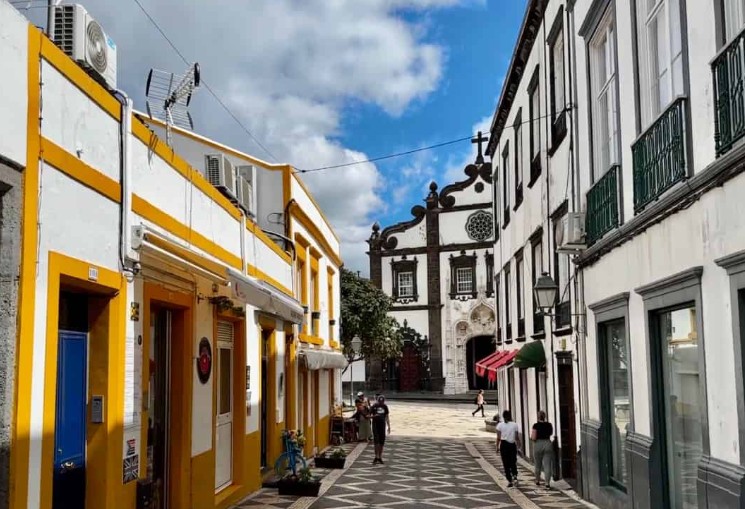
Are you concerned about the scenario of Chinese, Indian, and South Korean restaurants opening up and proliferating in the city, changing its character? Will the city center be redeveloped with restaurants and similar establishments in the near future?
I am not particularly concerned about gastronomic diversity, which can be synonymous with a city that is open to the world and culturally dynamic, as long as there is balance. What really concerns me is whether this growth will become disorderly and contribute to the erosion of local identity, imbalance, and overlap with other sectors. Restaurants are undoubtedly very important for the development of tourism in our city and region, but they cannot be the only economic driver of the historic center. It is essential to preserve, protect, and take urgent measures to encourage and revitalize our traditional commerce, housing, and culture, to prevent the city from becoming a tourist destination without soul or identity. The ideal situation is to maintain a balanced and sustainable coexistence among all sectors, so that we can be proud of having a rich, lively, authentic, appealing, and harmonious historic center capable of attracting new stores and investors.
Will the opening of the “Retail Park” be the final blow? Do you consider its licensing to be a mistake, or was it an unavoidable situation?
When this news became public, I gave my critical and unfavorable opinion in your newspaper regarding the opening of the “Retail Park,” and I maintain my opinion. As is easy to understand, in a small and sensitive region such as ours, the opening of these large commercial areas, which attract consumers due to their appealing characteristics and easy parking on the outskirts of the city, will inevitably further desertify our historic center. We know, of course, that this licensing was perhaps inevitable, given the economic pressure and commercial interests, but it should have been accompanied by a clear strategy for revitalizing the urban center, supporting and creating incentives for local commerce so that there would be balanced development of the city, taking into account the protection and preservation of its historic center. Unfortunately, this has not happened, nor is it happening. However, we hope and want to believe that effective measures can still be taken to minimize the impact that the opening of this large commercial area will have on those who invest in the historic center.
Your company, which is linked to commerce, tourism, housing, and real estate, has invested in the historic center of the city of Ponta Delgada. Is this a deliberate strategy, which has become risky given the difficult situation in which this landmark center finds itself?
Yes, it is a deliberate strategy, and we acknowledge that it involves risks, as all investments do. It is a reality that our historic center is facing difficulties and is experiencing a period of stagnation. However, it remains a very important symbolic, social, and cultural hub. It always will be, as historic centers are extremely important for preserving the history, identity, and culture of a region. Maintaining our commitment is a way of contributing to and supporting the urban regeneration that we so badly need. It is based on our conviction and hope that our historic center will recover and improve, and on our confidence in the future municipal executive to achieve and focus on this revitalization.
I would like to take this opportunity to clarify that the current closure of two of our commercial spaces is unrelated to the reasons that have led other stores to close. We have been seeing, especially on social media, posts criticizing the current state of our historic center, accompanied by photos of various closed commercial spaces. These posts also feature pictures of our two spaces, linked to other closed commercial spaces, as if the reason were the same, which is not true. One of our two commercial spaces is currently closed due to our company’s business and commercial strategy, and the other had to be closed because of the inability to keep the store open due to major structural work on the building where it is located.
Public opinion has the impression that the Municipal Police is “disguised” as an outpost of the Municipal Works Licensing Department and does not contribute to the city’s security. Do you agree?
I agree with that perception. We indeed feel the lack of a police presence that truly guarantees the city’s safety daily—a police force that can act in a preventive and deterrent manner, rather than just performing administrative oversight functions. It is essential to recognize that the Municipal Police plays a crucial role in urban management and the enforcement of regulations. However, it is equally important that we feel an active police presence that is close to those who live, invest, work, and visit here. A police force capable of intervening quickly in situations of insecurity, theft, and vandalism that affect the daily life and image of our city.
The recent installation of video surveillance cameras in the city is to be commended, a measure that we consider very positive and necessary to reinforce security in the historic center. However, this initiative must also be accompanied by a reinforced police presence on the ground, as technology alone cannot replace the peace of mind and security that the visible presence of law enforcement officers conveys; our city currently lacks this presence.
What message would you like to leave to all candidates for the Ponta Delgada City Council during this municipal election period?
Governing Ponta Delgada requires dialogue and cooperation with all stakeholders, including business owners, residents, institutions, and associations. The city faces serious challenges, including the need to revitalize its historic center and local commerce, as well as the balanced and sustainable management of quality tourism.
To the candidates for the Ponta Delgada City Council, we extend a message of responsibility and commitment to those who invest, live, and work in the city. It is essential to restore confidence, vitality, and security to our historic center—the safety of people and the economic security of those who keep their businesses open every day. Traditional commerce is an essential part of the identity and soul of Ponta Delgada and needs urgent measures for protection, encouragement, and appreciation.
We hope and trust that the next municipal executive will look at the center of our city not only as a physical space that it will have to govern, but as the “living heart” of the city of Ponta Delgada, which cannot stop beating and, for that reason, needs to be cared for, cherished, and protected. The future of our historic center will depend on our ability to reconcile development with preservation, growth with balance, and humanity with modernity, all while preserving essence and memory.
In Correios dos Açores-Natalino Viveiros, director.
Translated into English as a community outreach program by the Portuguese Beyond Borders Institute (PBBI) and the Modern and Classical Languages and Literatures Department (MCLL), in collaboration with Bruma Publication and ADMA (Azores-Diaspora Media Alliance) at California State University, Fresno. PBBI thanks Luso Financial for sponsoring NOVIDADES.

 Novidades - The Islands and the Diaspora