

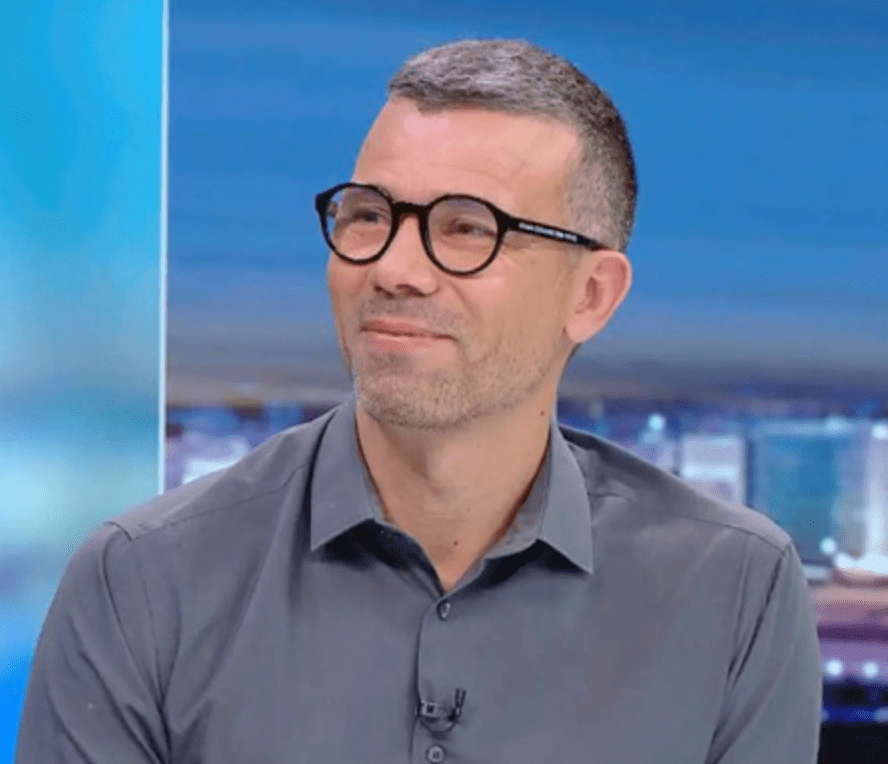
On the eve of a meeting that could be decisive for the future of Azores Airlines, between the management of the SATA Group, the Newtour/MS Aviation consortium—which has already proposed to acquire 76% of the airline—and the jury for the privatization of the company, Diário dos Açores publishes an exclusive interview with Pedro Castro, a renowned commercial aviation expert. In his analysis of the present, but above all focused on what the future of the airline may hold, he immediately highlights the need for a change in public policy to ensure “that the Azores remain connected, internally and externally, through a true diversity of modes of transport, operators, and solutions.” He recently warned that successive postponements of the privatization process only devalue Azores Airlines.
In what concrete indicators is this devaluation already visible, and what immediate measures can stop it?
In fact, the successive postponements of the privatization process have a direct and measurable impact on the value of Azores Airlines. The first visible sign is the recurring delays in the payment of salaries and vacation allowances, which reveal a structural cash flow problem. Salaries are always the last resort, even for the sake of social peace, so when delays occur in this area, it is because the financial situation has reached a critical point. It is legitimate to question whether other commitments are also compromised, namely, payments to suppliers. If this is happening, the risk is that creditors will begin to doubt the company’s solvency and start demanding immediate payments. It was precisely this cycle that precipitated the collapse of several companies in the past, including Swissair, which I experienced firsthand. Other signs are obviously the disastrous financial results for 2024, which I have warned about several times here in the Diário dos Açores, flight cancellations, and the positions taken by some unions.
The only immediate measure capable of halting this process of devaluation would be the urgent entry of an investor willing to heavily recapitalize the company. Fortunately for all of us taxpayers, and in accordance with European competition rules, the state cannot play this role. However, finding a private investor willing to enter into a high-risk, capital-intensive business with historically low margins (when they are positive) is an almost Herculean task.
Good luck finding such an investor, and even more luck to those who decide to invest, because they are unlikely to see a return on that investment.

The Regional Government has admitted that it will close Azores Airlines as early as 2026 unless a binding proposal is made. Do you think this will be the inevitable path?
If this scenario comes to pass, it should not be seen as a catastrophe, but rather as a natural possibility in the life of companies, especially those that have been poorly managed and overly dependent on public funds over the years. The closure of a company is not, in itself, a tragedy, and there are several examples where what comes next is usually much better.
If this happens, public policy must be different, ensuring the Azores remain connected, both internally and externally, through a diverse range of transport modes, operators, and solutions. Public money should be channeled to facilitate the creation of alternatives, not to perpetuate dependencies. Unfortunately, no regional government has truly understood this. Instead of investing in transport integration and infrastructure resilience, such as the port of Lajes, in Flores, which remains to be rebuilt, or expanding Pico airport, which is under its jurisdiction and does not depend on any decision from Lisbon, an increasingly state-controlled model has been chosen, which discourages competition and efficiency.
We have reached a point where public tenders for inter-island flights are dominated by the government’s own company, and even liberalized connections to the mainland remain, in practice, under the monopoly of public companies. A private company can’t compete with companies like this; regardless of the number of passengers, private companies do not enter opaque markets. Therefore, if Azores Airlines comes to an end, what should concern us is not the disappearance of the company, but the absence – at least temporarily – of a true alternative model of transport and connectivity for the archipelago.
The Executive has quantified the potential cost of insolvency at €300 million. This impact will have a huge negative effect on the fragile public finances of the Azores. Apart from the financial and political costs of a failed privatization process, do you think closure is a realistic way to contain SATA’s galloping losses?
It is difficult to understand how these figures are calculated. It should be noted that both the workers and the SATA Group fulfill their monthly social security contribution obligations, which is precisely the mechanism that serves to respond to situations like this. There would be an immediate impact in the short term, as is always the case when a sector faces profound disruption. But it would not be an uncontrollable shock at all: governments are accustomed to handling larger economic and social crises. Just recall the pandemic, which impacted all sectors simultaneously, not just one.
The real problem is another: over decades, all governments and politicians of all stripes have built an emotional narrative around SATA, as if it were more than a company, almost a symbol of identity. And that makes any rational decision much more difficult. Ultimately, whoever must turn off the lights will inevitably pay the political price for that decision. But history tends to put things in their proper place: time usually erases emotions and proves rationality right. And rationality, in this case, may well dictate that closing down an unsustainable structure is the only possible way to free the Azores from a financial burden that has become unbearable and is damaging the archipelago.

In 2022, Brussels approved €453.25 million for restructuring, requiring measures such as reorganization and the sale of 51% of the capital. What regulatory risks do you see if the process does not comply with the “spirit” of these conditions?
Attempting to privatize and actually privatizing are two different things, so failing to privatize in time or failing to find a buyer does not automatically lead to a sanction from the European Union.
Given that the company needs capital and that this capital cannot come from the state, without privatization, Azores Airlines will have to close. If the state tries to inject money in the meantime to avoid this outcome, it will face very serious regulatory problems.
The Newtour/MS Aviation consortium has described the pilots’ union’s position as “unacceptable” and claims to have submitted a proposal; SPAC says it has not received a “formal” proposal and rejects 10% salary cuts. What is really at stake in this disagreement, and how does it affect the closure of the deal?
It is important to put aside the “he said, she said” and understand the essentials: it is perfectly normal at this stage for both the investor and the unions to express their positions, expectations, and demands. This is precisely the time when these negotiations should take place.
The debate on salary cuts cannot be viewed in nominal terms, looking only at fixed salaries. In airlines, remuneration and crew-related costs are much more complex. A concrete example helps to illustrate this: on the Ponta Delgada–Frankfurt–Ponta Delgada route, currently operated at night, a TAP crew would fly this same round trip on the same day. At Azores Airlines, however, the same crew stays in Frankfurt for three or four nights if the destination has two weekly flights, which implies allowances, hotel stays, and accounting for this time as actual work, even though they are not flying. This type of operational organization in a company of this size has a huge impact on the profitability of the route, crew productivity, and aircraft utilization. And it is natural for any investor to carefully analyze these factors before committing capital. If, in view of this diagnosis, the union’s response is “we will not give in,” it is also natural for the investor to conclude “then we will not invest.”
The consortium maintains that simply “change shareholders and leave everything the same” is insufficient. It points to slippages: personnel costs increased by 61% (from €41 million to €67 million), ACMI rose from €4.4 million to €28 million, operational irregularities increased from €1.6 million to €10.4 million, and accumulated losses reached €486 million. What should be the first three operational corrections after privatization?
Any party in the regional government would like to “pass the buck” and leave everything as it is, so as not to lose votes or reputation.
This objective is not compatible with a private investor who does the math and will try to get a return on their investment. Herein lies the most significant and profound contradiction between the two sides. Operational irregularities and the use of external aircraft rentals (the so-called ACMI) are something that the consortium will (or should) know how to deal with on its own. For personnel costs—which are also the largest and most important—it needs to gauge the unions and understand their openness to negotiating certain aspects in certain professional categories. Without this, nothing can be done, which is why this prior discussion and compromise are so fundamental.
Reviewing and adapting the route network to the fleet is another line defended by the consortium. What technical and economic criteria should guide this reconfiguration?
To answer this question, it is said that the Consortium wanted to sit down with the unions and present the project, along with the requirements for its implementation. Returning to the example of the night route to Frankfurt: if the agreement means that the crew has to sleep there for three or four nights, the program has to be completely reconfigured because of this “detail,” and what is possible to do—in terms of the overall productive use of the company’s assets, whether aircraft or personnel—may no longer make any economic sense.

If private negotiation prevails or if the process fails again, what contingency plan do you advocate to ensure continuity of service—especially on strategic routes—without increasing the risk of closure in 2026?
I don’t quite understand what “strategic routes” means – the Azores are connected to the world, if only “via” Lisbon. The Azoreans do this every day, largely due to Azores Airlines having very few destinations and poor coordination of its schedules with SATA’s flights to the other islands in many cases. In fact, the current president of the regional government attended the Lisbon Tourism Exchange in March 2024, stating that Lisbon needed a new airport and that the impasse over its location was causing significant damage to the Azores and the Azorean economy. I’m not sure if he was there to do someone a favor by saying this. Still, Miguel Albuquerque from Madeira doesn’t do that kind of favor for anyone… and note that Madeira does not have its own airline and the position of the Madeira regional government is very clear: the more direct flights to Madeira, the better, and the less dependence on a single airline, the better.
Returning to the Azores, I believe the greatest risk is not the closure itself, but rather the total lack of preparation and alternatives to deal with this highly probable scenario.
The meeting between the jury, SATA’s management, and the Newtour/MS Aviation consortium is scheduled for tomorrow, October 13, in Lisbon. What do you expect from this “decisive” meeting, and what would be, in your view, an acceptable outcome for the region?
The outcome I hope for is that the region will never again be held hostage by a single company for its mobility and the election of its politicians. That is the worst of all options.
Rui Leite Melo, Journalist, and Paulo Viveiros, director–Diário dos Açores.
*jornal@diariodosacores.pt
Translated into English as a community outreach program by the Portuguese Beyond Borders Institute (PBBI) and the Modern and Classical Languages and Literatures Department (MCLL), in collaboration with Bruma Publication and ADMA (Azores-Diaspora Media Alliance) at California State University, Fresno. PBBI thanks Luso Financial for sponsoring NOVIDADES.

 Novidades - The Islands and the Diaspora