


The PSD was the party that won the most seats in the Azores, in an election with few changes and in which, despite maintaining its stronghold in Ponta Delgada, it lost its absolute majority in the archipelago’s largest municipality.
The Social Democrats won Sunday’s elections in nine of the 19 municipal councils in the Azores, including one in coalition with the CDS-PP and another in coalition with the CDS-PP and PPM, parties with which it has governed the archipelago since 2020.
Compared to 2021, the PSD won another municipality, but did not take it directly from the PS, which came in second with eight councils.
On the island of São Jorge, the Social Democrats, led by António Viegas, regained the Calheta Municipal Council, historically governed by the party, except for the last 12 years, when it was led by Décio Pereira, of the Dar Vida ao Concelho movement, who was prevented from running due to term limits.
Also in São Jorge, the CDS-PP, which ran alone with the support of the PSD, retained the municipality of Velas, which has been run by the centrists for 12 years.
In addition to winning more councils, the PSD managed to retain Ponta Delgada, the largest municipality in the Azores, but Pedro Nascimento Cabral, who was running for a second term, lost his absolute majority.
Except for the period between 1989 and 1993, the municipality of Ponta Delgada has always been run by the Social Democrats.
In these elections, the party won three seats, the same as the Ponta Delgada para Todos (PDLPT) movement, led by former socialist activist Sónia Nicolau.
The PS/BE/PAN/Livre coalition came in third in Ponta Delgada, winning two seats, and Chega won one seat.
The PS won the elections in eight municipal councils, one less than in 2021, losing Santa Cruz das Flores, which it had managed for 24 years, to the Civic Movement for the Municipality, led by Elisabete Nóia, who was vice president of the municipality in this term, elected by the PS.
On the island of Corvo, the smallest in the archipelago, the Socialists won the elections by 16 votes against the independent movement “Por um Corvo com futuro” (For a Corvo with a future), led by Paulo Margato, who ran in the previous regional legislative elections for the PPM.
Chega ran in all municipalities in the Azores, but only the party’s regional leader, José Pacheco, managed to be elected councilor in Ponta Delgada.
Nevertheless, the party elected deputies to the municipal assemblies of the Azores for the first time, winning 16 seats on the islands of São Miguel, Terceira, and Flores.
The CDU (PCP/PEV), BE, and IL, which also ran in these elections in the archipelago, failed to win any seats on the councils.
The CDU elected three municipal deputies (Calheta, Velas, and Horta), the BE two (Horta and Vila do Porto), and the IL one (Ponta Delgada).
In Jornal das Nove, Pedro Melo-director

PSD (and the ruling coalition PSD-CDS-PPM) takes a victory lap
The president of the PSD/Azores, José Manuel Bolieiro, said today that the party had achieved all its objectives for the local elections and considered that the results gave “consistency to the political project” of the Regional Government (PSD/CDS-PP/PPM).
“These are not subjective or partial observations. They are objective and, I would say, universal observations in the realm of the political project and the election on October 12: we won and achieved all our goals,” said Bolieiro.
The leader of the Regional Government was speaking at the PSD/Azores headquarters in Ponta Delgada after the results of the local elections were announced, in which the Social Democrats became the party with the most municipal councils in the archipelago.
The Social Democrat recalled that the electoral goals were to win “the largest number of seats in local government” and to achieve leadership of the association of municipalities and parishes in the region.
“A victory is a victory. We won the majority of municipalities in the Azores. We won the majority of parishes and municipal assemblies in the Azores, but even so, we will work with everyone,” he stressed.
Although he noted that there are “no projections” for the regional scenario, José Manuel Bolieiro argued that the results show that the Azoreans have “confidence in the capacity for dialogue and consultation” of the “political project” led by the Azores Government.
“There is no interpretation or projection of local elections for regional scenarios. However, I cannot help but express my satisfaction because everything ends in a revelation that I interpret as consistency in the political project we lead in the Azores,” he said.
Asked about the result in Ponta Delgada, where the PSD won but lost its majority in the municipal executive, Bolieiro said he was “not concerned” and highlighted the capacity for dialogue of the candidate re-elected for a second term, Nascimento Cabral.
“You can’t turn a victory into a defeat. The concrete contingencies of governance are those I have always been accustomed to and which I believe are the great potential of democracy: dialogue and consultation,” he said regarding the largest municipality in the Azores.
The PSD won more municipal councils in the Azores, either alone or in coalition, in Sunday’s local elections, despite the PS obtaining a higher percentage of votes, according to provisional data from the Ministry of Internal Administration.
The Social Democrats won the presidency of nine of the 19 municipalities in the Azores, one in coalition with the CDS-PP and one in coalition with the CDS-PP and the PPM.
With 24.71% of the votes, the PSD won one more council seat than in 2021, regaining Calheta, which had been led by the Dar Vida ao Concelho movement for the last three terms.
The PS, which obtained the most votes (35.14%), won eight municipal councils, one less than in 2021, losing Santa Cruz das Flores, which it had managed for 24 years, to the Movimento Cívico pelo Concelho (Civic Movement for the Municipality), led by Elisabete Nóia, who was vice president of the municipality in this term, elected by the PS.
The CDS-PP regained the municipality of Velas, which it has led since 2013.
In Jornal das Nove-Pedro Melo, director
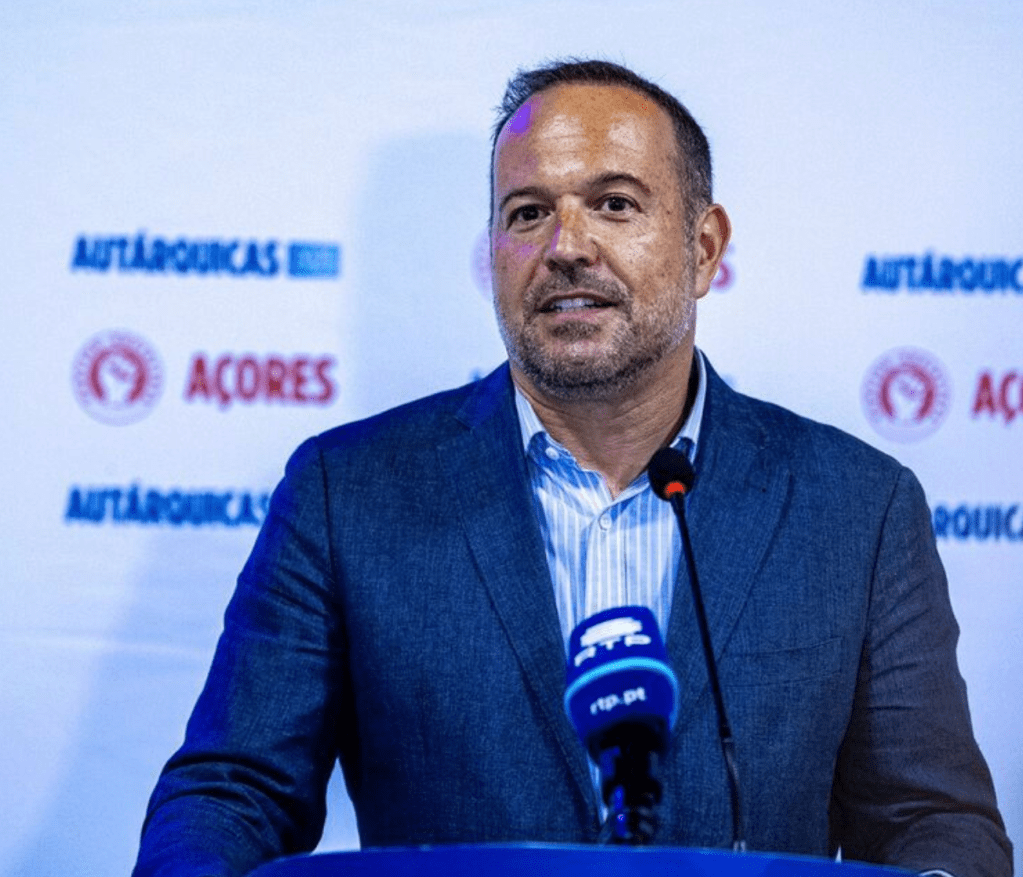
PS-Azores takes a positive look at the elections, according to its leader.
The leader of the PS/Azores, Francisco César, said on Sunday that the results of the local elections confirm the Socialist Party as the major party of Azorean democracy and the only credible alternative to the PSD and the current Regional Government, emphasizing that it was the most voted party in the Region and the one that won the most seats in the Azores.
“These local elections showed that the Socialist Party has become the most voted party in the Azores, with over 49,000 votes, surpassing the PSD, which, even in coalition, obtained around 47,000. But we are also the party that won the most seats in the city councils and municipal assemblies, strengthening our presence and our responsibility throughout the archipelago, despite having lost one city council and not having achieved all the objectives that were set at the outset,” said the socialist.
Emphasizing that, unlike in the last local elections, the Socialist Party won in terms of number of votes, Francisco César stressed that the PS/A remains, individually, the party with the most municipal councils in the Azores, maintaining the presidency of eight of the nine municipalities it led and coming very close to victory in two more municipalities.
“These elections show that the PS has regained the trust of the Azoreans. In a demanding political context, marked by an intense and often unfairly aggressive campaign, the Azoreans recognized the work, seriousness, and proximity of the Socialist Party,” said the leader of the PS/Azores, thus highlighting the recovery from the last legislative elections.
Francisco César, speaking after the election results in the region were announced, pointed to the PS as the only credible alternative to the PSD, “an alternative with solutions, a sense of responsibility, and a vision for the future,” also expressing his gratitude to the more than 4,600 PS/Azores candidates who ran in these elections.
“These are men and women who have given their faces and their time in defense of their communities, their parishes, and their islands. Your commitment is our party’s greatest strength.”
For the socialist leader, these results confirm that the PS remains the central political force in the region, the one that the Azoreans trust when they seek stability, responsibility, and concrete solutions for the future.
“We know there is much to be done. And it is with humility, but also with determination, that we reaffirm our purpose: to continue working with determination, serenity, and hope, alongside the people, for each of our islands and for the balanced development of the Region.”
From Press Release

Left Bloc finds some hope in the results.
Regional coordinator António Lima considered these results to be “a sign of hope for the left,” despite the loss of representation in Ponta Delgada.
Speaking to RTP/A after election night, António Lima highlighted the efforts made by the left to converge, even though the Unidos por Ponta Delgada coalition did not achieve the expected results.
Regarding the two elected representatives in municipal assemblies, António Lima stresses that “there are reasons to face the future with hope.”
From Press Release

CDU was disappointed with the results in the Azores
Speaking to RTP/Açores, the leader acknowledged that the party lost two seats in the municipal assemblies compared to the last local elections, from five to three.
The regional coordinator also highlighted the situation in Corvo, where the CDU lost its seat in the municipal assembly, and criticized Paulo Margato.
“We all know what happened and everything was worth it – even the blackmail of saying that if they were not elected, they would abandon the people of Corvo to their fate, without a family doctor,” he accused.
Finally, Marco Varela explains that “it is a negative result, but a result of resistance and struggle.”
From Açoriano Oriental, Paula Gouveia, director

CHEGA looks at the local elections in the Azores with a positive outcome
In the Azores, the party elected one councilor, 16 elected representatives in municipal assemblies, and 14 in parish assemblies.
“Four years ago, we had 1%. Today, we are a mid-table party with almost 10%. It is a great victory for such a recent party,” said José Pacheco, highlighting the difficulties in forming lists and the efforts of the candidates.
The new councilor for Ponta Delgada assured that Chega will continue to assert itself in the municipality: “This is a time for learning. The time for victory will come later.”
José Pacheco acknowledged the need to consolidate local structures within the party and criticized what he called “cronyism” in regional politics.
In Açoriano Oriental, Paula Gouveia, director

CDS looks at the results with satisfaction
The CDS-PP won again in Velas, securing its fourth consecutive term in charge of the municipal council. Catarina Cabeceiras succeeds Luís Silveira, who led the municipality for 12 years, and promises to continue the Christian Democratic project with “a new cycle” of governance.
“Above all, this significant vote we had in Velas is a great responsibility. We managed to strengthen the confidence of the people of Velas, winning another parish council – we now have five. It is a result that makes us very happy,” the new president told RTP-Açores.
Catarina Cabeceiras pointed out that the CDS team presented “a clear and consistent project” for both the City Council and the Assembly, as well as the parishes, and emphasized that the new mandate aims to combine continuity and renewal.
Among the priorities, the mayor pointed out that the focus is on “looking at the people,” emphasizing that this is the “greatest challenge.”
In Angra do Heroísmo, the regional leader of the CDS-PP, Artur Lima, considered Catarina Cabeceiras’ victory to be “extraordinary,” emphasizing the strengthening of the party’s representation in the municipality.
Artur Lima also praised the work of Luís Silveira, stating that he “transformed Velas” and left “a more attractive municipality, with better infrastructure and better at all levels.”
In Açoriano Oriental, Paula Gouveia, director
Translated into English as a community outreach program by the Portuguese Beyond Borders Institute (PBBI) and the Modern and Classical Languages and Literatures Department (MCLL), in collaboration with Bruma Publication and ADMA (Azores-Diaspora Media Alliance) at California State University, Fresno. PBBI thanks Luso Financial for sponsoring NOVIDADES.

 Novidades - The Islands and the Diaspora