

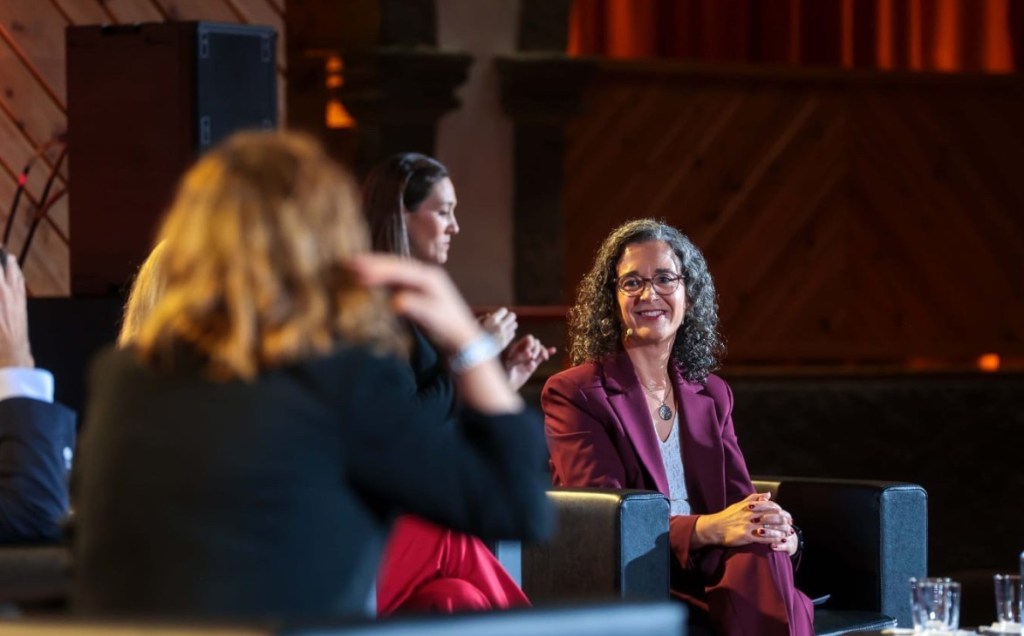
The Regional Secretary for Education, Culture, and Sports, Sofia Ribeiro, emphasized that support and investment in the cultural sector must “bring returns to the community” and cannot be focused solely on “promoting events.”
“Much more than investing in cultural events, we must invest in cultural dynamics that involve the community, that have intercommunication and that have a very strong training component, creating new audiences,” she stressed.
The minister was speaking on Saturday at the signing ceremony for the financing protocol for Ponta Delgada 2026 – Portuguese Capital of Culture (PDL26), at the Luís de Camões Auditorium in Ponta Delgada. Sofia Ribeiro also stressed that investments in culture should prioritize “continuous dynamics, networking, and not isolated work.”
According to the Minister of Education and Culture, it is necessary for students in the region to have “knowledge of the various cultural realities from an early age” and, to this end, the Government of the Azores has placed “the focus of educational policies on primary school, preschool, and even daycare.”
“By changing the schedules of primary school teachers, we have forced other professionals, such as physical education, visual education, and music education teachers, to have a daily work component with students,” she explained. Sofia Ribeiro recalled that arts education for primary school students has been expanded over the last two years to two more schools in the region, on the island of São Jorge.
“The focus on arts education has been a pillar of our government’s work, and I am sure that we will soon be able to reap the benefits of this,” she concluded.
Translated into English as a community outreach program by the Portuguese Beyond Borders Institute (PBBI) and the Modern and Classical Languages and Literatures Department (MCLL), in collaboration with Bruma Publication and ADMA (Azores-Diaspora Media Alliance) at California State University, Fresno. PBBI thanks Luso Financial for sponsoring NOVIDADES.

 Novidades - The Islands and the Diaspora