

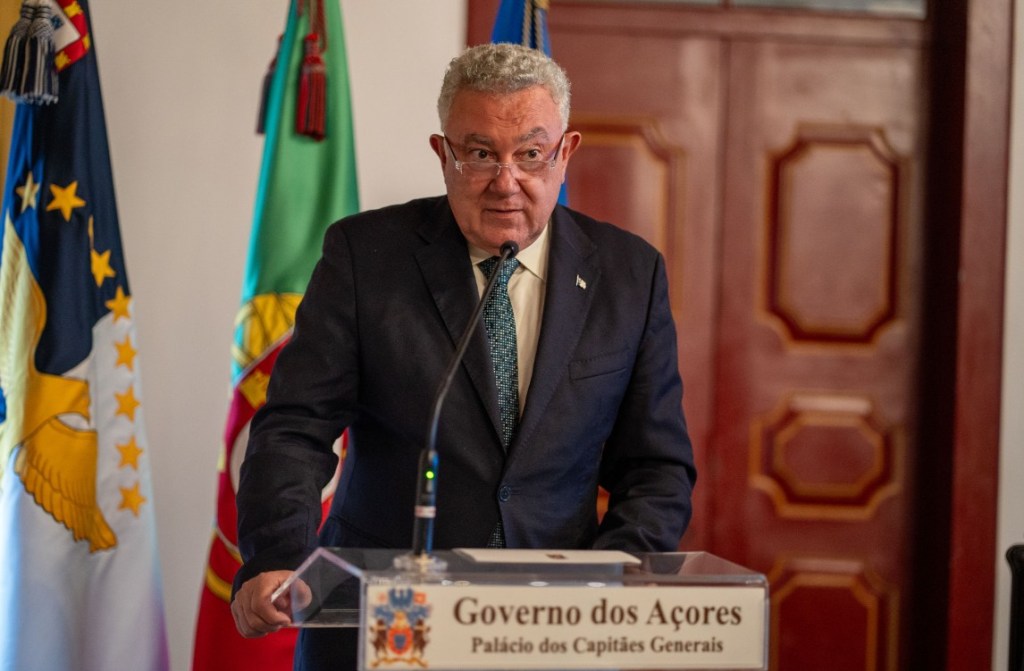
The vice president of the Regional Government, Artur Lima, argues that the Luso-American Development Foundation (FLAD) should support the creation of the Lajes Base Interpretive Center, which he considers “strategic” for the region.
“It is FLAD’s obligation to support this project because it exists in a proven, documented, and financial sense due to the Lajes Base agreement,” said Artur Lima at a conference on the Lajes Base Interpretive Center, which took place at the Palácio dos Capitães-Generais on Tuesday at the end of the day.
With the study plan for implementing the interpretive center now complete, the vice president of the Azorean executive stressed that this is a “strategic initiative for Terceira Island and the entire archipelago.”
“Deepening our knowledge of the social, economic, and cultural transformations that it has brought about is to preserve our history and our identity. Disseminating this knowledge is to pave the way for new forms of development and economic revitalization,” Artur Lima stressed.
“Investigating the relevance of Lajes Air Base to the role of the Azores in the Atlantic and in the world throughout history is to affirm a lucid, participatory, and open position to dialogue. Thinking about the global projection of the Azores in this new strategic scenario of accelerated dynamics is a firm step towards better decision-making and action now and in the future,” he added.
The governor stressed that “it is the Azores that give Portugal its Atlantic projection, constituting the western frontier of Europe”. He argued that “they will continue to be essential for security and defense in the Euro-Atlantic space.”
Also present at the conference, the president of the Legislative Assembly of the Azores, Luís Garcia, argued that the interpretive center could be an “instrument for achieving autonomy.”
“This space is both memory and projection, celebrating the past, honoring those who served, and recalling the role that Lajes Air Base played in the great transformations of the 20th century, but it is also a contribution to strengthening the present and preparing for the future,” he pointed out.
For Luís Garcia, the geopolitical and geostrategic potential of the Azores is a “central challenge” for autonomy. Still, the region needs a strategy that can translate its unique position into concrete opportunities.
“It is this awareness of our value that we need to affirm, calmly but also with great conviction.
We cannot accept reductive, almost provincial views that insist on looking at these islands as something merely peripheral,“ he stressed.
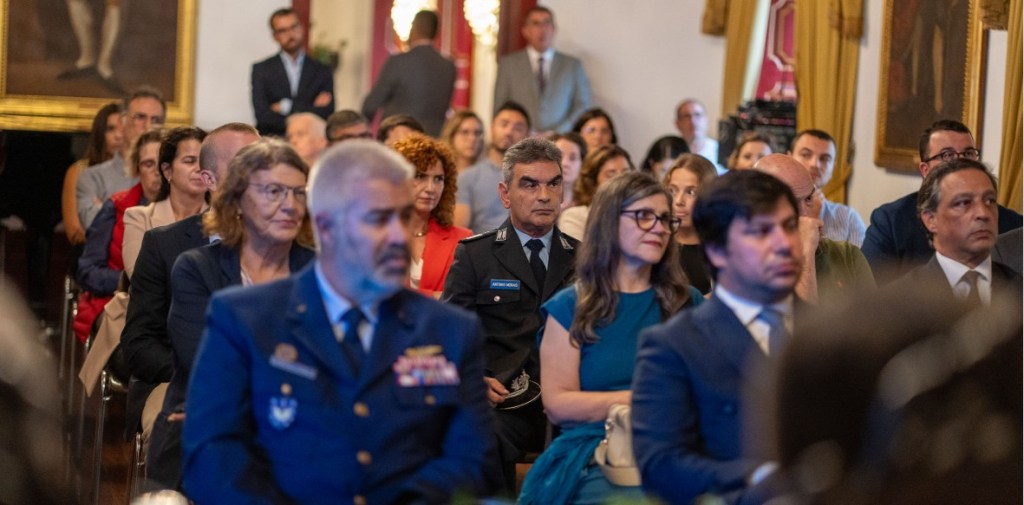
The president of the Azorean Parliament also stated that the potential of the Azores must be ”fully recognized and exploited, not only as a geographical fact, but as a political, strategic, and economic reality that requires vision and investment.”
“Portugal and the European Union must understand that investing in the Azores is investing in the security, sustainability, and cohesion of the transatlantic space,” he reinforced.
Luís Andrade, professor of Political Science and International Relations at the University of the Azores and member of the scientific committee of the Lajes Base Interpretive Center, considered the creation of this center “fundamental.”
The researcher stressed that the Azores “retain their geopolitical and geostrategic importance,” but argued that the region “must adopt its own strategic concept in order to clarify its main objectives with regard to its external relations.”
“It is essential that the Azores archipelago has a vision of the role it intends to play in this new security and defense equation, both in terms of transatlantic relations and the relationship between the North Atlantic and the South Atlantic,” he pointed out.
According to Luís Andrade, China’s military interest in the Azores is “pure speculation.” Still, the United States is unlikely to abandon Lajes, not least because it knows that when power vacuums are created, someone will fill them sooner or later.
“I don’t think they will ever abandon this base, at least in the near future, because it is fundamental,” he stressed.
The researcher considered that “relations between Portugal and the United States of America are good,” but “can always be improved.”
“We can and must continue to work with our American friends to show that there are points on the bilateral agenda that can and should be reinforced,” he said.
Luís Andrade also argued that it is “imperative that the Azores benefit more from the Cooperation and Defense Agreement” between Portugal and the United States.
“The Autonomous Region of the Azores cannot continue to be somewhat marginalized from the benefits that the Portuguese State has been enjoying under this agreement. On the other hand, FLAD, which has been paying greater attention to the archipelago in recent years, should maintain and, if possible, increase its cooperation with the Azores,” he stressed.
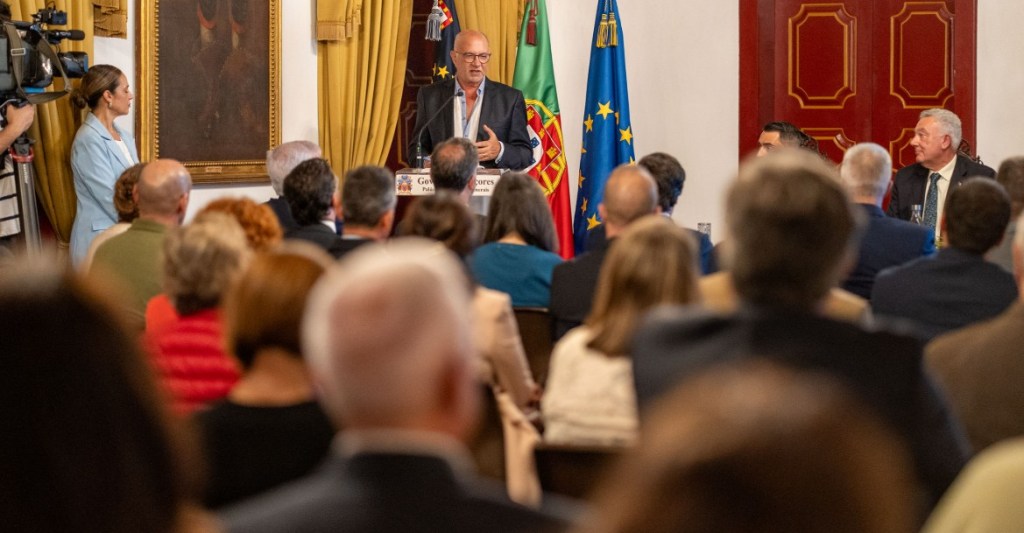
Pedro Ventura, historian and researcher in military history and military aviation, warned of the difficulties in accessing documentary funds, especially US archives, which were at Lajes Air Base and later transferred to Ramstein Air Base in Germany.
“This is the great challenge facing the center, which is to bring together all these documentary collections, scattered across all these geographical areas, to bring together the ‘think tankers’ who have this central hub of study in Lajes and to achieve a working basis that unites us all and gives Lajes the strategic relevance it deserves,” he said.
“There is no history without documentary preservation, and we will not be able to plan new works, new studies, new conferences, if there are no historians, researchers, economists, sociologists, political scientists who, in their different areas, end up having this common denominator, which is Lajes Air Base as a unifying force for study,” he added.
THREE-DIMENSIONAL INTERPRETIVE CENTER
Permanent research center
More than just a space that teaches locals and tourists about the history of the infrastructure, the Lajes Base Interpretive Center should have a research component that leaves knowledge in the Azores. This is what the study plan for the center’s creation, coordinated by journalist and researcher Armando Mendes, advocates.
“We will continue to study and, above all, we will try to find a prospective study model, so that Azorean policy makers have a basis for their thinking,” explained Armando Mendes, who has a PhD in History, Defense, and International Relations, with a thesis on the Lajes Base.
In 2023, the Regional Government of the Azores signed a protocol with the Historical Institute of Terceira Island (IHIT) to create a study plan for the implementation of the interpretive center.
The work is now complete and will be submitted to a scientific committee composed of historians and international relations scholars.
According to Armando Mendes, the interpretive center’s grand vision is “the meeting of cultures” and should be structured in three dimensions.
On the one hand, a traditional interpretive center is proposed, preferably located in the control and command bunker of Serra do Cume, in Praia da Vitória.
With a focus on multimedia content, this center would be aimed at locals and tourists, as well as schools.
In a second dimension, the work proposes the creation of tourist routes in the parishes located near the Lajes Base, with an economic impact on these communities.
The third dimension is the creation of a permanent research center, which would also allow people who want to produce knowledge in this area to settle on the island.
In Diário Insular-José Lourenço, director.
Translated into English as a community outreach program by the Portuguese Beyond Borders Institute (PBBI) and the Modern and Classical Languages and Literatures Department (MCLL), in collaboration with Bruma Publication and ADMA (Azores-Diaspora Media Alliance) at California State University, Fresno. PBBI thanks Luso Financial for sponsoring NOVIDADES.

 Novidades - The Islands and the Diaspora