


Former Prime Minister Francisco Pinto Balsemão died yesterday at the age of 88. With a law degree, he was involved in various political and business activities and, as the owner of the Impresa Group, which owns SIC and SIC Noticias, the founder of Jornal Expresso is remembered as someone who always prioritized freedom of expression.
The Council of Ministers approved a two-day national mourning period, yesterday and today, for his death, and the President of the Republic signed the Government Decree establishing it. On the website of the Presidency of the Republic, Marcelo Rebelo de Sousa states, and we quote: “Today, Portugal has lost one of the most remarkable figures of the last sixty years. In politics, in society, in the affirmation of freedom of expression and of the press.
In politics, he was a member of the Liberal Wing and co-author of the constitutional revision projects, the press law, the law on assembly and association, and the law on religious freedom, to change Portugal in the late 1960s and early 1970s. After April 25, he was the founder of the PPD (now the PSD), Vice-President of the Constituent Assembly, Member of Parliament, Government Minister, Party President, and Prime Minister during the constitutional revision that ended the Revolutionary Council and marked the transition to full democracy, longevity, and State Councilor. From the 1970s to the new century, he was one of the Portuguese politicians with effective external projection, particularly in Europe and the US.

In society, he integrated or led causes, opinion movements, and European, Euro-African, Latin American, and transatlantic institutions. In the affirmation of freedom of expression and of the press, campaigning against censorship and prior examination, founding Expresso before April 25, creating a new large media group, drafting the first democratic press law, joining the Press Council, launching SIC, revolutionizing what information was available at the end of the dictatorship and the beginning of democracy. Visionary, pioneer, creative, determined, hard-working, democrat, social democrat, Europeanist, and Atlanticist, he was involved in almost every battle from the mid-1960s to the present day.
Portugal will not forget him. Portugal will never forget him,” said the President of the Republic. Prime Minister Luís Montenegro remembered Pinto Balsemão as someone who managed to “transform the life of the country and consummate in political decisions the principles of valuing private initiative, respect for the fundamental values and rights of citizens, access to health, education, mobility, and housing, as instruments of human dignity and the promotion of true equality of opportunity.”
“The founding of Expresso and later the Impresa group are good examples of the determination that Francisco Pinto Balsemão always had. In addition to his direct political involvement through the institution he founded, the PSD, and through the public offices he held, he also ended up revitalizing and deepening our democracy in his professional life,” said Luís Montenegro.
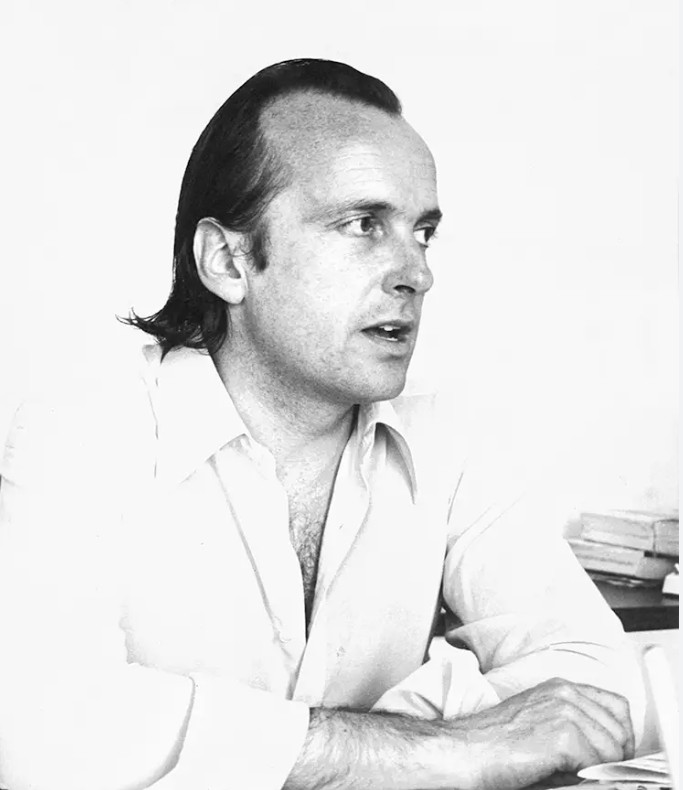
Before April 25, he was a member of the National Assembly for the Liberal Wing, having defended the democratization of the regime, and shortly after April 25, he founded, with Francisco Sá Carneiro and Magalhães Mota, the Popular Democratic Party (PPD), later the Social Democratic Party (PSD). He headed two governments after the death of Sá Carneiro, between 1981 and 1983, and was, until now, a member of the Council of State, an advisory body to the President of the Republic, the Prime Minister pointed out.
The death of Francisco Pinto Balsemão was also mourned in the Azores. The President of the Legislative Assembly of the Autonomous Region of the Azores (ALRAA), Luís Garcia, expressed his deep sorrow at his passing, emphasizing that the former Prime Minister of Portugal was “a unique figure in the consolidation of Portuguese democracy and a true pioneer of the media in Portugal.” A man of firm convictions and recognized integrity, Francisco Pinto Balsemão leaves a legacy that honors Portuguese democracy, freedom of expression, and service to the country.
On his own behalf and on behalf of the Legislative Assembly of the Autonomous Region of the Azores, President Luís Garcia offers his family “his deepest condolences and sympathy to all those who shared his life, work, and ideals,” joining in the national mourning for the loss of a major figure in Portugal’s contemporary history,” reads the statement released.
José Manuel Bolieiro, President of the Government and on behalf of the Government of the Azores, also expressed his deepest sorrow at the passing of Francisco Pinto Balsemão, considering him a remarkable figure in Portuguese democratic life and media.
In the exercise of public functions, Bolieiro emphasizes that Balsemão “served the country with a high sense of responsibility, integrity, and respect for democratic institutions, having led the Government during a period of important political and social transformations.”
Furthermore, “Francisco Pinto Balsemão was always a man who understood the political autonomy of the autonomous regions, respected their governing bodies, and was a friend of the Azores, qualities he demonstrated throughout his public and personal life.
He will be remembered as a man of firm convictions, discreet and honest, who dedicated his life to public service and the consolidation of freedom and democracy in Portugal.”
The Government of the Azores offers its heartfelt condolences to his family, friends, and all those who shared his personal and professional journey, joining in the national mourning for the passing of a figure of undeniable importance in the contemporary history of the country, as stated in the note from the Presidency of the Azorean Government.

The PSD-Azores also recalled the former Prime Minister’s career and expressed its sorrow at his death. “Francisco Pinto Balsemão is a symbol of the founding of the PSD and contributed decisively to the formation of social democratic values and the affirmation of the party as a civic and political organization. Francisco Pinto Balsemão was also one of the architects of the consolidation of Portuguese democracy, leading the governments that ensured the transition from revolution to the current democratic regime,” said José Manuel Bolieiro. The leader of the Azorean Social Democrats recalled that “it was Francisco Pinto Balsemão, together with Francisco Sá Carneiro, Magalhães Mota, and João Bosco Mota Amaral, who structured the ideological matrix and affirmed the programmatic principles of the then PPD.”
“More than half a century after the founding of the PSD, Francisco Pinto Balsemão’s values continue to inspire all social democrats today.
The PSD, as at the time of its founding, remains a personalist, humanist, interclassist, and reformist party. And this is largely due to Francisco Pinto Balsemão,” he stressed.
According to José Manuel Bolieiro, Francisco Pinto Balsemão was a figure who, both as leader of the PSD and as prime minister, “had a decisive impact on Portuguese democracy, taking on a reformist agenda marked by the historic constitutional revision of 1982 and the conclusion of negotiations that led to Portugal’s subsequent accession to the then European Economic Community.”
The leader of the Azorean Social Democrats added that the former Prime Minister of Portugal “was always a friend of the Azores and a staunch supporter of autonomy,” recalling the “fundamental role” he played in the formation of a “free media” in the country, as highlighted in the note published and sent to newsrooms.
Nélia Câmara is a journalist for Correio do Açores, and Natalino Viveiros is the director.
Translated into English as a community outreach program by the Portuguese Beyond Borders Institute (PBBI) and the Modern and Classical Languages and Literatures Department (MCLL), in collaboration with Bruma Publication and ADMA (Azores-Diaspora Media Alliance) at California State University, Fresno. PBBI thanks Luso Financial for sponsoring NOVIDADES.
How the American media reported his death..

 Novidades - The Islands and the Diaspora