

Islands of Memory: People, Places, and Traditions –
From the settlement of the Azores until the early 1970s, agricultural and fishery products were the basis of the Azoreans’ subsistence, in a context of great isolation and with little or no public support.
These difficulties, which affected most families living on the different islands of the Azores, forced them to adopt various survival strategies, almost always linked to the use of land for those who owned or leased it, whether as their main source of income, as a supplement to their income, or as part of their salary in agricultural products.
Let us not forget that it was only with the “Marcelist spring,” from 1968 onwards, that some social protection measures for rural workers began to be introduced. The situation of poverty in which most families in the Azores found themselves partly explains the explosion of Azorean emigration in the 1960s and part of the 1970s, taking advantage of the facilities then granted by the governments of the United States of America and Canada.

Small landowners and rural tenants who produced cereals and legumes, partly for sale but also for their own consumption, tried out production strategies in the Azores that improved the yield of their farms, combining, for example, corn, beans, and mogangos/bogangos, or pumpkins, on the same land and in the same sowing, a combination of crops that benefit each other, with the corn serving as a climbing support for the beans, and the bogangos and pumpkins mitigating weeds in the soil and fixing moisture in the earth. Beans are also known for their ability to retain nitrogen in the soil, a process fundamental to plant development.
This combination of mutually beneficial crops is very old, known as the “three sisters crop, or Milpa, used by the native peoples of America, and also adopted in the Azores. The positive results of this strategy are evident in increased productivity and the availability of a range of products with diverse uses.
Corn was used not only to make bread. Beans were used to make soups, feijoadas with pork, mogangos, desserts, and pig feed, in a family economy where this animal was part of the diet in our rural areas, in the form of meat, torremos, chouriços, morcelas, and salted bones. Having a pig and slaughtering it was a sign of “abundance” in a home and a high point of celebration for the family and neighbors. This is still the case today in some parts of our islands, such as Pico and Flores, islands that I know very well.
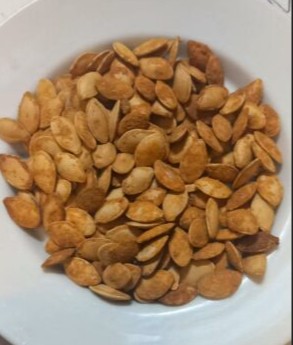
In addition, the seeds of mogangos and even roasted pumpkins, mainly in a wood-fired oven with garlic and local pepper, are highly appreciated as a snack, particularly on the island of São Miguel, where they were sold by street vendors carrying them in wicker baskets. Even today, some people make them at home, but they are also made in factories for sale in grocery stores and supermarkets.
This section on mogangos is dedicated to Dr. Mota Amaral, the first President of the Autonomous Government of the Azores, and a person who was particularly attentive to Azorean ethnology and ethnography, with the credentials of having known this time and this type of economy well, naturally through information passed on by family members who dealt closely with our farmers, but also in his election campaigns even before April 25, traveling through practically all the parishes of the island of São Miguel and beyond.
In short, at a time when hunger was structural, without support, without protection, without subsidies, without the EEC, and without even being able to count on the State, the Azoreans always found strategies for survival and, when necessary, had the ultimate solution: emigration!
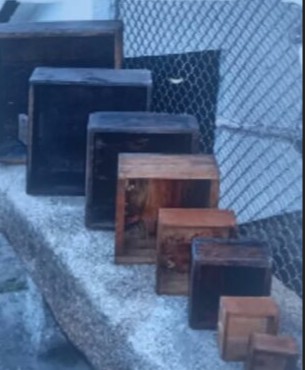
I remember, in the 1960s, watching the payment of wages to landless rural workers, usually weekly, being made partly in cash and partly in kind, based on cereals and legumes,
that is, wheat and corn, or beans, lupins, broad beans, and peas. These products were placed in wooden chests and delivered to the workers in portions previously calculated based on wooden measures, such as the “alqueire” or “maquia.”
In Jornal Açores9–Paulo Melo, director
 Novidades - The Islands and the Diaspora