

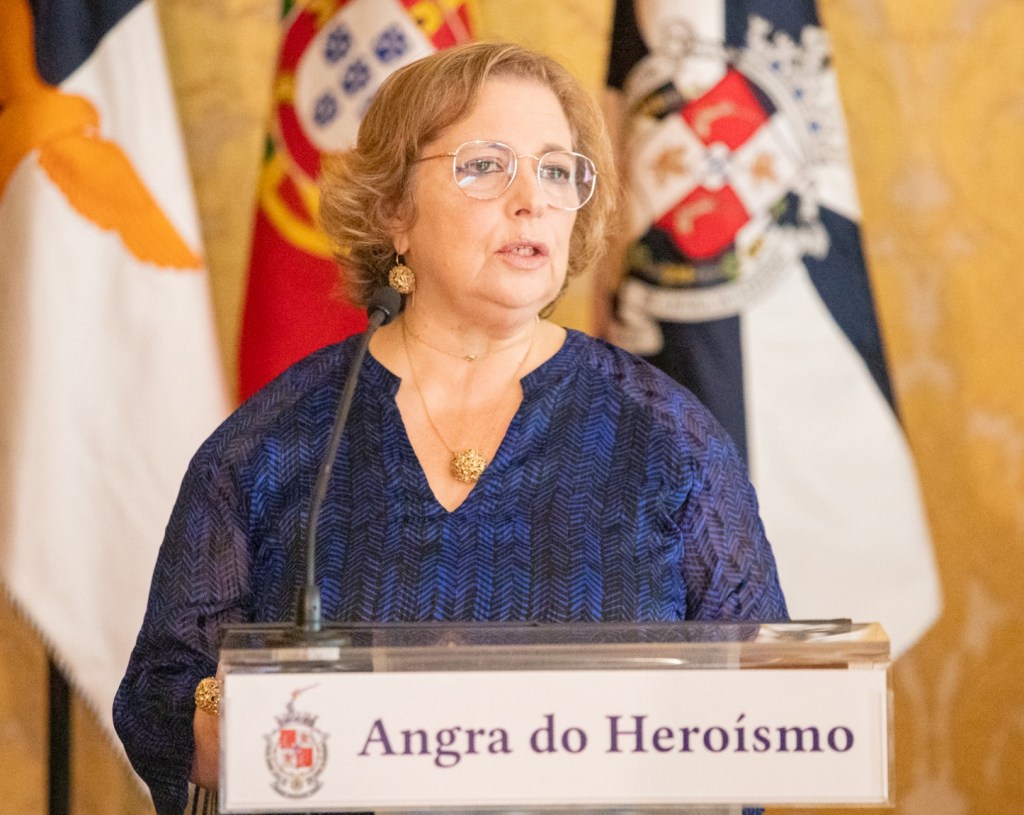
Fátima Amorim took office yesterday as mayor of Angra do Heroísmo. Among her priorities, she highlighted the economy, housing, mobility, and financial rigor.
“All of this will only be possible with financial rigor. There can be no sustainable development without sound accounts. We will maintain budgetary balance, because that is what guarantees confidence and allows us to invest in the future,” said the mayor at the ceremony to install the local government bodies.
Fátima Amorim, who was a PS councilor in the previous term, succeeds Álamo de Meneses, who held the position for 12 years and now assumes the presidency of the Municipal Assembly of Angra do Heroísmo.
With an absolute majority in the council and the municipal assembly, the mayor reaffirmed her “total willingness for dialogue and cooperation.”
“This council belongs to everyone, those who voted for us, those who chose other proposals, those who voted blank, and even those who did not go to the polls. We must listen to, respect, and serve everyone,” she stressed.
The new mayor said that it is a “time of continuity, but also of renewal, hope, commitment, and responsibility.”
With people “at the center of governance,” Fátima Amorim has made the promotion of a “strong and diversified economy” a priority.
“The goal is clear: more jobs, better jobs, and greater retention of young people, reversing the demographic decline that has been occurring. The primary sector will continue to be the pillar of the local economy,” she pointed out.
The mayor also said she wanted to “ensure that the people of Angra do Heroísmo have access to decent housing at fair prices, investing in renovation and construction,” and investing in energy transition, sustainable mobility, and environmental protection.
“We want an even greener, cleaner, and more resilient city, a lively, modern city with quality public spaces, active commerce, and more efficient mobility that is adapted to the current reality of the city and the municipality,” she emphasized.
Tourism, heritage enhancement, culture, sports, education, and social support were other areas listed as priorities by the mayor.
“Angra do Heroísmo is a municipality with history, with a present, but also with a future, where it is good to live, work, and invest. A World Heritage city, proud of its past, but determined to assert itself as a modern, inclusive, and sustainable city,” she stressed.
“I reaffirm my commitment: to serve Angra do Heroísmo with truth, humility, and determination, to work every day to deserve the trust that has been placed in us, and to build a stronger, fairer, and more prosperous Angra with everyone,” she added.
Seeking consensus
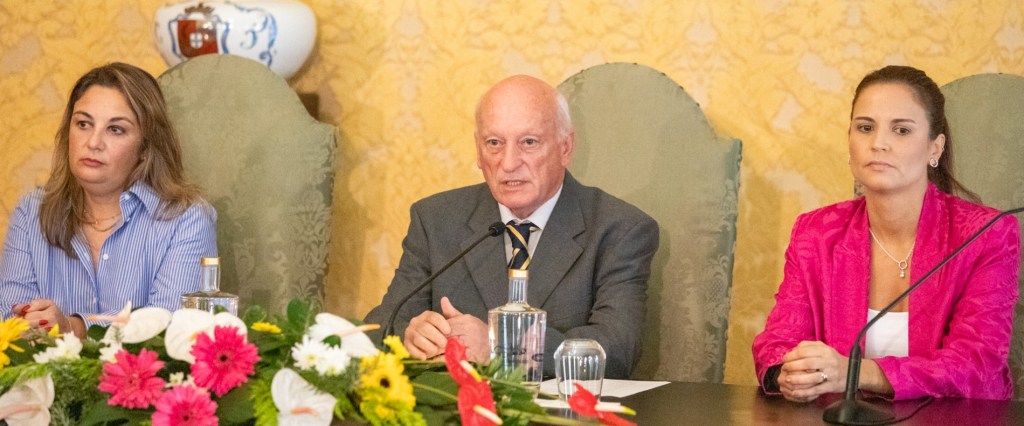
Álamo de Meneses, who exchanged the presidency of the municipality for the presidency of the Municipal Assembly of Angra do Heroísmo, committed himself to “trying to find consensus and solutions.”
“We will be here to continue to cultivate mutual respect and closeness. To the representatives of the four parties that now have seats in the municipal assembly, I reiterate my desire to maintain an open, democratic, and loyal dialogue and to be able to find, together, the best solutions that defend the interests of our people, regardless of our ideological base and the paths that led us to this assembly. We are all representatives of our people and we all deserve respect, consideration, and collaboration so that we can serve all those who voted for us,” he said.
Openness to dialogue
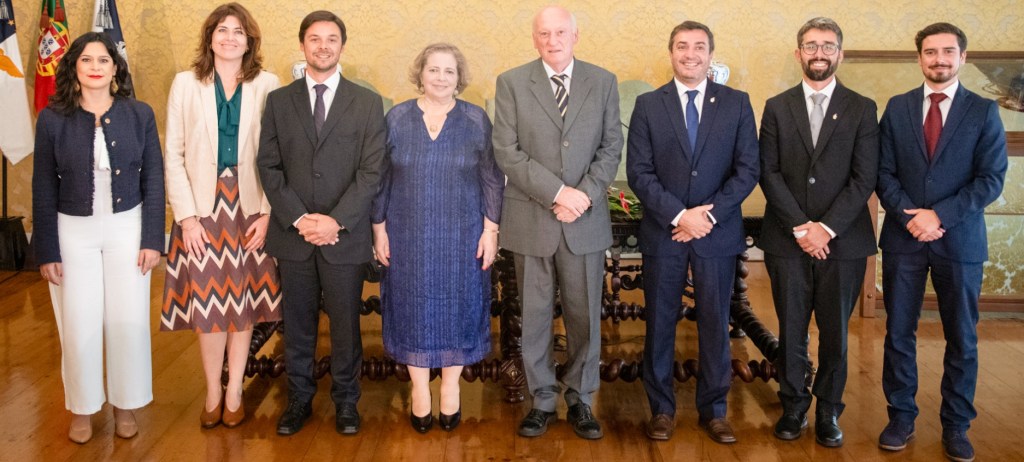
From the opposition to the most voted party, the deputies of the four parties represented in the assembly also expressed openness to dialogue.
José Miguel Toste, of the PS, assured that the municipal group’s position “will be, in line with that taken in recent years, to explore to the maximum the possibilities of obtaining cross-party consensus, which guarantees the interests of the municipality, and whenever this is not possible, to justify the positions taken in the best possible way.”
The deputy pointed out that the PS project, which won the elections with an increase in votes on the 12th, “proposes an assertive response to issues such as the stabilization of municipal management, financial consolidation, and the socioeconomic development of the municipality.”
Paulo Rui Chaves said that the PSD municipal group “can always expect dialogue, understanding, moderation, and assistance for everything that is in the best interests of the people of Angra.”
“We will not be a demagogic opposition, we will not be a destructive opposition. We will be a responsible opposition, which will praise when it has to and scrutinize thoroughly when it has to,” he assured.
“Without demagoguery or populism, we are here to work together in the best interests of the people of Angra,” he added.
André Castro also said that the CDS will be a “constructive, demanding, and responsible opposition in defending the interests of Angra do Heroísmo and Terceira Island.”
“It will never be an opposition that blocks, but rather an opposition of ideas, dialogue, and commitment to the public interest,” he emphasized.
For the centrist municipal deputy, the municipality of Angra do Heroísmo “cannot be seen as just another municipality in the Azores.”
“Defending Angra is defending Terceira, and defending Terceira is contributing to a more balanced, more cohesive, and more just archipelago,” he stressed.
José Bernardo said that Chega “will not abandon its program or its convictions,” but is available “to collaborate with everyone on anything that is fair, useful, and beneficial to Angra do Heroísmo.”
“We want a modern, efficient, and inclusive Angra that values merit, work, and initiative,” he said.
The deputy said that the party presents itself “without complexes or arrogance, but with the firmness of those who have clear ideas and a solid program.”
“We want a council free of bureaucracy that suffocates and demotivates those who work, invest, create wealth, and promote the development of our island,” he stressed.

In Diário Insular-José Lourenço-director
Translated into English as a community outreach program by the Portuguese Beyond Borders Institute (PBBI) and the Modern and Classical Languages and Literatures Department (MCLL), in collaboration with Bruma Publication and ADMA (Azores-Diaspora Media Alliance) at California State University, Fresno. PBBI thanks Luso Financial for sponsoring NOVIDADES.

 Novidades - The Islands and the Diaspora