

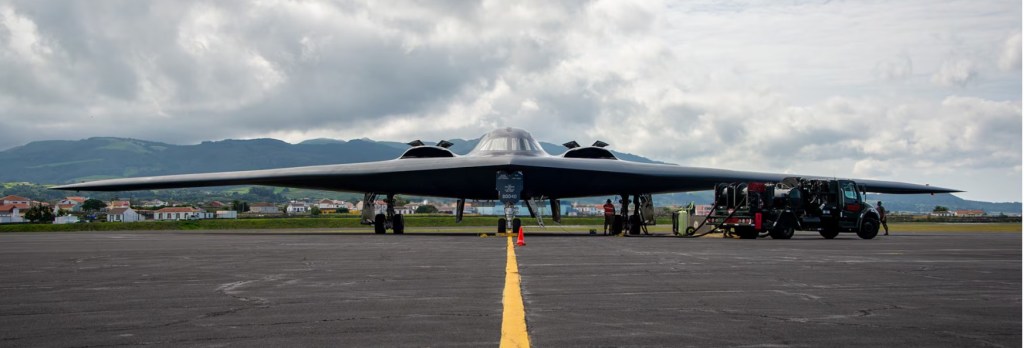
Portuguese employees working for the Americans at Lajes Air Base are at risk of not receiving their fortnightly wages due to the federal government shutdown, which has been ongoing for weeks and has paralyzed all federal department services and activities deemed non-essential due to a lack of funding, until an agreement is reached between the parties in Congress. The salaries of Lajes workers for the first half of this month have been cut by four days, and if nothing changes in Congress, there will be no salary. This is proving dramatic for many families who are unable to meet their commitments, particularly their bank loans, without any margin for subsistence.
The Regional Government has been putting pressure on the Republic to intervene diplomatically with the US, but to no avail. If there is no positive outcome in the standoff between Republicans and Democrats in the near future, the only possibility, albeit remote, is for the Portuguese State to assume this responsibility until a solution is found. As far as we know, employees abroad, in the case of Europe, fall into three categories: those who depend directly on Ramstein in Germany and are paid; those who rely on companies that are contracted by the US and will have to resolve “their” problem; and the others, the majority, who are aligned with US civil servants. It is in this last category that most of the Lajes workers are found. What is not clear (so far, no one has been able to explain it to the workers) is the fact that, in other shutdowns, these same workers have not seen their wages affected. It could be said that this is yet another novelty of the Trump administration. But even that does not hold water, as one of the longest shutdowns was during the previous Trump administration, and the effects did not affect Lajes workers. In fact, there is no memory of similar impacts in prior administrations. The Lajes Agreement, dating back to 1995, has been brought up, but it does not protect workers.
The icing on the cake (contrary to common sense) is that firefighters will also be affected in their wages, which throws them out of “essential activities” and is incomprehensible. If this were to happen, it would paralyze all air traffic at Lajes, primarily for safety reasons. There are reports that at US bases in Spain and Germany, with similar problems, the respective states have, in the meantime, replaced the US, and workers have been receiving their salaries. Unless a similar approach is taken, we do not see a solution until the US Congress reaches an agreement. But it has to be quick because banks, which normally communicate with customers through their automated systems, are indifferent to personal and family dramas, stamping them with a seal of relaxation and non-compliance.
In Diário Insular-José Lourenço, director, and Armando Mendes (PhD), editor-in-chief.
NOVIDADES will feature occasional opinion pieces from leading thinkers and writers in the Azores, providing the diaspora and those interested in the current state of the Azores with a sense of the significant perspectives on some of the archipelago’s issues.
Translated to English as a community outreach program from the Portuguese Beyond Borders Institute (PBBI) and the Modern and Classical Languages and Literatures Department (MCLL).
 Novidades - The Islands and the Diaspora