


The Pico Professional School has a 26-year history and plays a central role in professional training on the island. This academic year, it has six classes and eight courses in operation. The institution stands out for its proximity to students, its vocational guidance, and its connections to local businesses. In an interview with Correio dos Açores, Pedagogical Director Isabel Rodrigues discusses the training offered, the challenges of vocational education, and preparing young people for the future in a context of change and an aging population.
Correio dos Açores – What training does the school currently offer?
Isabel Rodrigues (Pedagogical Director) – This academic year, the Pico Professional School has six classes covering eight courses, as two classes combine two courses: taught together in the sociocultural component and separately in the practical and scientific component. This modality is disadvantageous for the school, but it gives students more choice.
Thus, we have: in the 1st year, courses in Educational Technician, Sales Technician, and Electrical Installation Technician; in the 2nd year, courses in Management Information Technology Technician, Psychosocial Support Technician, and Restaurant Bar Technician; in the 3rd year, courses in Environmental and Rural Tourism Technician and Sports Management Support Technician.
We expect a similar number of courses for next year. The training areas have not yet been defined.
What sets you apart from other vocational schools in the Azores? What are your characteristics?
Vocational schools are very similar, as they are funded the same way and follow the same model. However, some have managed to specialize, achieved great things, or are located in densely populated areas and, in a way, find it easier to attract students.
We have 26 years of history with many success stories in our favor. We are the only vocational school on the island, and we value our students highly: we know each one by name, understand their difficulties, and try to reach out to everyone. The students are happy here.
What difficulties, obstacles, and adversities does the school face in its day-to-day activities?
The Pico Vocational School faces the same difficulties as most schools, namely the aging population and reduction in the number of graduates; the lack of support in dealing with students with specific challenges; the difficulty in hiring trainers for the sociocultural and scientific components (since we are unable to offer the same conditions as general education); excessive demands and bureaucracy, typical of those who work with EU funds; absenteeism, truancy, and risky behavior that affects us all; penalties for failing to take advantage of opportunities; finally, the lack of support for extracurricular activities, as these count towards our application to participate in various gender equality and environmental programs, but we are then unable to participate during term time, as the social fund only finances training and not awareness-raising.
Regarding government, institutional, and European support, what is the school’s current situation?
We are in a moment of historic recovery. It is still too early to make a reliable assessment. Still, the government’s support in contracting loans that allowed schools to function with some normality, and whose interest was paid by the Government of the Azores, was fundamental. In terms of European projects, our school has participated in several over the years, which have been highly successful and efficient in their processes.
In general, do students enter higher education after completing their vocational course?
Most graduates do not continue their studies, mainly because, when they come to vocational education, their main reason is to learn a profession, not to continue their studies. However, students often change their minds and end up going to university, which is also an advantage of vocational education. Some courses are an asset for students who enter the same field at university, giving them an advantageous “baggage.” Imagine a student who studied accounting and goes to university; they will certainly stand out from others who did not have the same experiences. However, this is not true for all courses.

How does the Professional School contribute to the entry of trained students into the job market?
The Pico Professional School works very closely with companies and their trainees, for example, publicizing all job offers and helping to prepare resumes. Our Professional Integration and Guidance technician not only presents existing programs but also offers sessions on job search techniques. For several years, the school has had a database that continues to communicate with graduates to assess their employment status. It continues to publicize job offers that reach the school, as well as those that appear in other media (both from the Regional Government and companies).
Vocational schools are unique in that they work closely with the world of work. It is a collaborative effort involving various partners, including public and private entities, internship providers, counselors, and training staff. In other words, in vocational education, multiple stakeholders are part of the teaching-learning process. It is a different reality with different requirements, whose objective is to prepare students for life and not just for work. It is an ambitious project that vocational schools in the region have taken very seriously.
José Henrique Andrade is a journalist for Correio dos Açores-Natalino Viveiros, director.
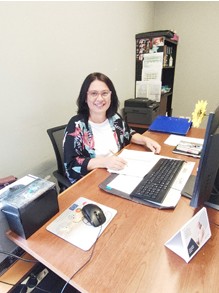
Photographs from the School’s Facebook page

Translated into English as a community outreach program by the Portuguese Beyond Borders Institute (PBBI) and the Modern and Classical Languages and Literatures Department (MCLL), in collaboration with Bruma Publication and ADMA (Azores-Diaspora Media Alliance) at California State University, Fresno. PBBI thanks Luso Financial for sponsoring NOVIDADES.

 Novidades - The Islands and the Diaspora