

There are mornings in the Azores when the air itself seems to remember — when the mist carries the scent of baked bread and the distant murmur of children’s voices, echoing through narrow streets with baskets in their hands and hope in their eyes.
It is November 1st, and somewhere between the sacred and the simple, between All Saints’ Day and the hunger of ordinary life,
the ancient ritual of Pão por Deus awakens again — a tradition woven from charity, gratitude, and the quiet poetry of giving.
The Origins: From the Ruins, Bread Was Shared
The story of Pão por Deus — literally “Bread for God” — reaches far into the folds of Portuguese history. Still, it carries a particularly poignant echo from 1755, when Lisbon was devastated by the great earthquake that shattered the city on All Saints’ Day. Amid ruins and ashes, survivors wandered through the streets asking for bread, not out of greed, but out of need — and yet they did so invoking the sacred: “Pão por Deus!” A cry that was both a prayer and a song.
From that act of collective resilience, a custom was born — one that would spread through towns, villages, and islands,
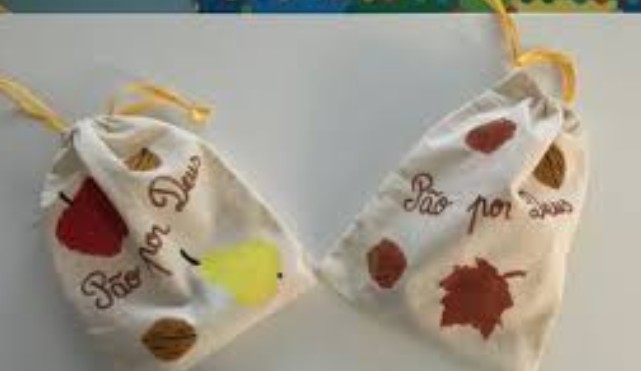
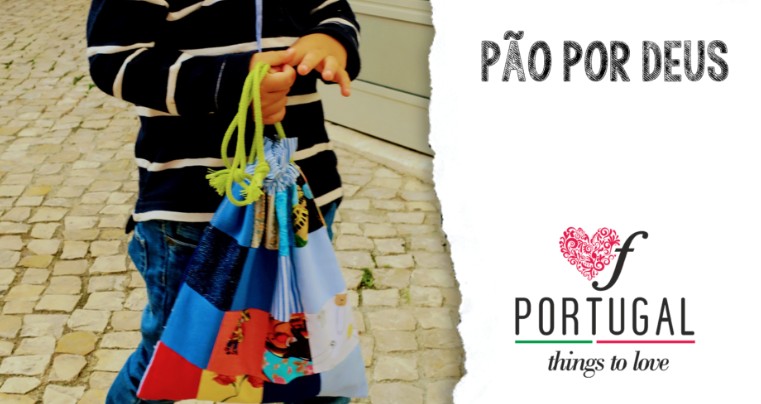
rooted in the rhythm of faith and neighborly kindness. Children began going door to door each November 1st, carrying small cloth bags or woven baskets, reciting verses or blessings in exchange for sweet bread, chestnuts, fruit, or coins. It was a ritual that mingled innocence and remembrance, a way of teaching that even in loss, sharing keeps the soul alive.

Across the Islands: The Azorean Heart of the Tradition
In the Azores, Pão por Deus took on its own color and cadence — islands have a way of transforming customs into songs.
On São Miguel, Terceira, Faial, Pico, and all the other islands of the Azores, children would wake early to roam through volcanic villages, their laughter rising above the morning fog as they knocked on doors,mchanting small rhymes of gratitude:
“Ó tia, dá-me o Pão por Deus,
se não tens, dá-me castanhas,
se não tens, Deus te acompanhe!”
(“Auntie, give me Bread for God,
if you have none, give me chestnuts,
and if not, may God go with you!”)
It was a sweet ceremony of innocence — where generosity was rewarded not with wealth, but with joy. Each home that opened its door became, for a moment, a temple of compassion.
Each child who received a gift learned that abundance is not measured by what we have, but by what we share.
At its core, Pão por Deus is more than folklore; it is an echo of an older spirituality, a time when the boundary between the sacred and the domestic was porous, when giving bread to the living was also a gesture for the souls of the departed.
All Saints’ and All Souls’ Days were once inseparable — a dialogue between heaven and earth. The bread offered in God’s name symbolized a prayer for the dead, a small earthly act with eternal resonance. It was not just sustenance for the body, but a remembrance that kindness transcends mortality.
In every loaf, there was a blessing; in every child’s smile, a trace of communion.
The Portuguese word caridade — charity — comes alive here, not as pity, but as presence: a shared acknowledgment that life is fragile, and that giving lightens the weight of it. I recall my own grandmother once telling me that giving to those less fortunate wasn’t charity, in the strict sense of the word, but our responsibility.
A Tradition Fading, Yet Remembered
Today, in the cities of Portugal and across the islands, the voices of children calling “Pão por Deus!” are rarer.
The supermarkets have replaced the home-baked loaves, and Halloween — imported and neon — now competes with this humble, ancient ritual. The paper bags, once adorned with drawings and lace, have been traded for plastic masks and foreign candies.
Yet, in some villages and schools, in the Azores especially, the tradition endures — quieter, perhaps, but no less sacred.
Teachers tell the story to new generations, bakeries shape small round loaves marked with the sign of the cross,
and families recall how their parents or grandparents once walked barefoot, asking not for riches, but for remembrance.
For those who still keep it, Pão por Deus remains a whisper of what Portugal, and certainly the archipelagos of the Azores and Madeira once knew well: that the simplest gestures carry the deepest meaning; that sharing bread is a form of prayer; and that no act of kindness, however small, ever truly disappears.
As dusk falls on All Saints’ Day, the sea around the Azores and Madeira darkens into a mirror and a memory. Somewhere, a grandmother still wraps sweet bread in a napkin, places it on the table, and murmurs, “Pão por Deus — for those who came before us.”
And in that gesture — unremarkable, tender, eternal—lies the quiet wisdom of a people who understood that even in loss, we are never alone. The door opens, the bread is given, and for one more year, the heart of Portugal remembers how to give thanks.
Diniz Borges
If you enjoyed this piece and want to contribute to our Grassroots fundraiser with a minimum donation of $25, please do so easily and securely through this link. Thanks.
https://crowdfunding.fresnostate.edu/project/48115
The following is an article from Igreja Açores — The Azorean Catholic Church…
Pão por Deus in the Azores
October 31, 2021
Children take to the streets asking for Bread for God
On November 1st, the Azores awaken once again to the ancient rhythm of Pão por Deus, a living tradition carried forward by Catholic schools and now rekindled as a cultural practice in public schools across the islands — especially in the early grades, where memory still has a voice.
The tradition of Pão por Deus reaches back to 1756, one year after the great earthquake that devastated Lisbon. Poverty, already heavy upon the city, deepened with the destruction wrought by the quake. A year later, Lisbon’s survivors — the hungry and the hopeful — went out into the streets crying “Pão por Deus!” to still their hunger, to ask not merely for food, but for mercy.
The Children’s Tradition
In the 1960s and 70s, under the Estado Novo dictatorship, the custom survived in a gentler form, though tightly controlled: only children under ten were allowed to go door to door, and only until noon.
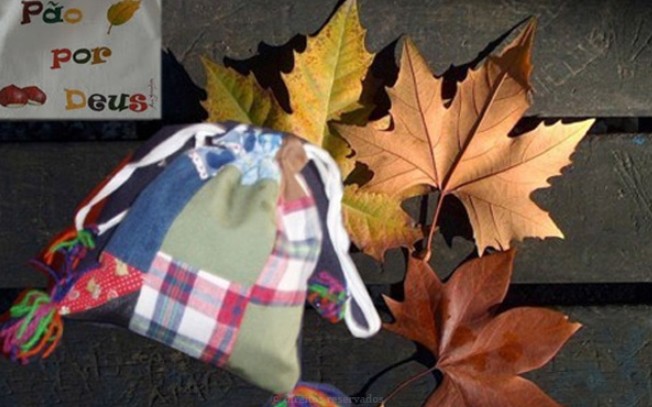
Even so, the sound of small feet and the laughter of children filled the streets, as they carried brightly decorated bags — sometimes homemade, sometimes crafted at school — to collect bread, dried fruits, and, more recently, sweets.
Today, Pão por Deus mingles with another celebration that arrived from beyond the sea — Halloween, imported from Anglo-Saxon countries and introduced in Portuguese schools by English teachers.
On the Night of the Witches, hundreds of children now roam the streets asking for candy. Yet there remains a quiet difference between the imported and the inherited: in Pão por Deus, a Catholic tradition, the child who receives nothing offers no mischief in return — only a smile, and a blessing.
Bread, Saints, and Remembrance
Pão por Deus lives side by side with another custom of November 1st — the pilgrimages to cemeteries, where families place chrysanthemums upon the graves of their loved ones.
This day, All Saints’ Day, holds deep significance in the Catholic calendar, a solemn feast honoring “all those who dwell in the glory of God,” whether canonized or not, as the Popular Catholic Encyclopedia reminds us.
The first to celebrate all saints collectively were the Eastern Churches, as early as the fourth century, often during the joyful Easter season or in the following week.
In the West, the tradition was introduced in 610, when Pope Boniface IV dedicated the Pantheon of Rome to the Blessed Virgin and all martyrs — a gesture that transformed a pagan temple into a sanctuary of memory and light.
The date of November 1st was first adopted in eighth-century England and gradually spread throughout the Carolingian Empire. By the reign of Louis the Pious (835), it was established throughout the Frankish kingdom — likely at the request of Pope Gregory IV (790–844) — and would soon become one of the Church’s most enduring feasts.
The Bread and the Blessing
According to Portuguese tradition, on All Saints’ Day, children would roam the streets in small groups, knocking on doors and reciting verses,
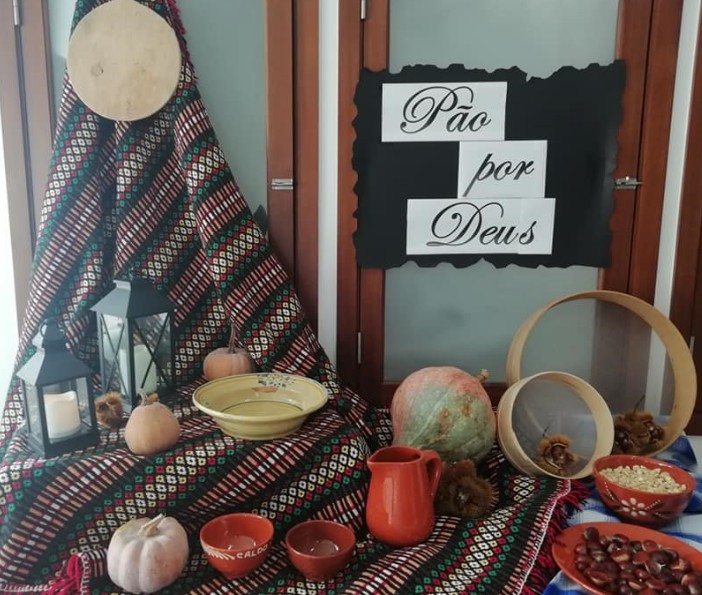
receiving in return small gifts — bread, cornbread, cakes, pomegranates, or dried fruits: walnuts, almonds, and chestnuts — which they placed into their cloth bags.
In some villages, this day is still known as “Dia dos Bolinhos” — the Day of Little Cakes.
For centuries, Pão por Deus has been a gentle catechism of generosity — a way of teaching that sharing is sacred, that remembrance feeds the living as much as the dead. It is bread offered not just to fill the hand, but to open the heart.
A Feast Remembered
For a few years, All Saints’ Day disappeared from Portugal’s list of official holidays, suspended by a temporary agreement between the Portuguese Government and the Holy See. But in 2018, it was restored — as if the country itself remembered something essential: that this day, and this bread, belong not only to the Church but to the people.
And so, in the Azores, especially in rural areas, the children still go out on this misty morning, their voices rising through the basalt streets, asking for Pão por Deus with the same innocence as their ancestors — a tradition reborn with each generation,
a whisper of the soul that knows: to give bread is to provide memory, and to receive it is to taste the grace of gratitude.
If you enjoyed this piece and want to contribute to our Grassroots fundraiser with a minimum donation of $25, please do so easily and securely through this link. Thanks.
 Novidades - The Islands and the Diaspora