


The Azores recorded 521,900 overnight stays in tourist accommodation in September, 1.2% less than in the same period last year, according to data from the Regional Statistics Service (SREA). “In September, tourist accommodation establishments (hotels, local accommodation, and rural tourism) in the Azores recorded 521,900 overnight stays, 1.2% less than in the same month last year,” according to the SREA’s Tourism Activity report. Since February 2024, the number of tourist overnight stays in the Azores has not recorded a year-on-year decline. According to the SREA, at the national level, overnight tourist stays increased by 0.7% year on year in September.
In the first nine months of the year, the Azores reached 3.8 million overnight stays in tourist accommodation, representing a 5.4% increase over the same period last year. In September, the region recorded 153,000 guests (down 2%), with an average stay of 3.41 nights, up 0.8% year-on-year. Foreign residents accounted for the majority of overnight stays this month (76.3%), totaling 397,900, down 0.1% from the same period last year. Over the past six months, the domestic market has seen a decline in overnight stays in the Azores compared to the same period the previous year. In September, overnight stays were 4.6% lower, with 123,900 (23.7% of the total). Among foreign markets, Germany was the largest source market this month, with 76,300 overnight stays (19.2% of overnight stays by foreign residents), representing a year-on-year growth of 13.4%. In second place was the United States, with 60,700 overnight stays (15.3%), representing a decrease of 9.4%, and in third place was Spain, with 57,500 overnight stays (14.4%) and a reduction of 11.3%. Israel (126.6%), Poland (45.9%), and Hungary (37.6%) recorded the highest year-on-year growth, while Slovenia (-43.8%), Belgium (-18.7%), and Spain (-11.3%) posted the largest declines.
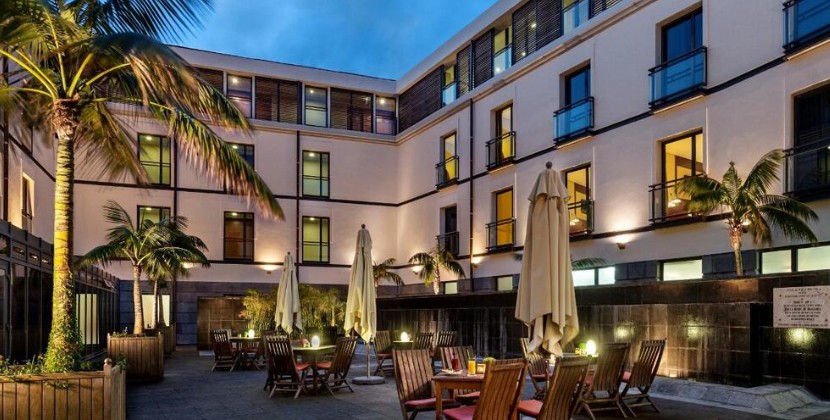
With 260,100 overnight stays, hotels accounted for 49.8% of all tourist overnight stays in the archipelago in September, followed by local accommodation with 233,300 overnight stays (44.7%) and rural tourism with 28,500 overnight stays (5.5%). Only hotels showed a year-on-year decrease (3%), with local accommodation (0.7%) and rural tourism (0.9%) showing slight increases.
Seven islands in decline
Considering only hotels and local accommodation, which accounted for 94.5% of overnight stays, only two of the nine islands of the Azores saw a positive year-on-year change in September: Corvo (2.5%) and Faial (1.4%). The largest reduction occurred on the island of Flores (-9.3%), followed by Santa Maria (-9.1%) and Terceira (-4.6%). Graciosa saw a 4.5% drop in overnight stays, São Jorge 3.4%, Pico 0.9%, and São Miguel 0.3%.
The island of São Miguel, the largest in the archipelago, accounted for 67.9% of overnight stays in hotels and local accommodation (335,000) in September, followed by Terceira, with 61,000 overnight stays (12.4%), Pico, with 33,700 overnight stays (6.8%), and Faial, with 29,600 overnight stays (6%).
The domestic market stood out, with the highest number of overnight stays on the islands of Graciosa (68.9%), Santa Maria (51.0%), and Corvo (50.3%).
Among foreign markets, Germany was predominant on the islands of Pico (26.2%), Faial (19.4%), São Jorge (19.3%), and Corvo (15.4%), and Spain on Flores (18.9%) and São Miguel (14%). The North American market was the main foreign market on the islands of Terceira (10.3%) and Graciosa (9.1%), while the French market was the main foreign market on Santa Maria (11.5%).
In the hotel sector, the net occupancy rate per bed fell to 66.8% in September (down 3.2 percentage points), while total revenues rose 6.2% to €26.7 million.
The average revenue per available room was €117.01, and per room used, €145.61. Rural tourism had a net occupancy rate per bed of 44.9% (down 5.8 percentage points) and total revenues of €3 million (up 11.7%). In this category, the average revenue per available room reached €94.02 and per occupied room €170.84.
No revenue data are presented for local accommodation, but the gross occupancy rate per bed was 40.4% (down 2.2 percentage points). According to the report, 14.5% of active local accommodation establishments reported no guest movement in September.
In Diário Insular-José Lourenço-director
Translated into English as a community outreach program by the Portuguese Beyond Borders Institute (PBBI) and the Modern and Classical Languages and Literatures Department (MCLL), in collaboration with Bruma Publication and ADMA (Azores-Diaspora Media Alliance) at California State University, Fresno. PBBI thanks Luso Financial for sponsoring NOVIDADES.

 Novidades - The Islands and the Diaspora