

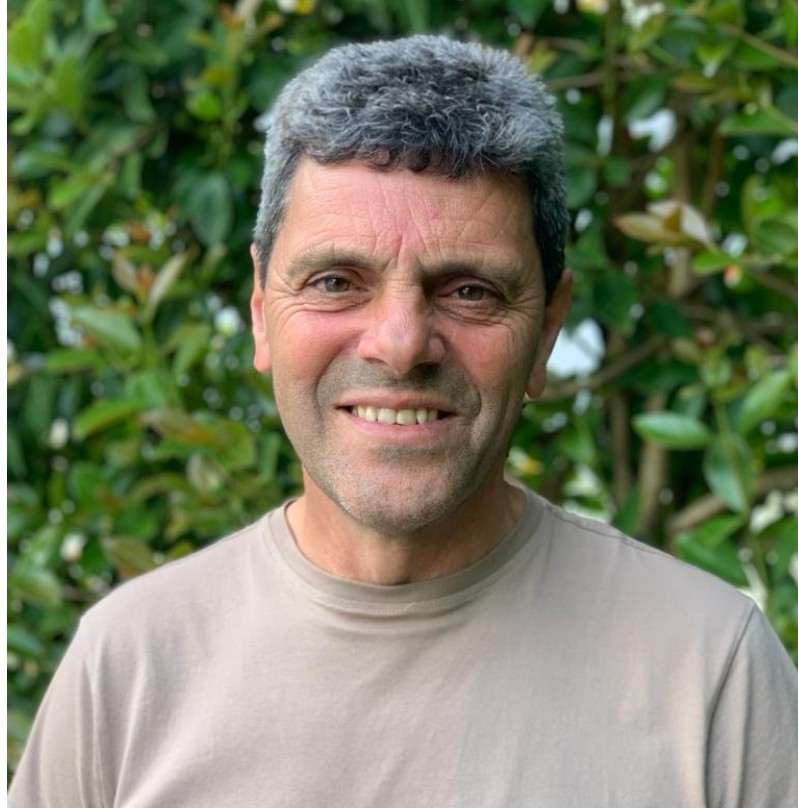
It offers introductory training in organic horticulture from November 17 to 22 in Angra do Heroísmo, an initiative of the Bio Azórica cooperative. Has demand for this type of content increased?
People today are very interested in this type of content. Almost all those seeking this type of training are university graduates, but there was a gap in teaching from grandfather to father and from father to son. We had a 30-year void that they are now trying to fill. They are looking to learn how to plant lettuce, something so simple that we instinctively learned from our grandparents or parents. That no longer happens, and now people need to take a course to understand how the entire ecosystem works, not just how to plant lettuce, but how they can eat food they grow themselves, without synthetic chemicals involved in the process. People want to eat healthier, more carefully prepared food that aligns with their values.
Are more and more people concerned about where their food comes from?
I am meeting more and more people who are concerned about food, about sustainability, which is something that was not talked about much before, and about being autonomous in the process of producing their own food. It is a phenomenon becoming increasingly common among people living in apartments and houses. Apartment dwellers are interested in learning how to grow food in pots or planters. People have this idea of wanting to produce something. They feel the need to get their hands back in the soil and believe they are capable of growing their own food, if necessary.

In the past, almost everyone had a vegetable garden, and the knowledge was passed down from generation to generation. Do we need to recover that knowledge now?
It was almost mandatory for everyone to have a vegetable garden because the economy demanded it at the time. Many did it out of necessity. Then people started doing it out of habit or because they wanted to keep one, even though they were already earning enough, so it wasn’t necessary. It was thought that the right model was for some to produce and others to eat. That is no longer the case. Macro-companies have turned to machinery and synthetic products to maximize profits. Everything is based on economics, and we forget the nutritional value of food; we forget the act of working with the food we are going to consume, which is also very valuable for self-esteem and self-sufficiency. All of this has fallen by the wayside. And now we are trying to learn to follow that path again, that guiding thread that was lost. And it will take a long time for this to happen. The idea of everyone having a vegetable garden, as in the past, is not going to happen, but it is very noticeable that the more people study, the more they realize that they have to be responsible for their food, too, and this is leading them to want to return to the vegetable garden. The problem is the difficulty of returning to a space that now seems alien. It looks like it’s from another planet to arrive at a space of land. It’s very confusing for those who have never set foot there. That’s why people are now looking for a course to learn how to do it without chemicals, to support biodiversity, and to help improve the planet. People have many of these ideas that were lost and are now coming back, perhaps because the earth is warming up, or because they realize there will be no way out if nothing is done. And there is this general concern.
What will be taught, specifically, in this training?
We will talk about planning a vegetable garden, the PDM, that is, never planting a vegetable garden where a road will one day pass; we will also speak about production factors and the impact they have on their distribution on the planet; we will also talk about how to make beds, which vegetables to choose; we will talk about how to make our own fertilizer, in this case compost; how to mulch, that is, cover the soil; we will talk about how to make a natural homemade insecticide with orange peels; we talk about compost tea, the multiplication of microorganisms, and the territorial occupation with good organisms, so that we have richer and more dynamic soil; we even talk about the distribution and possible sale of products, the choice of seeds, and the various types of seeds that exist. We talk a little about everything.
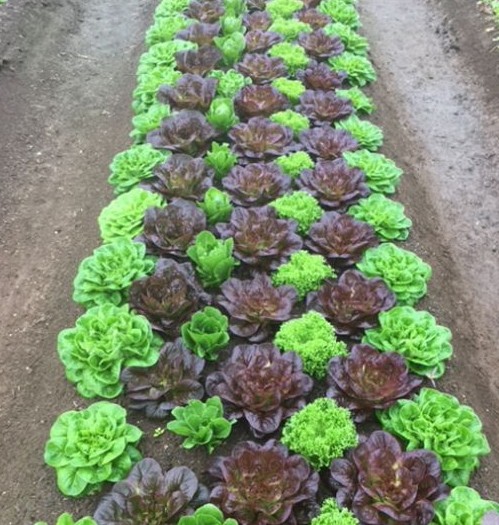
Has organic farming evolved in the Azores? Are we already at the level we would like to be at?
We are still very much at the bottom of the ladder. The illusion we have is because there is a lot of pastureland being converted to organic production, and these figures are very misleading because they cover a large area. Still, we are deficient, not in meat or milk, of course, but in horticultural products. In this area, we have not grown enough, not by a long shot. We are miles away from where we need to be. We are fortunate to live on volcanic islands, where we have soils that make up 1% of the world’s total and can feed 10% of the world’s population because they are so rich. We could do much more, work much harder, organize ourselves better, and create biodiversity. All the food we need would not have to come from outside; we could produce it ourselves. This is the kind of sustainability that is required for islands of well-being, such as the Azores, not just macro-production and monocultures. For me, exporting is a minor issue. We can export within the islands to visitors; we don’t have to worry about sending things abroad. We have to produce to feed ourselves here. That’s what’s important. And any surplus can be sold to those who visit us.
How do you assess the progress that has been made?
We need to speed things up a little. Change is needed more quickly. One day, there will have to be someone at the Regional Government level who is not afraid of difficulties, who is no longer scared of change, and who is committed to what really needs to be committed to: clean production in the Azores. Until that happens, things will move at a snail’s pace. Until everyone is on the same page, until there is a goal, an ideal, I don’t see change happening overnight. I’ve been doing this for 30 years, and I’ve traveled all over the islands giving training. I know that this is moving very slowly. It really needs to be pushed, or people need to believe in the model and go for it.
im Diário Insular-José Lourenço, director
Translated into English as a community outreach program by the Portuguese Beyond Borders Institute (PBBI) and the Modern and Classical Languages and Literatures Department (MCLL), in collaboration with Bruma Publication and ADMA (Azores-Diaspora Media Alliance) at California State University, Fresno. PBBI thanks Luso Financial for sponsoring NOVIDADES.

 Novidades - The Islands and the Diaspora