

Plastic-Free Sea Week was an initiative held for the first time this year. With initiatives in several schools and across several islands, this Rotary Club project attracted more than 1,000 volunteers in the Azores alone. Although Sea Day had already been celebrated, one of the initiative’s objectives was to raise awareness of the constant threat of plastic in people’s lives.
The Rotary Club promoted the ‘Plastic-Free Sea Week’ project with the support of several schools, institutions, and associations. Charles Cooman, one of the people responsible for the initiative, said that “Plastic-Free Sea Week is happening for the first time and ran from Monday to Sunday, aligning with Sea Day in Portugal, which is today, November 16. This is the first edition of Plastic-Free Sea Week, but the organization does many more activities throughout the year.“
According to the Rotary Club member, ”several activities were promoted on various islands, such as Santa Maria, Terceira, and Faial, in addition to São Miguel. Several associations, institutions, public entities, and schools will also be involved. We also count on the involvement of scouts and environmental associations.“
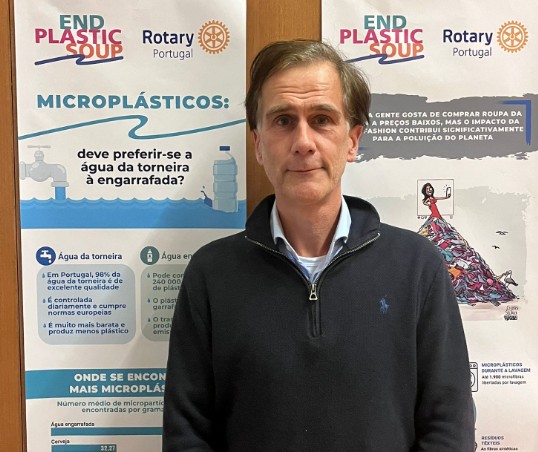
When asked what activities were promoted during this week, Charles Cooman said that there were ”several. We had a section we call actions, where we went to clean beaches, for example, and other sections that are much more important: awareness and education. For example, here at Colégio do Castanheiro, throughout the week, students from various classes made posters, songs, and performed with an orchestra made from trash they found on the beach. This was in addition to a lecture by the University of the Azores, which explained the problem of plastic pollution and raised students’ awareness. The activities will vary depending on the schools and associations. When I visited the São Miguel Cerebral Palsy Association, I saw that they had built two structures, each with its own meaning, from trash found on Milícias beach. They built an octopus with eight tentacles, which means that we join arms to bring about a better future, and they also built a fish, alluding to the Azores. Fish is very important in our diet, but we are increasingly noticing nanoparticles that fish ingest and that we humans end up eating too. It was a very well thought-out initiative.
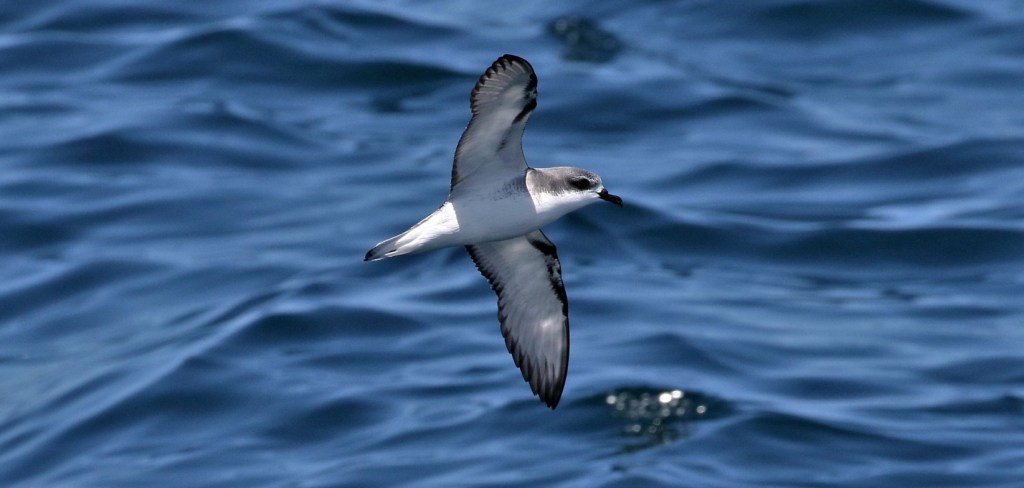
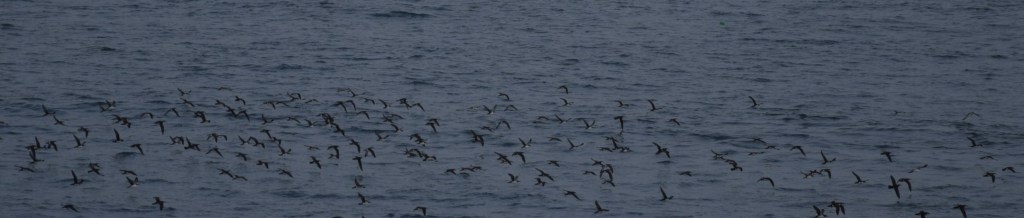
“In addition to the initiatives I mentioned, we have initiatives promoted by scouts and environmental associations. On Wednesday, I was at the Geopark attending a conference where they explained the impact of plastic on shearwaters. And since 75% of shearwaters nest in the Azores, this plastic problem is very important,” he added.
This project achieved several goals. According to Charles Cooman, one of the goals was to reach 1,000 volunteers nationwide. “We had a goal of gathering 1,000 volunteers nationwide. The goal was achieved solely with volunteers in the Azores, making the Azores an example in this regard. And with this, we were able to exceed the goal we set. Education and awareness are very important. We did many activities with young people, such as this lecture we attended, which involved young people from 5th to 9th grade.“
Plastic is increasingly present in everyone’s daily life. ”We can see the impact that plastic has on our lives just by walking along the coast. We know a lot of trash, and you don’t have to be a scientist to realize it’s not good for the environment. As I often say, if we could see the nanoplastic particles in our food, we would lose all desire to eat. We can’t see them, but these particles accumulate throughout our lives, and this is not good. We have a major environmental and health problem. The diseases that are the consequences of the plastic we eat throughout our lives will have to be covered by Social Security. It is a very big problem that affects many people.
Plastic production continues to increase…
Charles Cooman, during his speech at the lecture that took place last Thursday at Colégio do Castanheiro, began by stating that “many unforeseen events happened this week and it would be easier not to come here. However, my biggest mistake would be not to talk to you.” The Rotary Club member used this opening to make a point, comparing what is easiest to do in each person’s daily life with the excuses we make for not recycling.
According to Charles Cooman, plastic is “everywhere and the volume of plastic has been increasing. In 2000, 200 million tons of plastic were produced, and in 2020, production more than doubled, with 430 million tons produced. By 2040, plastic production is estimated to at least double again.”
For the Rotary member, the biggest problem is the feeling of helplessness in the face of plastic in everything used in everyone’s daily routine. “This is not just a problem for the Azoreans. It is a global problem, so big that we feel we cannot do anything. However, if we think that we cannot do anything, nothing will happen.”
“Our actions have limited impact. We will not be able to change the whole world, but if we can change our immediate environment, then we are already contributing to the reduction of plastic,” concluded Charles Cooman.
The lecture was followed by presentations from some classes at Colégio do Castanheiro, who completed various projects related to Plastic-Free Sea Week. The two 5th-grade classes prepared a musical performance with an original song related to the theme. The 8th-grade class made several posts on the school’s social media accounts, calling for the responsible use of plastic and explaining how to dispose of it. The 9th-grade classes chose to work on two different themes. The 9th-grade class 1 wrote poems displayed in the school reception area so that all students passing by could see them, and the 9th-grade class 2 chose to present a short stop-motion video, both of which alluded to the theme.
Paulo Torres, a researcher at the University of the Azores, presented the theme “Plastics, a silent threat!” With this theme, the researcher sought to highlight the importance of keeping the ocean clean and the implications this may have for humanity’s future.
According to Paulo Torres, the ocean “connects all living beings. However, we do not see what is really happening in it.” The researcher warned of the large increase in the presence of plastic in the oceans, stating that “the main marine litter is plastic. And within plastic, 80% is microplastics.” The increase in microplastics in the sea has proven to be a serious threat to society. “Microplastics are increasingly found in our food and have even been found in the human bloodstream,” he said.
The lecture, which took place last Thursday in the auditorium of Colégio do Castanheiro, was attended by Helena Lourenço, the school’s director, João Miranda, and an audience of 200 students and their teachers.
Schools present at beach clean-up.
At least two schools participated in the beach clean-up in Ponta Delgada last Friday morning. Colégio do Castanheiro and Escola Básica 1 JI do Livramento took some of their students for a different kind of day.
Filipa Cabral, a teacher at Colégio do Castanheiro, began by stating that “the two 7th grade classes, 7º1 and 7º2, accompanied by their teachers and Interact, which consists of 12 students from the 10º1 class,” were present at the cleanup.
When asked about the importance of these projects to students, the teacher noted that the entire school was involved in Plastic-Free Sea Week. “This challenge set for us by the Rotary Club was very important, to try to integrate Interact into Plastic-Free Sea Week. My participation was more in organizing the beach cleanup and raising awareness of the problem of marine litter. With the collaboration of other teachers at Colégio do Castanheiro, we were able to hold the lecture and exhibitions that took place at the school throughout this week. Our students must understand the importance that each of them can have in making a difference tomorrow. This is the message I like to convey. We ‘lost’ an hour or two of our day and, in the end, we made a difference, since the amount of waste we collected is undoubtedly large.
A few schools still participate in this type of project. For Filipa Cabral, “It would be important for more schools to embrace these projects and initiatives so that our students become increasingly aware and responsible for these dynamics. And so that they themselves are able to provide these moments to their classmates and come up with ideas, such as organizing visits or more clean-ups. It is the students themselves who should take this initiative, pass this responsibility on to them, and pass on this desire to change and to be able to have not only a cleaner beach but also a cleaner coastline. It is very important to pass on this message,” she concluded.
Rita Linhares, President of the Interact Club at Colégio do Castanheiro, was one of the students who actively participated in the beach cleanup at Praia das Milícias. According to her, “it is very important for us students to be able to participate in this type of activity because it strengthens our life experiences not only as students but also as people. By participating in this type of activity, we become better people and evolve in a more personal sense.
The Interact President stressed the importance of more schools participating in these activities. ”This type of activity should be done by many more schools. Colégio do Castanheiro has always been known for being a school that is very active in participating in these projects, or in terms of citizenship in general. We could reach out to other schools by, for example, collaborating on small projects of this kind. We could bring together classes from different schools and, little by little, this collaboration would become more effective.”
When asked about the importance of clubs such as Rotary joining this cause, Rita Linhares said, “The clubs’ initiatives are very interesting. They are a way for people to help and do good for the community. It is important that we not only see, but feel that we can be part of something as important as this, because Rotary is an international club and gives us the opportunity to work together for the greater good.”
The 10th-grade student also praised Musami’s role in this beach cleanup. “Musami played a significant role in this activity. They not only provided the bags, gloves, and all the materials. What they do is really important because if nothing is done, in a few years the planet will be completely contaminated and will not be a favorable place for life. We can all contribute to this cause, and their help was invaluable.“
Ana Xavier, a 3rd-grade teacher at Escola Básica 1 JI do Livramento, began by saying that they have been doing ”this activity for many years. This is the third-grade class, which already came last year, and this year they came again. In the first year, they didn’t come because they were too young. We do this activity with the aim of cleaning up the beach, and it is part of the ‘Educate for a Blue Generation’ project, where we raise awareness about cleaning up the oceans. The students love participating in these activities. We have also brought other groups from other years. It is a very good activity for raising children’s awareness of the pollution that people cause on a daily basis.”
According to the teacher, “the children are very curious and really love doing this activity. They see that there are many people who do not respect the environment and pollute it with trash. This year, we even collected a flip-flop. With these activities, we can raise awareness not only about what is happening to the environment, but also about what is happening in the world, since our ozone layer is getting thinner and thinner. We were able to explain this to them, warning them about the possible climatic consequences. And climate change is due to the trash produced by everyone.”
Ana Xavier can already see some behavioral changes in people. “I noticed that this year the beach was cleaner. Last year we picked up a bottle full of cigarette butts, and this year there are far fewer. Even in terms of trash, last year there was much more. We managed to pick up 3,450 kilograms of trash, mainly plastic. The plastic we managed to collect is already smaller, more broken up, let’s call it that. Perhaps people are starting to become more aware,” she concluded.
Frederico Figueiredo is a journalist for Correio dos Açores-Natalino Vieiros, director.
Translated into English as a community outreach program by the Portuguese Beyond Borders Institute (PBBI) and the Modern and Classical Languages and Literatures Department (MCLL), in collaboration with Bruma Publication and ADMA (Azores-Diaspora Media Alliance) at California State University, Fresno. PBBI thanks Luso Financial for sponsoring NOVIDADE

 Novidades - The Islands and the Diaspora