

As long as there are those who name the light, darkness will not triumph
No sector of a society can withstand this succession of shocks, this administrative drift that transforms Culture, that territory where a community thinks, breathes, and recognizes itself, into a mere disposable prop of governance. The state of culture in the Autonomous Region of the Azores is not the result of an accident, but of continued erosion, of a progressive desacralization of the symbolic space that should be at the heart of any public policy worthy of the name. To govern without culture is to administer ruins, and it is precisely among ruins that they want us to get used to living.
Persistent disinvestment, the constant oscillation between momentary priorities and the most absolute improvisation contribute to a reality that has become too evident to be ignored, showing that culture is not a strategic axis for those who govern the Autonomous Region of the Azores, but a burden. And when political power treats imagination as a useless burden, it is citizenship itself that becomes opaque and submissive.
The musical chairs at the Regional Secretariat for Culture is the most visible symptom of this structural contempt. Faces change, portfolios are exchanged, organizational charts are rewritten, but nothing remains but the same lack of direction. Those who constantly change positions do not seek guidance, postpone decisions, delay commitments, and condemn the sector to an eternal restart, as if we were always inaugurating day zero of the same incompetence.
I have been denouncing this state of affairs for years, not out of habit, but out of conscience. I denounced it in the local election campaign, when I realized, with the bitter lucidity that time teaches us, that the City Council of Ponta Delgada does not have, and has never truly attempted to have, a serious, structural, visionary cultural policy. And I denounce it today because we are facing the announced shipwreck of a project that could have been historic: Ponta Delgada Portuguese Capital of Culture.
The city that could open our nine islands to the country and the world, which had the opportunity to show the strength of its heritage, its artistic creation, its intellectual community, is today mired in disorganization that borders on irresponsibility. A title of this magnitude cannot be sustained with circumstantial press releases, formal photographs, and the illusory glamour of advertisements. It requires continuous work, cultural vision, articulation skills, technical competence, artistic sensitivity, and, above all, respect for the sector and its agents.
None of this has happened. What we see is fragmentation, political amateurism, erratic priorities, decisions that overlap and cancel each other out, and a complicit silence in the face of the collapse of a rare opportunity. It is as if culture were always the first victim and the last concern.
Ponta Delgada is failing in its cultural destiny not because of a lack of talent, but because of a lack of government, and it is also a victim of political disinvestment in culture by the Regional Government. The city has artists, writers, musicians, researchers, and institutions capable of sustaining any ambition. What it lacks is a strategy that recognizes and empowers them, instead of pushing them into invisibility or the internal exile to which so many have been condemned.
Defending culture in the Azores has become an act of civic resistance. It means rejecting the prevailing mediocrity and demanding that imagination be treated not as an ornament but as the lifeblood of democracy. It means remembering that no region can prosper when its thinking is impoverished, when its heritage is neglected, when its creativity is allowed to languish in the interstices of bureaucracy.
It is time to demand more and better. To demand competence, continuity, political courage. To demand that the cultural future of the Azores cease to be hostage to improvisation and victim of the incompetence of those who have managed it, and once again become a matter of historical responsibility.
With this denunciation, I do not intend to repeat the obvious, but to counteract the shadow that some want to pass off as the natural climate of our time. I seek to shine a stubborn light in the midst of the storm, a glow that rejects resignation and exposes the abandonment to which successive regional governments have consigned culture.
May the title of this chronicle not be read as a lament, but as a promise. For as long as there are those who persist in naming the light, no darkness, however dense or persistent, can triumph.
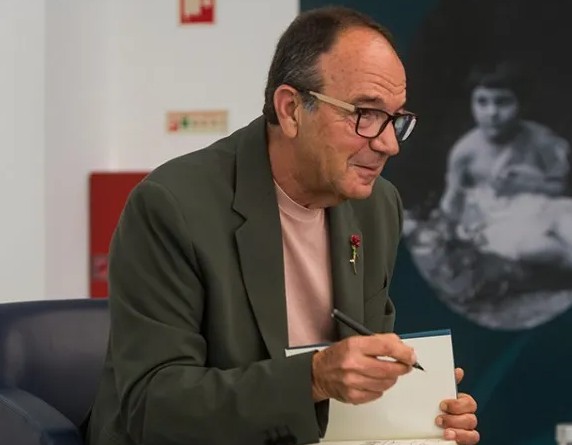
Henrique Levy is a poet, a fictionist, an essayist, and a political activist in the Azores.
NOVIDADES will feature occasional opinion pieces from various leading thinkers and writers in the Azores, providing the diaspora and those interested in the current state of the Azores with insight into the diverse opinions on some of the archipelago’s key issues.
Translated to English as a community outreach program from the Portuguese Beyond Borders Institute (PBBI) and the Modern and Classical Languages and Literatures Department (MCLL).
 Novidades - The Islands and the Diaspora