

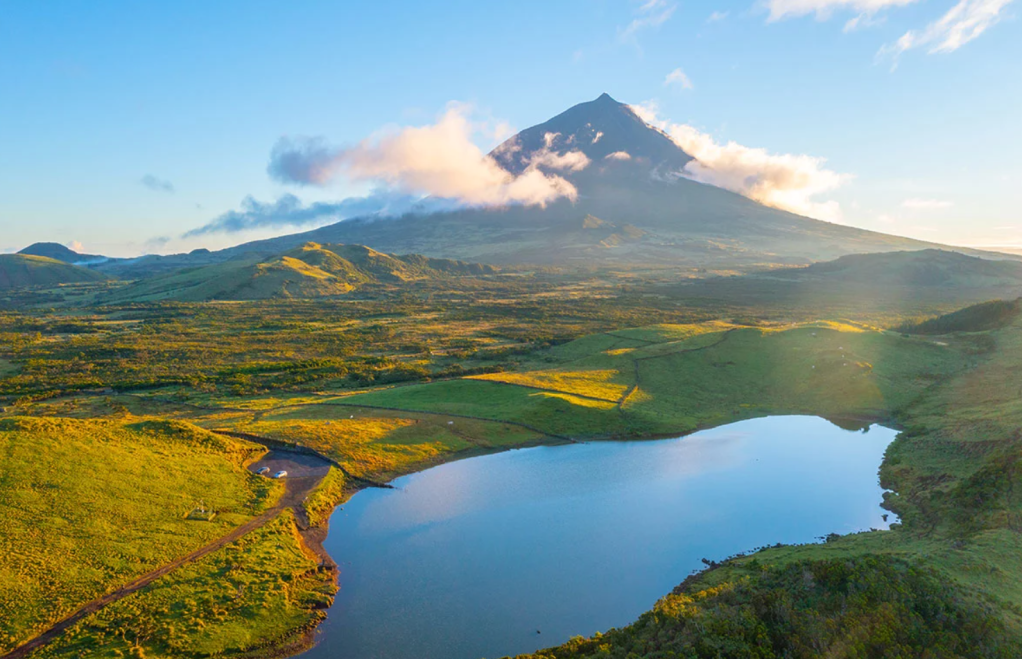
The third quarter of 2025 brought a strong rebound in climbs to Pico Mountain but confirmed a sharp drop in visits to the Region’s accessible volcanic caves in the Autonomous Region of the Azores. The data published in the 2025 third-quarter Bulletin of the Azores Regional Statistics Service (SREA) show that, between July and September, the combined total of climbs to Pico Mountain and visits to the Mountain House reached 25,431 visitors—an increase of 28.4% compared with the same period in 2024—while the volcanic caves recorded 45,120 entries, down 40.9% year-on-year.
In the case of Pico Mountain, the third quarter consolidates the summer season as the driving force behind this tourism product. After a modest start to the year, with 1,603 visitors in the first quarter and 12,155 in the second, the number of climbs and Mountain House visits soared to 25,431 in the summer of 2025. In 2024, the same quarter saw 19,806 visitors, meaning that the 28.4% increase recorded now represents 5,625 additional people during the peak demand period.
Even so, when looking at the January–September cumulative total, the overall balance remains slightly negative compared to last year. In the first nine months of 2025, the combined total of climbs to Pico Mountain and visits to the Mountain House reached 39,189 visitors, compared with 41,019 in the same period of 2024—a decrease of 4.5% (1,830 fewer people). The strong summer rebound offset only part of the sharp declines recorded early in the year, when the first quarter ended roughly two-thirds below 2024 levels and the second quarter was still down by about one-quarter.
The trend for the accessible volcanic caves is very different. Despite seasonal recovery—with entries rising from 10,487 in the first quarter to 36,287 in the second and 45,120 in the third—the comparison with 2024 shows a steep decline. In the summer of 2024, these caves received 76,372 visitors; in the third quarter of 2025 they drew only 45,120, a decrease of 31,252 entries, corresponding to a 40.9% year-on-year drop. Within the year itself, the summer total still represents a 24.3% rise over the second quarter, but this is not enough to recover the losses relative to the previous year.

Looking at the January–September cumulative total, the downward trend in cave visits is even more pronounced. Accessible volcanic caves registered 91,894 entries in 2025, compared with 156,300 in the same period of 2024. Over nine months, they lost 64,406 visitors—a reduction of 41.2%. Even with increased demand in the summer, the data confirm that this specific segment is performing well below last year’s levels.
The Environmental Centers of the Azores help contextualize this contrast. In the third quarter of 2025, these centers welcomed 146,118 visitors, an increase of 17.3% compared with the same quarter of 2024. During the first nine months of the year, 315,218 visitors passed through the Environmental Centers, up 9.4% from the 288,022 recorded between January and September 2024. In other words, overall interest in environmental interpretation sites and nature-based experiences continues to grow, even as volcanic caves lose relative weight within the wider offerings.
Taken together, the official data point to a reconfiguration of demand patterns for this type of tourism product in the Azores in 2025. Pico Mountain is regaining ground in the summer and moving closer to last year’s cumulative levels, confirming its status as an icon capable of attracting an increasing number of visitors during the high season. Meanwhile, the volcanic caves, despite still drawing tens of thousands of entries, are experiencing a year clearly below 2024, with drops of more than 40% both in summer and in the total for the first nine months.
In Diário dos Açores-Paulo Viveiros, director
Translated into English as a community outreach program by the Portuguese Beyond Borders Institute (PBBI) and the Modern and Classical Languages and Literatures Department (MCLL), in collaboration with Bruma Publication and ADMA (Azores-Diaspora Media Alliance) at California State University, Fresno. PBBI thanks Luso Financial for sponsoring NOVIDADES.

 Novidades - The Islands and the Diaspora