

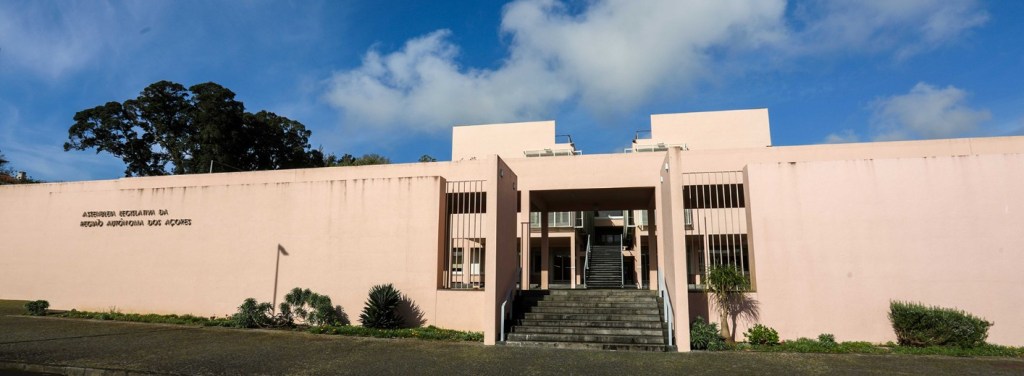
On the second day of the debate on the Plan and Budget for 2026, the Regional Secretary for Health highlighted the modernization of the Regional Health Service (SRS) driven by the PRR, announcing new equipment, measures to reduce waiting lists, and advances in the future of the Hospital do Divino Espírito Santo (HDES), including the possible acquisition of a PET scanner. While the PSD emphasized the strengthening of care in the sector, the PS, Chega, and BE pointed out weaknesses in the SRS, from the worsening of waiting lists to the lack of professionals, as well as in the restructuring of the HDES.
The second day of the debate on the Plan and Budget proposals for next year in the Regional Legislative Assembly featured a speech by the Regional Secretary for Health and Social Security, Mónica Seidi. She highlighted “the opportunities provided by the PRR,” which, according to her, will allow the Regional Health Service to modernize, differentiate itself, and become more competitive and attractive for retaining professionals.
Among the measures planned for 2026, Seidi announced the renewal of the vehicle fleet with 71 vehicles and the acquisition of surgical robots, “with tenders to be launched by the end of this year.” CT scanners will also be purchased for the Horta Hospital and the São Jorge ICU, and X-ray equipment on the islands of Corvo, Flores, São Jorge, Pico, and São Miguel will be replaced. She justified these choices by stating that, through the PRR, the government has opted to replace “all obsolete equipment left behind by more than two decades of socialist governance.”
The Secretary also said that the Investment Plan for 2026 includes four programs aimed at reducing waiting lists, both surgical and non-surgical. Regarding surgeries, she noted that in October 2025, the SRS “increased the average number of patients operated on since May 2024 by 11%.” She added that between May and December 2024, the HDES list grew by 2.4%, which was reduced by half (1.2%) between January and October 2025.

As for the future of the HDES, Seidi reported that weekly meetings of the analysis committee are taking place, in a “complex and lengthy” process, and that there is already a clear preference for one of the functional programs, which provides for the remodeling of the building, the expansion of the SU/ICU, the outpatient area, and new logistics areas. However, she stressed that “the new HDES will not just be concrete,” indicating that it will also be necessary to improve the response to users. In this context, she raised the possibility of acquiring a PET device, especially for cancer patients, which would allow annual savings of more than €500,000 by avoiding travel outside the region. Positron Emission Tomography (PET) is a medical imaging technique that uses molecules that include a radioactive component (radionuclide) and, when administered to the human body, these molecules allow the detection and localization of biochemical reactions associated with certain diseases, especially in the areas of oncology.
PSD/Azores deputy Salomé Matos highlighted “the quality work and daily commitment of SRS professionals” in a demanding context, noting that improvements in healthcare are “a reality in the sector.” She also highlighted the increase in General and Family Medicine coverage, currently close to 90%, compared to 72% in 2016. She added that, compared to 2019, several hospital specialties recorded growth of over 40%, citing increases of 32% in surgeries, around 15% in day hospital sessions, 15% in primary care consultations, and 23% in specialist visits.
PS/Azores deputy José Miguel Toste stated that health “is, without a doubt, the area of governance that most concerns the Azoreans.” He referred to the worsening of surgical waiting lists and mentioned that, in September 2025, the average waiting time was 473 days (1 year, 3 months, and 13 days). According to the socialist, “today, not only are there more Azoreans waiting for surgery, but these 13,260 are waiting longer.” Toste also warned of a reduction of 9,351 consultations carried out in the island’s health units, pointing to persistent structural weaknesses: a lack of doctors, nurses, and technicians, difficulties in retaining professionals, growing dependence on external providers, and disorganization in the coordination between units.
Regarding the reconstruction of the Hospital do Divino Espírito Santo, Toste stressed that “its recovery cannot be delayed,” but warned that the process “cannot become hesitant, late, or without guidance.”
Chega/Açores argued that maintaining the HDES emergency room in a modular structure is an inappropriate solution and should be reviewed by the Regional Government. Deputy Hélia Cardoso acknowledged that it could have been the best option “given the promise of funds from the Government of the Republic to finance the remodeling of the space,” but noted that this implied an increase of €88.4 million. José Pacheco explained that the modular structure was supposed to be temporary, created after the fire that affected the HDES, but is “becoming a permanent solution, a bottomless pit for taxpayers, with a deficient service that will tend to worsen.”
António Lima, from the Left Bloc/Azores, stated that the increase in surgical waiting lists and average response times is a direct result of the decrease in doctors and nurses and that “you can’t make an omelet without eggs.” According to data from the Directorate-General for Public Employment presented by the deputy, between March 2022 and September 2025, the SRS lost 149 doctors and 120 nurses.
“A problem that has already exceeded all acceptable limits”
Mónica Seidi stated that, in the context of additive behaviors, regional policies are aligned with national, European, and other international strategies, highlighting the Azores Task Force, “so criticized by some,” as having played a “decisive role.” She explained that, thanks to the work carried out and the action of various regional stakeholders, it has been possible to prepare the conditions for the substance NEP to be criminalized next year, with the penalty of imprisonment.
The Secretary also revealed that the Regional Government has already agreed with the Health Centers on the daily rates for the next four years, in the context of addictive behaviors and mental health. For 2026, a 10% increase in Mental Health daily rates and an 11% increase in addictive behaviors is expected, after several years of freezing “during socialist governance.”
With regard to IPSS, recognizing “the delicate moment they are going through” due to delays in payments by the Republic, Seidi assured that “all efforts will continue to ensure that the Financial Management Institute transfers the outstanding amount from the cooperation agreement to the Azores Social Security Institute.”
Socialist deputy Dora Valadão warned the ALRAA of the worsening situation of homeless people in several parishes in the region, stating that the Regional Government has not presented coordinated, effective responses that have a real impact on the lives of these people. She considered it to be “a problem that has already exceeded all acceptable limits” and requires immediate intervention. In the debate on the Plan and Budget for 2026, she also stressed that complaints related to insecurity, drug addiction, crime, and homelessness have increased and reveal the inadequacy of current responses.
As for the prevention of drug addiction, the parliamentary leader of Chega/Azores stated that the Regional Government “has done nothing,” adding that no Prevention Plan is known, nor its implementation, nor the respective planned investment. José Pacheco stressed that the fight against drug addiction cannot be based on the creation of “shooting galleries.”
The sole representative of BE/Azores recalled that the Regional Government has drawn up the Regional Plan for Social Inclusion and Citizenship, which aims to reduce monetary poverty by 40% by 2028. However, António Lima says that the Plan and Budget for 2026 does not include any measures provided for in that document: “How does the Government explain that, in the poorest region of the country, there are no measures to implement the Plan it itself created to combat poverty?”
Sofia Ribeiro says that support for School Social Action has increased by 42.8%

On the afternoon of the first day of the plenary session dedicated to proposals for the 2026 Budget, the Regional Secretary for Education, Culture, and Sport, Sofia Ribeiro, stated that “there is always a lot to do” and that “not everything can be done at the same time,” but she emphasized that the priority for 2026 is policies focused on people. In her speech, she began by referring to the main results of the current government, highlighting the Azores Education Strategy 2030, which defined as a priority bringing regional results closer to those of the rest of the country. According to the Secretary, this year the Azores achieved results above the national level in eight subjects.
Regarding School Social Action, Ribeiro reported that €14 million has been allocated, explaining that there are 17.4% fewer beneficiary students (a reduction greater than the demographic decline) but that, even so, support for School Social Action has increased by 42.8%.
With regard to teachers, she stated that the PSD/CDS-PP/PPM coalition government has hired more than 900 teachers, despite a decrease of about 4,500 students. Regarding the “Digital Schools” project, she revealed a cumulative investment of €36.5 million, which translates into more than 15,000 computers and tablets, more than 1,000 interactive panels, and 4,380 new internet points in schools.
In the area of culture, the Secretary assured that there is now “more money actually paid to cultural agents,” with €1.7 million programmed for 2026. She pointed out that the new support scheme for cultural activities received hundreds of applications and “improved the speed of the analysis of the processes.” She also stressed that culture “cannot be reduced to support,” but must ensure the vitality of traditions and heritage, as well as encourage creation, production, knowledge, and diversity.
Socialist MP Inês Sá defended the creation of a Social Pact for Education, which she considers essential in combating inequalities in the regional education system. She criticized the cuts of more than €12 million planned in the sector, accusing the government of exacerbating disparities between schools and students. She also highlighted three priority areas: the restoration and modernization of school facilities; incentives to retain teachers and operational assistants; and combating educational inequality to ensure that socioeconomic background or island of birth do not determine the quality of education.
Also from the PS/Azores, MP Marta Matos accused the Azores Government of devaluing the role of sport in the health and well-being of the population, referring to cuts of €2.3 million in this area. She also pointed out significant reductions in sports, children’s, and sports infrastructure projects. Regarding culture, she criticized the “persistent underfunding,” noting that in the proposal for 2026, only 0.68% of the plan is allocated to the sector and that “this government has never allocated even 1% of the regional budget to it.”
Chega/Azores deputy José Pacheco pointed out several schools in urgent need of intervention, including Antero de Quental Secondary School, whose refurbishment has been included in successive budgets for more than five years. He highlighted that the budget allocates €1.25 million to the school, but that “what is missing is to get started.” As for the shortage of teachers and assistants, he suggested that the Regional Government consider internal mobility solutions, although he warned that this could lead to an increase in sick leave.
António Lima, a member of the Left Bloc, cited data from the Directorate-General for Public Employment indicating that in 2020, there were 7,509 workers in Azorean schools and that this year there were only 7,504.
€10.1 million for local government

The Regional Secretary for Parliamentary Affairs and Communities, Paulo Estêvão, pointed out that immigrants represent 3.6% of the population of the Azores and are “essential to the regional economy.” He stated that the Government’s policy in this area is based on “humanism, integration, proximity, and historical memory,” recalling that the Azoreans “were and continue to be a people of emigrants.”
Regarding the media, Estêvão pointed out that the SIM Program “more than doubled Promedia’s support,” that the newspaper subscription program is finally operational, and that the training of journalists was successful, maintaining “total independence in content.” He added that programs to promote regional media have been launched and national support has been obtained outside the Azores budget.
Regarding the space sector, Paulo Estêvão considers 2026 and 2027 to be “decisive years.” The first suborbital launches are planned for 2026 and, in the short term, orbital launches, paving the way for the greater goal of launching satellites from Santa Maria. As part of an ESA program, with around €15 million, of which €3 million is co-financed by the Azores, the Santa Maria Space Technology Center will be built in 2027.
With regard to local government, the Secretary stated that, with a budget of €10.1 million, the Government is investing “directly in people, in proximity, and in balanced development.” He gave the example of tourist VAT payments for previous years and the launch of the Local Government Cooperation Portal.
Deputy Olivéria Santos, from Chega/Azores, stated that “supporting local government is more than an administrative option: it is a democratic necessity.” While recognizing the efforts of the Regional Government, she warned that supporting local government “does not only mean transferring powers,” but also ensuring adequate financial resources and effective autonomy. She called for special attention to the Parish Development Fund to ensure the continuity of ongoing projects.
Stability of scientific careers and retention of local talent
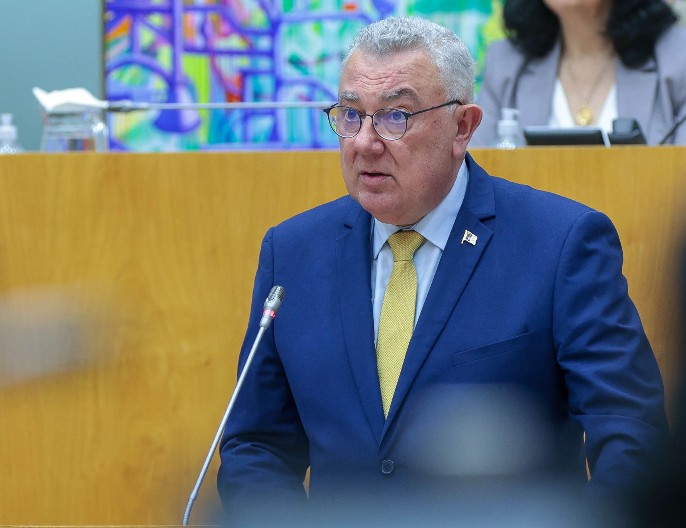
The Vice President of the Regional Government of the Azores, Artur Lima, also spoke in the parliamentary discussion of the Plan and Budget for 2026 last Monday. He highlighted the creation of two data centers on the islands of São Miguel and Terceira, as well as the completion of the Mobile.Gov project, investments which, he said, have reduced costs, increased efficiency in resource management, and strengthened the fight against external threats.
He also stressed that the Azores “are about to be connected to each other and to the world like never before,” alluding to the future “NUVEM” and ‘SOL’ submarine cables, which will connect to the archipelago.
In the international context, he argued that the Region must “be present and proactive in defending and demanding what is rightfully the Azores’.”
He recalled that the archipelago recently assumed an important role in the Commission of Peripheral Maritime Regions, where it holds one of the Vice-Presidencies. Artur Lima also highlighted the central role of the University of the Azores, classified as “a pillar of the Region.”
In this regard, he announced the creation of a regional Tenure program, which he considers a decisive step towards the stability of scientific careers and the retention of local talent. He added that the PROSCIÊNCIA and the Scientific and Technological System of the Azores are currently being reviewed. He stated that “a solid commitment to science has made it possible to raise the level of innovation” in the Region. He cited the European Commission, through the Regional Innovation Scoreboard, which ranked the Azores in 2025 as “Emerging+,” with a rating of 70 basis points.
In Correio dos Açores-natalino Viveiros-director.
Translated into English as a community outreach program by the Portuguese Beyond Borders Institute (PBBI) and the Modern and Classical Languages and Literatures Department (MCLL), in collaboration with Bruma Publication and ADMA (Azores-Diaspora Media Alliance) at California State University, Fresno. PBBI thanks Luso Financial for sponsoring NOVIDADES.

 Novidades - The Islands and the Diaspora