


Today is International Volunteer Day. In this context, Correio dos Açores spoke with Diana Pereira, manager of LIFE IP AZORES. This initiative, which began in 2019, aims to ensure the integrated, effective, and sustainable management of protected areas in the Azores by restoring the most vulnerable habitats and species. She says that volunteering is one of the pillars that underpin the project’s success. Since its foundation, there have been more than 60 volunteer actions, mobilizing approximately 1,300 people.
Correio dos Açores – What is the objective of the “LIFE IP AZORES” project?
Diana Pereira (Manager of “LIFE IP AZORES”) – “LIFE IP AZORES” isa vital initiative that underscores the importance of Natura 2000 implementation in the Azores. Managed by the Regional Secretariat for the Environment and Climate Action, it aims to inspire confidence in its role to ensure the effective, sustainable management of protected areas, encouraging stakeholders to support habitat and species recovery aligned with EU directives.
Through its implementation, the aim is to improve the conservation status of 100% of environments and at least half of the species that are currently in an unfavorable situation. To realize this, the initiative mobilizes complementary funds, a broad network of partners, and encourages society’s active participation, inspiring confidence that meaningful progress is achievable and sustainable.
Ultimately, it aims to leave a lasting legacy for Azorean biodiversity, strengthening the resilience of ecosystems to the impacts of climate change and contributing to the achievement of targets set by the European Union (EU), such as the Biodiversity Strategy 2030, the EU Regulation on Invasive Alien Species, and, more recently, the Nature Restoration Law.
How long has the project been running? Do you intend to continue?
It is a large-scale project, the first to be integrated and approved in Portugal, 60% of which isco-financed by the European Commission through the LIFE Program. It represents a total investment of €19.1 million dedicated to nature conservation in the Azores. Its implementation began in 2019 and will continue until 2027, plus an additional five years of monitoring and control of results, as planned for all LIFE projects.
In addition to the coordination provided by the Regional Secretariat for the Environment and Climate Action, we have four key partners: the Regional Directorate for the Environment and Climate Action, the Regional Directorate for Maritime Policy, the Portuguese Society for the Study of Birds, and the Fundación Canaria Reserva Mundial de la Biosfera La Palma. This support network ensures a multidisciplinary, integrated approach, which is essential to achieving the defined objectives effectively.
As for continuity, it is not only desirable but indispensable. The Regional Secretariat for the Environment and Climate Action aims to lay a solid foundation for conservation, train technical and operational teams, and establish a working structure that will sustain the actions initiated, expand them, and enable their replication. It is important to recognize that the challenges related to nature conservation and ecosystem restoration do not end in 2027, and we want to ensure that the Region is prepared to address them with knowledge, experience, and on-the-ground capacity.

To what extent is volunteering fundamental to the success of the initiative?
Volunteering is one of the pillars that underpin the success of LIFE IP AZORES NATURA. In addition to reinforcing the technical teams in the field, volunteers play a decisive role in maintaining fieldwork continuity.
But its importance goes far beyond the operational aspect, bringing the community closer to the archipelago’s natural values, promoting citizen science, and helping broaden the reach of messages and results. Each participant becomes an ambassador for Azorean natural heritage, helping build a culture of environmental responsibility and active participation.
Political leadership also recognizes this value. The Regional Secretary for the Environment and Climate Action, Alonso Miguel, has emphasized the importance of civil society involvement as an indispensable condition for ensuring that the work begun will endure over time. In this sense, volunteering is not just a complement; it is a driving force for change, capable of ensuring that the maintenance of nature in the Azores is a shared and ongoing mission.
What activities has the project already developed this year in conjunction with volunteers?
Throughout this year, several actions have been developed with their indispensable support. Of particular note are the initiatives to remove invasive alien species and plant endemic species, which are essential for the recovery and reinforcement of natural habitats. In various interventions, they also participated in monitoring restored areas, contributing to the scientific assessment of ecosystem evolution.
In addition to these activities, they are also involved in the SOS Cagarro program, one of the largest environmental volunteer campaigns in the Azores, in which hundreds of participants collaborate in rescuing juvenile shearwaters during the nesting period. This participation reinforces the commitment to protecting not only habitats but also the region’s most emblematic creatures.
The tasks assigned vary according to each individual’s profile, training, and objectives, allowing operations to be tailored to their skills and ensuring a useful, effective, and enriching experience. This flexibility values each volunteer’s individual contribution and enhances the collective impact on biodiversity protection.

How many volunteers have signed up this year? Has there been an increase?
In 2025, more than ten volunteer projects were promoted, involving around 400 participants. Since the movement began in 2019, more than 60 actions have taken place, mobilizing approximately 1,300 people, figures that reflect the community’s growing interest in nature conservation.
To this involvement is added participation in SOS Cagarro, which continues to be one of the most significant environmental volunteering campaigns in the region. Every year, hundreds of people, residents and visitors alike, come together to save the animal, reinforcing the collective impact of conservation efforts.
In recent months, there has been a notable increase in the number of interested parties, especially among foreign students in conservation, biology, and environmental management, who take advantage of their stay in the archipelago to collaborate in the field. This growth is also due to the availability of a new registration platform on the website, which has simplified and streamlined the process, facilitating the analysis, management, and integration of interested parties.
How can people participate and cooperate with you?
Interested parties can access our website, under the “Volunteering” tab, where they will find a registration form and useful information.
Alternatively, they can contact us directly by email, indicating the island where they wish to collaborate and their availability dates. Everyone is welcome to participate, learn about the work carried out on each island, and understand the real contribution each action makes to the preservation and services of the ecosystems.
What is the most common profile of volunteers? Which island has the most?
The most frequent profile is that of students, mostly foreigners, linked to nature conservation, biology, and related areas. Many arrive through academic programs or groups organized by universities and schools, and it is common for entire classes to participate, with specific activities planned during their stay.
The island of São Miguel concentrates most of the tasks and, consequently, the largest number of volunteers. This predominance is mainly due to its greater accessibility, logistical capacity, and ease in welcoming large groups, factors that facilitate organization and impact. The island of São Miguel hosts the majority of tasks and the highest number of volunteers. This predominance is primarily due to its greater accessibility, logistical capacity, and ability to accommodate large groups. These factors enhance both organization and impact.
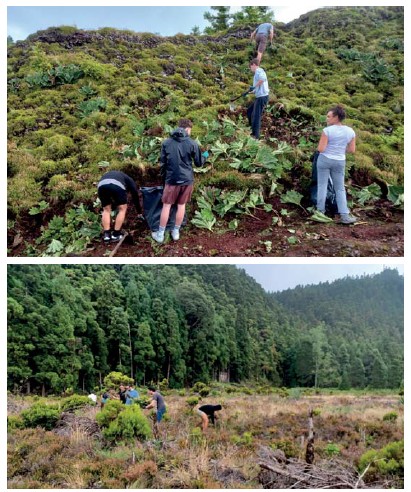
What impact have you already observed on the species and habitats conserved through the interventions?
Since its inception, the results have been significant, and it is already possible to observe clear improvements in habitat recovery and population reinforcement of several endangered species. In approximately 1,453 hectares of intervention, distributed across the nine islands, remarkable advances have been consolidated in terms of both ecological restoration and the production of scientific knowledge.
One of the most significant milestones was the establishment, in Ponta do Castelo (Santa Maria), of the first Nature Custody Agreement in the Azores, an area dedicated entirely to the protection of the habitats and species present there. At the same time, 102 new populations of native and endemic flora were identified, covering 19 target species. In the areas managed by the Regional Secretariat for the Environment and Climate Action alone, more than 44,000 native herbaceous and tree plants have been planted, contributing directly to the restoration of natural environments.
The installation of 22 km of fencing on the islands of Pico, Faial, and Corvo has also been decisive, allowing livestock to be excluded from sensitive areas and promoting the restoration of peat bogs and other vulnerable spaces. In terms of threat control, more than 120 hectares have been treated with actions to remove invasive alien species, significantly reducing pressure on native ecosystems. The installation of artificial seabird nests on several islets has increased the reproductive success of emblematic species of the archipelago.
In the field of scientific knowledge, the project has brought about significant advances. A striking example was the first detection of the Azores bat (Nyctalus azoreum) on the islands of Flores and Corvo, broadening our understanding of its distributionand reinforcing the importance of monitoring.
Together, these results demonstrate that LIFE IP AZORES NATURA is generating concrete, lasting, and essential impacts for the sustainability of species and habitats throughout the archipelago, contributing unequivocally to the protection of the Azores’ natural heritage.
What challenges have you faced over the years?
We have faced several challenges that require adaptive management and continuously adjusted solutions. Among the most significant is the rapid spread of invasive alien species, which requires regular, large-scale interventions to prevent the degradation of natural habitats.
The difficulty of accessing remote areas is another major obstacle, making some field actions particularly complex and logistically demanding. Added to this is the difficulty of managing operations spread across nine islands, each with distinct ecological, social, and operational realities.
Raising public awareness remains a constant necessity, especially amid the increase in tourism, which can intensify pressure on sensitive natural areas. At the same time, conflicts associated with agricultural activity, including vandalism of fences and illegal grazing, compromise environmental restoration and require rapid, coordinated responses.
Together, these factors underscore the importance of ongoing collaboration among public entities, the local community, the agricultural sector, tour operators, and other socioeconomic actors, ensuring that nature conservation in the Azores is a shared, long-term responsibility.
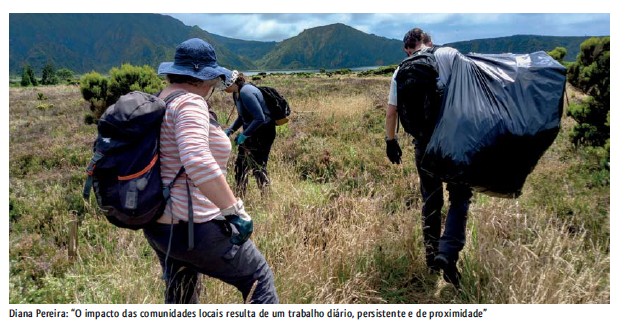
How do you assess the impact of local communities on the project?
The impact of local communities results from daily, persistent, and close work. In the first phase, people must be aware of the idea. In the second phase, they must participate and understand the importance of the diverse actions we carry out for conservation. Awareness has been one of the central pillars of LIFE IP AZORES NATURA, and the growing involvement shows that this effort is producing concrete results.
Actions aimed at schools have been particularly relevant, marking ongoing progress in environmental education, especially through the School Environmental Awareness Activities offered by the Regional Secretariat for the Environment and Climate Action. At the same time, we have developed wide-ranging thematic initiatives, such as the campaign dedicated to the invasive species pampas grass (Cortaderia selloana), distributed to all municipalities and parish councils. This campaign has raised awareness of the rapid spread of the species and encouraged the adoption of control practices. The positive feedback from several islands indicates that our initiatives are gaining momentum and prompting proactive responses.
Overall, the impact is very positive. With each trip, we notice that a growing number of people have heard of LIFE and recognize the work being done on the ground.
Nevertheless, there is still much to be done, especially in combating and controlling invasive alien species, which remain one of the greatest challenges to nature conservation. Overcoming them requires continuous, collaborative effort and increasing participation by the whole community.
How did the community receive the project? Did they embrace it or did you feel a lack of support?
The community’s reception has been very good overall. However, this is a process that requires time, continuity, and proximity—conditions that are not always easy to guarantee in all locations. There are areas where collaboration arises more immediately and spontaneously than in others, but the most important thing is that, over time, collective commitment has enabled initiatives to move forward and gain consistency.
It is also essential to highlight the role of the Environment and Climate Action Services on each island. Their teams, including security guards, operational staff, and technicians, have been instrumental in ensuring the success of on-the-ground work, serving as a direct bridge between the project and local communities. Without this local support, many of the interventions would not be possible.
How do you balance caring for nature and human activities?
In the Autonomous Region of the Azores, this aspect has to go hand in hand with sectors such as agriculture and tourism. We seek this balance through dialogue, training, and awareness-raising, showing that the ecosystems we protect provide essential services and contribute to the well-being of populations.
That is why we have invested in external training and awareness-raising aimed at the general public, clearly showing the importance of these habitats and the role that each person can play in their protection. Balance is built through dialogue, involvement, and appreciation of the territory, ensuring that human development and conservation go hand in hand.
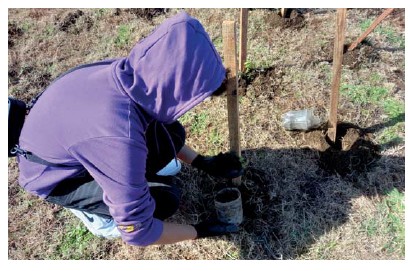
What partnerships have you developed over time?
We have established several partnerships that have been essential to amplifying conservation’s impact. One of the most significant examples was the first Nature Custody Agreement in the Azores, in Ponta do Castelo (Santa Maria), the result of direct collaboration with the owner to ensure the active protection of that area. Simultaneously, we are actively engaging with schools, local authorities, parish councils, and associations, including farmers’ groups, through fencing projects that exemplify our ongoing conservation efforts.
We have also created a tab on the website dedicated to funds and financing opportunities to support entities and citizens interested in applying for various notices related to maintenance, environmental education, or sustainable development. In addition, we maintain close contact with other initiatives, both within and outside the region, to share best practices and develop joint solutions to common challenges. These partnerships have been fundamental in strengthening the environment in the Azores and ensuring an increasingly collaborative approach.
What message would you like to leave for this International Volunteer Day?
Our message is, above all, one of recognition and awareness. Volunteering is fundamental to ensuring the environmental sustainability of the Azores, involving not only the local community but also many international visitors who join us in a joint effort to preserve ecosystems.
We want more and more people to take an interest in these issues and to be curious about the work being done on the ground. The progress achieved was only possible thanks to the commitment of everyone, including the volunteers who, with dedication and a sense of mission, protect the archipelago’s biodiversity.
Every action, no matter how small, has a real impact on nature and the quality of life of communities. Volunteering shows that protection is a collective effort and that, together, we can make a difference.
Do you think it is important to commemorate this date?
Yes, it is essential to mark this date. International Volunteer Day values those who give their time and energy for the common good and helps to reinforce the importance of civic participation in protecting nature. It is also an opportunity to inspire more people to get involved, showing that individual contributions are essential to addressing challenges such as ecosystem restoration and invasive species control. Celebrating this date is a way to recognize the central role of volunteers and to renew our commitment to working together for the future of the Azores.
Diogo Simões Pires is a journalist for Correio dos Açores-Natalino Viveiros, director
Translated into English as a community outreach program by the Portuguese Beyond Borders Institute (PBBI) and the Modern and Classical Languages and Literatures Department (MCLL), in collaboration with Bruma Publication and ADMA (Azores-Diaspora Media Alliance) at California State University, Fresno. PBBI thanks Luso Financial for sponsoring NOVIDADES.

 Novidades - The Islands and the Diaspora