

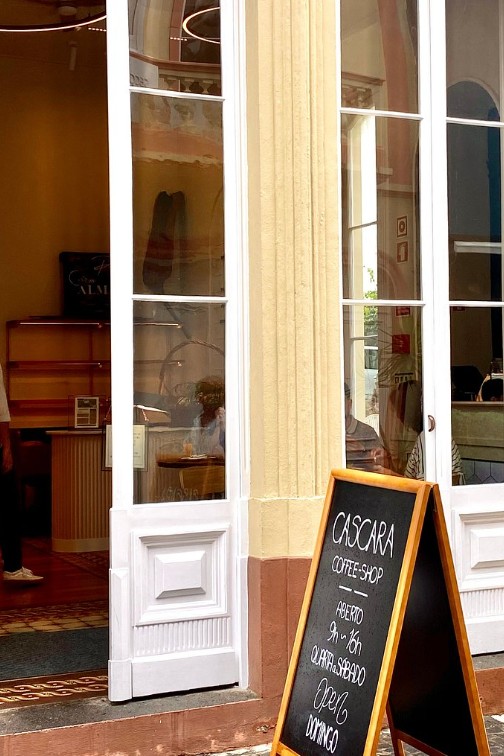
With over 20 years of experience in the restaurant business, Tatiana Pertegato and her husband Maxime came to São Miguel in 2020. After opening Louvre Micaelense, they decided to open a new space, Cascara Coffee Shop, at Casa das Palmeiras. The founder explained to Correio dos Açores why they opened this space, what differences there are between Cascara and other cafés, and stated: “We have enormous respect for this area; we would never set a price above the true value of our product.”
Correio dos Açores – What led you to open Cascara Coffee Shop?
Tatiana Pertegato (founder of Cascara – Coffee Shop) – I have been living in São Miguel with my husband since 2020, and we are the owners of Louvre Michaelense — Bar, Bistro, and Grocery Store. When we arrived, we reopened the space, which had been around since 2015, but with a new concept developed by us. In May of this year, we opened a space that, in our opinion, was missing in the city center: a place where you could eat a high-quality breakfast.
Since we work at the Louvre, which is located in the city center, we never knew where we could go for breakfast or even brunch, since we already worked in a café and didn’t want to eat there too.
As two coffee lovers, we have always wanted to open a space dedicated to this specialty—a place where people can enjoybreakfast or brunch accompanied by handmade pastries. Maxime, my husband, being French, brought the tradition of preparing fresh croissants every morning, and I, being Italian, added cappuccino to our breakfast. We felt that something like this was missing in the center of Ponta Delgada. On the island, there are very few places that make everything fresh; as far as I know, there is only one other place that does, and it even opened after us. People want places with these products, but they don’t exist yet. In our opinion, we created a space that both locals and visitors needed.
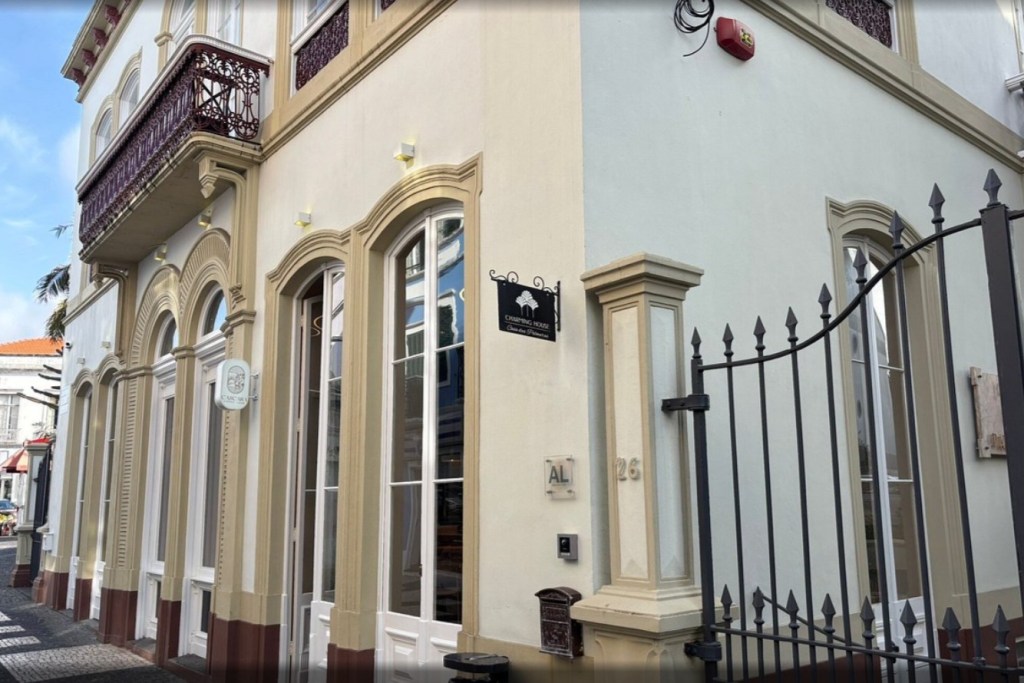
And why have the space at Casa das Palmeiras?
It was fate. This is a space we had been following since 2019. We got married here when we were traveling, before we moved.
We had dinner with our family and were immediately attracted to this space. So, when the Ce La Vie restaurant closed and the place became available, I contacted Raquel, the owner of Casa das Palmeiras, out of curiosity. As they already knew us because of the Louvre, they decided to go ahead with us on this project without hesitation. It was a very brief conversation, which went extremely well and came to fruition very quickly.
How have these first six months of Cascara been?
They have been very good, sometimes too good, because, as I mentioned, all our products are fresh, which means we have a production limit, and during the summer this limit was not enough to meet demand.
People praise the space, the aesthetics, and the quality of the food. Still, some do not recognize that quality comes at a different cost than what they are used to. We have over 20 years of experience in the restaurant business and a deep respect for this industry; we would never set a price above the true value of our product.
We know that our prices are above average and we are aware that there are still places where you can get a coffee for 75 cents. However, we also know that our coffee is organic, we use a top-of-the-line machine, and we offer high-quality service. Therefore, we are convinced that the price is fully justified by the experience we provide to the customer.
This has been pretty much the only criticism we have received: that it is a little expensive. And that’s okay, because considering something expensive or cheap is always subjective. It depends on each person and their lifestyle.
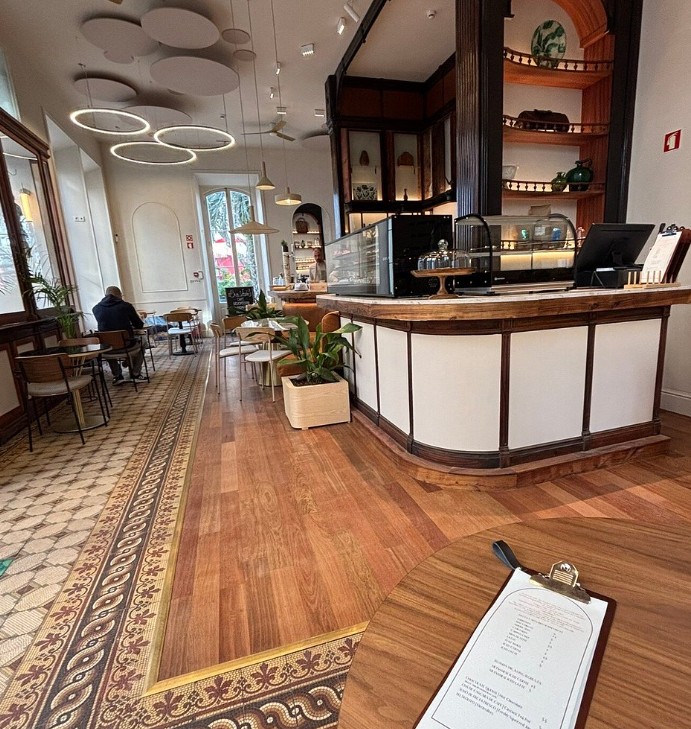
If you had to list the differences between Cascara and the other cafés here in the city, what sets Cascara apart?
We offer organic coffeefor espresso-based drinks, and we also offer a locally roasted option through a partnership with a local bar that roasts its owncoffee.
We also have classic coffees—cappuccino, flat white, and espresso—and specialties such as ceremonial-grade matcha latte. Our rule is simple: if we serve a product, we guarantee that it is of the highest quality.
We also serve Vietnamese coffee, prepared with a traditional filter. It is a totally different process, which takes about five minutes and is filtered directly over an ice cube produced by us. It contains condensed milk and uses 100% Robusta coffee, unlike the usual Arabica.
In addition, we make V60 coffees, another filtering method, using different origins depending on what is available on the market — Colombia, Guatemala, Brazil — always with EcoSolidários coffees. Delta collaborates with farms that support local producers.
We also have cold brew, and we believe we are the only ones to offer it here. Although it is also a filtered coffee, the process is different: instead of hot water, it uses cold water and extracts slowly over eight hours. The result is a coffee with completely different notes, impossible to obtain when the bean is “roasted.” I had never seen these methods here before. These are things we like and are always experimenting with.
And in terms of pastries?
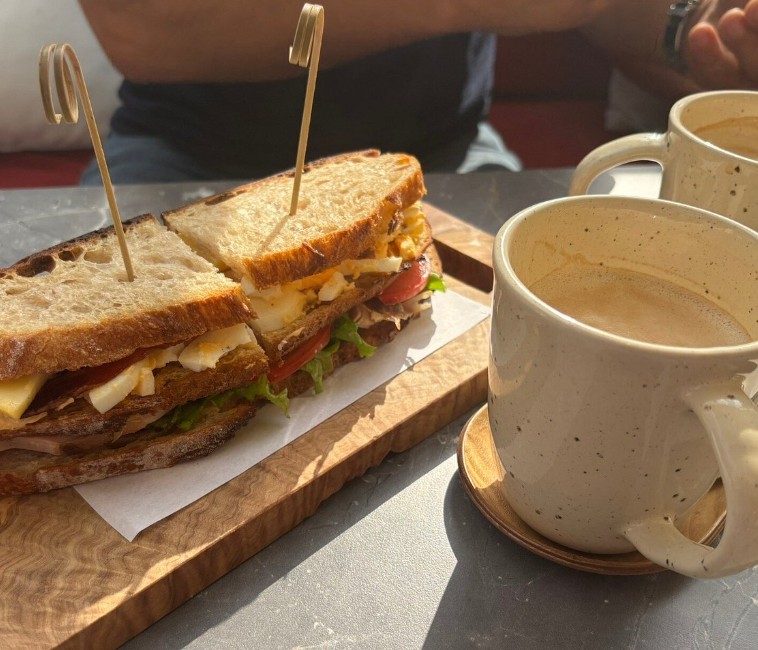
We don’t have pastel de nata, simply because it’s a Portuguese classic and we prefer to leave it to those who are naturally from here. All our pastries are produced on site and the base is always made with yeast and also with sourdough. Among our classics—which are not easily found elsewhere—are croissants, cinnamon rolls, and, since the summer, some specialties such as lemon meringue pie, Sicilian cannoli, an Italian dessert made with ricotta and less sweet, and éclairs. Our pastries thus reflect two major influences: French and Italian.
We do not offer gluten-free products; we focus on fresh, natural products. We are aware that we do not have many options for those following a gluten-free or vegan diet, but we always guarantee simple, high-quality ingredients.
In addition, we have design objects available for sale. This way, customers can have a coffee, enjoy something special, and even take home a unique piece.
Is there a high turnover of people coming in and out of the Cascara team?
At the moment, we don’t have that turnover. We have chosen to take our business in a different direction—a slightly risky path, but one that has worked very well so far. We decided to work with a smaller team and shorter hours, being open only from 9 a.m. to 4 p.m. This allows the entire team to be present throughout the day, without the need for shifts, thus avoiding an increase in the number of employees. In addition, we close two days a week, on Mondays and Tuesdays, which allows us to maintain a team of eight people who have been with us since we opened.
We were also fortunate to seek out people with field experience, knowing from the outset that we would have to offer salaries above market rate. We want everyone to feel happy, well, and comfortable, and to want to stay with us. So we provide a good salary, a healthy work-life balance, and we also benefit from the reputation we have built up over the years. We have earned this reputation by being serious, professional, fair, and easy to work with and learn from. We don’t want work to be just about putting in eight hours and going home without developing. The energy we put into this—the desire to create a relaxed, pleasant, and inspiring environment—also contributes to better work.
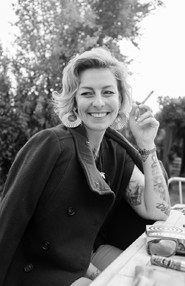
Is it difficult to be an entrepreneur in the Azores?
It’s not easy, and there are several factors involved. One of them is the economic factor, as it is not easy to cover all the costs that an entrepreneur has annually, both legally and before the State. There are many taxes, and although we are entitled to various forms of support, these almost always come with conditions. It often ends up being more complicated to maintain the support than to simply decide not to use it.
The second factor is the difficulty in finding staff. I find it very interesting that the Azores, being a region that lives almost entirely from tourism, does not currently have a large number of professionals on the island.
Often, locals are not interested in pursuing this field or do not see it as a career, which makes hiring difficult. In addition, bringing in professionals from outside is difficult due to the issue of accommodation. The impossibility of living or renting a space in the city center at an affordable price significantly limits the hiring of these professionals.
This staffing crisis has been going on since Covid in 2020, and I see no signs of improvement, which makes the situation very complicated. Many entrepreneurs end up closing their businesses because they cannot find suitable employees. This problem is even more pronounced outside Ponta Delgada—for example, in Ribeira Grande, São Vicente, and other locations, it becomes much more difficult for entrepreneurs to keep their establishments open.
And it’s a shame, because the possibility, capacity, and potential exist, but if there is no one dedicated to this professional field, it becomes complicated.
This doesn’t just happen in the restaurant business, it’s a general problem. I’ve enrolled in a training course and hope to be at hotel school soon so I can influence people to return to this field.
Hospitality is beautiful when it happens: it allows us to bring joy to those who visit our space through the universal language of food and drink, and it’s a privilege I appreciate every day. Many people think it’s simple. It’s not automatic. We have to know how to deal with people, know how to talk and listen, and have knowledge of how things work. Let’s see what happens in the future.
Frederico Figueiredo is a journalist for Correio dos Açores, Natalino Viveiros-director
Translated into English as a community outreach program by the Portuguese Beyond Borders Institute (PBBI) and the Modern and Classical Languages and Literatures Department (MCLL), in collaboration with Bruma Publication and ADMA (Azores-Diaspora Media Alliance) at California State University, Fresno. PBBI thanks Luso Financial for sponsoring NOVIDADES.

 Novidades - The Islands and the Diaspora