

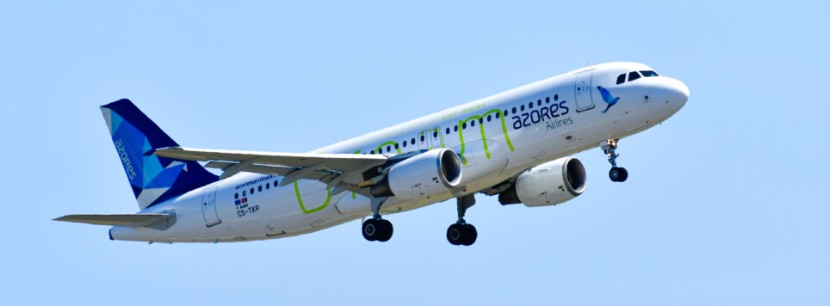
The urgent debate on the situation of the SATA Group marked the first day of the last plenary session of the year in the Legislative Assembly. Duarte Freitas, Regional Secretary for Finance, said he was open to evaluating proposals from the opposition, but dismissed the idea that Azores Airlines’ liabilities amount to €700 million. At the same time, PS/Azores presented three measures to ensure the company’s stability. Both the coalition and opposition parties debated past responsibilities and the future of the group.
Yesterday, the last plenary session of the year began in the Legislative Assembly of the Autonomous Region of the Azores (ALRAA), with the first day largely devoted to the urgent debate on the situation of the SATA Group, proposed by the PS/Azores.
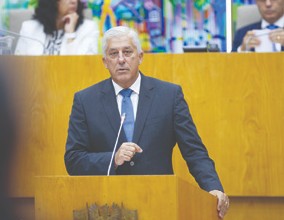
In view of the solutions and measures presented by the opposition, Duarte Freitas, Regional Secretary of Finance, said he was willing to evaluate some of the proposals. He also clarified that Azores Airlines’ liabilities “will be far from the €700 million mentioned here.” However, the government official stressed that “there is a lot of intra-group debt” and that there is “a lot of fine-tuning to be done,” concluding that, regardless of the context, “the liabilities that remain at the end are those that, naturally, the Azoreans will have to pay.”
Regarding the company’s handling operations, Freitas states that, in the future, “whether sold or not,” it should be subject to public service obligations (PSOs) so as “not to weigh on the carrier’s accounts.”
PS/Azores presented three measures for the future of SATA
Faced with the future of SATA, the Socialist Party/Azores presented three solutions to, according to the party, guarantee the future of the company, protect the mobility of the Azoreans, and safeguard jobs.
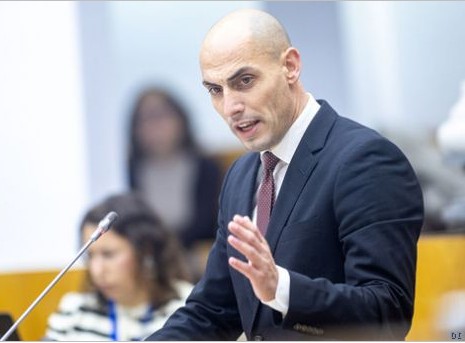
In the urgent debate, Carlos Silva, Vice-President of the PS/Azores Parliamentary Group, advocated the effective separation of the SATA Group’s administrations, creating two separate and qualified leaderships for each company in the group, for “greater accountability in management”; reviewing the Region’s position on handling in negotiations with Brussels, arguing that this activity “should remain largely under public control”; and strengthening parliamentary oversight of the privatization of SATA Internacional, ensuring “transparency, rigor, and access to information by all parties and citizens.”
According to the parliamentarian, these measures are “a decisive contribution to restoring stability to the group and saving SATA Air Açores from a possible collapse of SATA Internacional,” stating that “it is not enough to say that ‘now it’s going to happen’ or that ‘we expect different results,’ making the same mistakes of the past or, in many cases, even more serious ones.”
As an example, the socialist recalled the Restructuring Plan, “negotiated by the government of José Manuel Bolieiro and approved by the European Commission in the amount of €453 million” was a “unique opportunity to relaunch and make the company viable” and that after five years “we are now in a position to say that this Restructuring Plan has proved to be a complete failure.” He added that the process had turned into “a real soap opera,” marked by “a lack of transparency and decisions of dubious legality.”
In addition, Carlos Silva gave examples of decisions that, in his opinion, had the opposite effect: “They promised more transparency, but they hide the accounts and do not publish them in a timely manner; they promised to end loss-making routes, but they created others and aggravated the losses; they promised to avoid hiring more ACMIS, but they spent more than €50 million between 2021 and 2024 alone; they promised to reduce personnel costs, but hired 400 more employees and gave raises of more than 30% to some of them; they promised to reduce operating costs by €100 million, but not only did they not reduce them, they increased them by more than €260 million; and they promised stability, but there have already been 11 directors and 4 chairmen of the board of directors.”
Coalition parties point to improvements at SATA and accuse PS of destroying the company
PSD/Azores deputy Paulo Simões emphasized today that “transparency” has been the guiding principle of the PSD/CDS-PP/PPM coalition government in the privatization of SATA Azores Airlines, and that the coalition supports the creation of a commission to monitor the process. He recalled that the socialist governments were “responsible for sinking SATA,” and that it is now up to the Coalition Government to address the legacy they left.
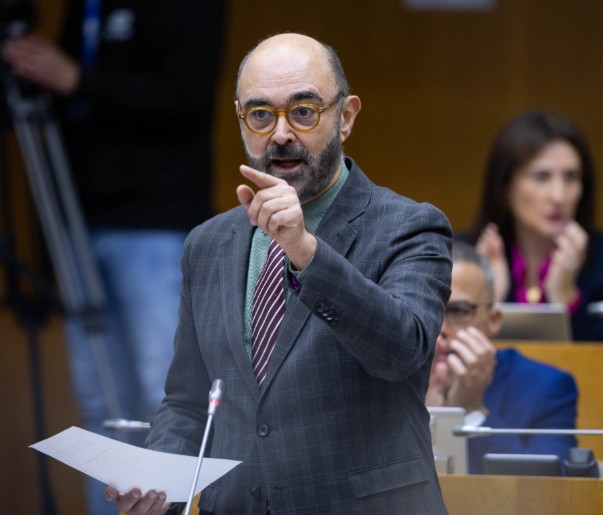
The Social Democrat deputy presented the chronology of the company’s financial evolution between 2018 and 2024: “In 2018, SATA Internacional had a loss of €63.4 million. In 2019, around €56 million. And then we moved on to the PSD/CDS-PP/PPM government. In 2021, €50.3 million. There has already been an improvement. In 2022, €34.2 million.”
He also pointed out that losses were reduced by 30%: “In other words, when SATA achieved its worst result of the socialist years, in 2018, the regional, national, and macroeconomic economic scenario was favorable, as indicated in the Court of Auditors’ report (…) The Coalition government, on the other hand, is facing two wars and an inflationary crisis, not to mention that it is still paying off debts arising from the acquisition of Cachalote.“ The deputy also stressed that the PSD/Azores approves the establishment of a working group, within the scope of the Economy Committee, to monitor the privatization of SATA.”
For his part, the parliamentary leader of the CDS/Azores, Pedro Pinto, stated that SATA’s situation “remains challenging, and no one here is ignoring that,” but pointed out that recently released data show objective signs of improvement in the Group’s companies’ financial and operational indicators. The deputy said it is essential that the public debate on the future of the company considers “the reality as a whole and not just the most negative elements.”
Despite the progress, the parliamentary leader reiterated that there are still important challenges ahead and, therefore, this does not mean that SATA’s overall situation is positive; “it just means that, within a difficult scenario, there are measurable signs of stabilization that must be recognized and analyzed seriously.”
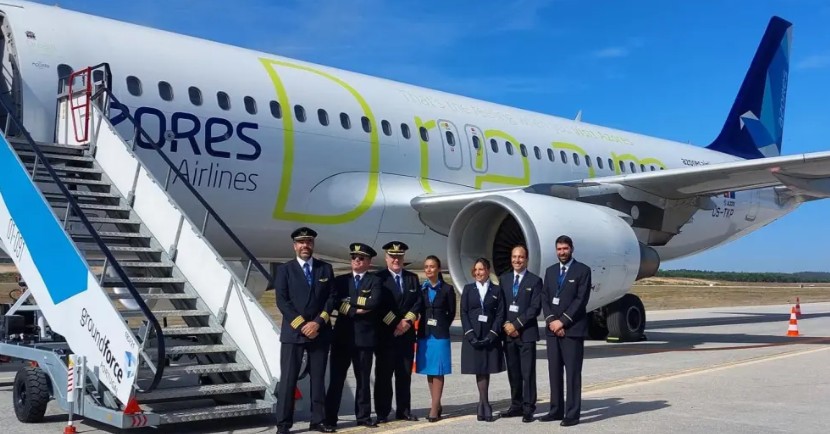
Regarding the ongoing process, Pedro Pinto recalled that the group is at a decisive moment of privatization and restructuring and that, therefore, responsibility in public discourse is essential.
PPM deputy João Mendonça explained that the restructuring plan “is not from this government”: “It was negotiated by the PS with mandatory commitments, the sale of Azores Airlines, and strict European restrictions. All because the PS pushed SATA to the limit and had to ask for a bailout.“
The parliamentarian from one of the coalition parties emphasized that this government received a ”bankrupt company,“ ”a plan closed by the PS,“ and ”non-negotiable European commitments,“ adding that, despite this, the executive ”complies, works, negotiates, and defends the region.”
On the opposition side, Chega/Azores points to the current situation of SATA to the Socialist Party, but stresses that “the same path was followed and continued after 2020” with the executive of José Manuel Bolieiro.
Referring to the PS/Azores’ proposal for a regime pact for SATA, CHEGA’s parliamentary leader, José Pacheco, said he agreed with the need for effective oversight of the entire process, either through the Economy Committee or another body of the Legislative Assembly.
José Henrique Andrade is a journalist for Correio dos Açores-Natalino Viveiros, director
Translated into English as a community outreach program by the Portuguese Beyond Borders Institute (PBBI) and the Modern and Classical Languages and Literatures Department (MCLL), in collaboration with Bruma Publication and ADMA (Azores-Diaspora Media Alliance) at California State University, Fresno. PBBI thanks Luso Financial for sponsoring NOVIDADES.

 Novidades - The Islands and the Diaspora