

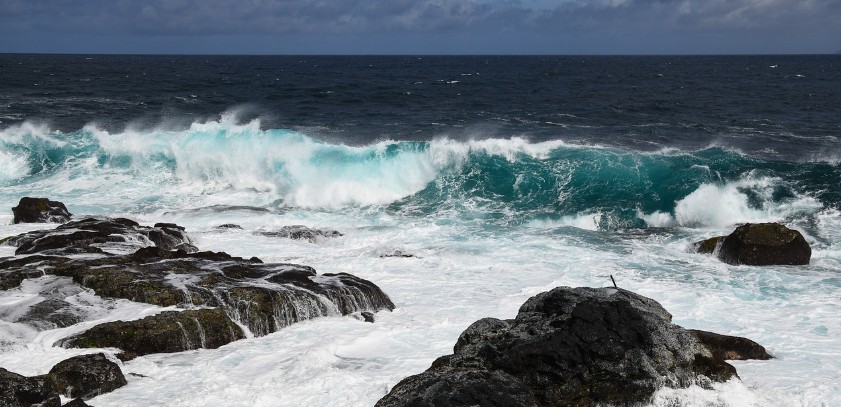
The Regional Government of the Azores has approved a new and far-reaching strategy for managing the archipelago’s protected ocean, a decision that marks an important transition for the islands and for all those who, across the world, continue to feel tied to this maritime homeland. Beginning on January 1, 2026, the Azores will enter a new phase in the stewardship of their vast marine territory through the implementation of the EGRAMPA— the Management Strategy for the Azores Network of Marine Protected Areas. This strategy gives operational shape to the network known as RAMPA and strengthens the region’s commitment to protect 30 percent of its maritime space, half under full protection and half under high protection. Covering nearly 287,000 square kilometers, this network represents both a scientific endeavor and a cultural one: a recognition that the sea remains the deepest link binding islanders to those who emigrated generations ago.
EGRAMPA makes clear that the success of this protected-area network will depend on three intertwined forms of responsibility: continuous scientific monitoring, effective and coordinated enforcement, and a stable, diversified financial base capable of sustaining long-term conservation. To achieve this, the Government will immediately begin defining the necessary resources, identifying funding sources, reinforcing inspection capacities, preparing management plans, and establishing a system to monitor environmental, social, and economic outcomes. These actions form the backbone of a modern approach to ocean governance—an approach that matters not only on the islands but also to the diaspora, for whom the ocean has always been both a memory and a horizon.
The strategy sets in motion the preparation of spatial planning and management plans for each protected area, ensuring that rules of protection can be applied with clarity, with practical tools, and with goals adapted to each ecological context. At the same time, it emphasizes that the effectiveness of any conservation effort depends on the capacity to watch over the sea. Surveillance and enforcement are treated as essential dimensions of the system, to be strengthened through cooperation with the National Maritime Authority, the Republican National Guard, and the Regional Inspectorate of Fisheries and Maritime Uses. Together, these institutions will help uphold the integrity of the Azores Marine Park, safeguarding the marine life and ecosystems that many emigrants remember from childhood, or from the stories passed down across oceans.
A significant portion of EGRAMPA is devoted to the creation of a rigorous financial model that can support the full spectrum of conservation work—from marine science to community engagement, from environmental monitoring to education. The Government anticipates that resources will be most heavily demanded in the early years, as the system is built, and later in the ongoing costs of monitoring and enforcement. To meet these needs, the strategy proposes a financing system that draws from multiple sources: annual regional budget allocations, European Union funds dedicated to biodiversity and the blue economy, scientific partnerships, and voluntary contributions. The ultimate goal is the creation of a permanent and transparent conservation fund whose benefits are shared equitably across all islands.
Crucially, this financial system will operate with contracts, cooperative agreements, public calls for research and conservation projects, and support for strategic initiatives. Annual reports and audits will ensure accountability, and the effectiveness of funding will be measured alongside environmental and socio-economic indicators, allowing the system to evolve as necessary. In this way, the Azores hope to build a model of marine conservation that is scientifically sound, economically stable, and socially legitimate.
For the diaspora—especially for those living in North America, where so many Azorean families maintain a strong emotional connection to the sea—this new phase in marine protection offers more than an administrative update. It represents a reaffirmation of the islands’ identity as a maritime region whose well-being has always depended on the health of the surrounding ocean. Protecting these waters means protecting a shared memory, a cultural inheritance, and a legacy that migrants have carried with them to California, New England, Bermuda, Canada, Brazil, and beyond. The success of EGRAMPA carries implications not only for biodiversity and sustainable development, but also for the way future generations of Azorean descendants will understand their roots.
By aligning spatial planning, scientific monitoring, maritime surveillance, and sustainable financing under a single strategic vision, the Regional Government seeks to ensure that the ocean remains a living presence in the region’s life. The commitments made through 2028—to complete management plans and establish a long-term financing model—signal a determination to build a protected marine system with measurable impact and lasting value. For the islands and their global diaspora, this work echoes the same truth: that the sea, always a force of departure and return, remains the element through which the Azores imagine their future.
Adaptation from an article in Diário dos Açores, Paulo Viveiros, director.
Translated into English as a community outreach program by the Portuguese Beyond Borders Institute (PBBI) and the Modern and Classical Languages and Literatures Department (MCLL), in collaboration with Bruma Publication and ADMA (Azores-Diaspora Media Alliance) at California State University, Fresno. PBBI thanks Luso Financial for sponsoring NOVIDADES.

 Novidades - The Islands and the Diaspora