

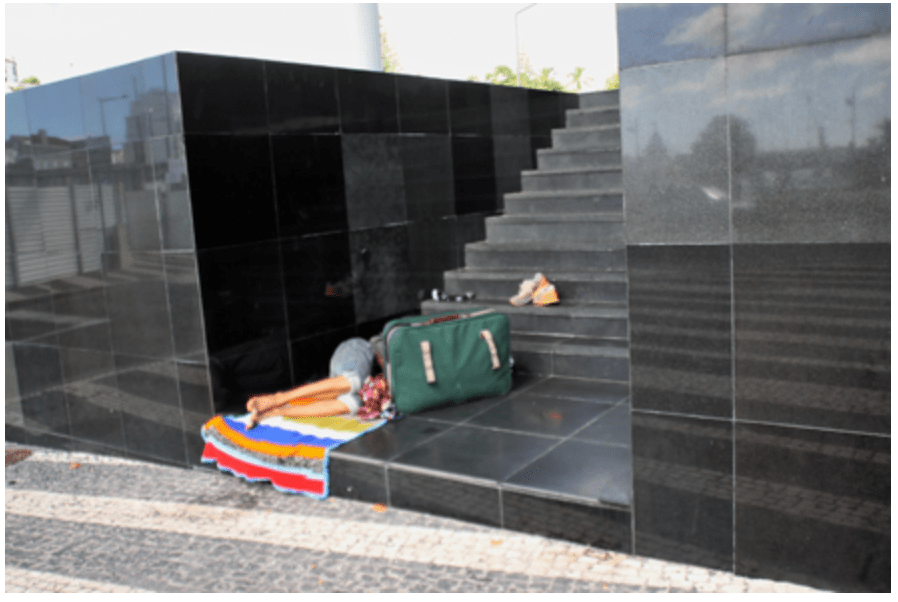
An open letter signed by the Initiative of People Experiencing Homelessness (PSST) sounds an urgent alarm over the growing number of people living without shelter in the municipalities of Ponta Delgada, Ribeira Grande, and Lagoa, and calls for immediate measures to confront the added cruelties of winter. Addressed to regional and municipal authorities, the document prompted inquiries from Correio dos Açores to the Ponta Delgada City Council, which declared its willingness to work in partnership with the Regional Government of the Azores on the development of a contingency plan, situating its response within the framework of ongoing social policies in the municipality.
The open letter—written by people who inhabit public spaces, emergency shelters, or fragile and improvised refuges—warns that homelessness in São Miguel continues to expand. According to estimates by the Association Novo Dia, approximately 150 people currently live in this condition across the municipalities of Ponta Delgada, Ribeira Grande, and Lagoa alone.
With unmistakable urgency, the document calls for a set of immediate measures to help these individuals withstand “the harshness of the winter that lies ahead.” Among its proposals is the opening of a new, temporary accommodation center—provisional in nature, yet vital—to respond to the most pressing needs over the next six months. It further urges the creation of protected spaces, even if improvised, equipped with beds, warm coverings, hot meals, hygienic facilities, and dignified access to health care.
Beyond emergency responses, the initiative insists on a longer horizon. It argues for the strengthening of housing solutions for the population at large and, in particular, for approaches that prioritize immediate access to housing as a cornerstone of personal and social reintegration. The appeal is also endorsed by citizens who are not themselves experiencing homelessness but who recognize the gravity of the situation and the moral imperative for swift and effective action.
“To live on the street is to lose, little by little, the dignity every person deserves”
The open letter gives voice to lived experience, stating that people experiencing homelessness endure “daily inhumane conditions that threaten our dignity, our health, and even our lives,” and stressing that winter intensifies this suffering in dramatic ways.
“The cold penetrates our clothes and improvised blankets, undermining our health, and even when illness strikes, we are forced to remain in these conditions. Rest does not exist: sleeping on the street is not sleeping—it is surviving one more night, in the same cold and unsafe place, often while hearing words we would rather not hear.”
The reality, they write, is “harsh, but simple to understand”: to live on the street is to be stripped, gradually, of the dignity owed to every human being.
The document underscores that such conditions constitute a clear violation of fundamental principles enshrined in the Portuguese Constitution, which is founded on “the dignity of the human person and the will of the people committed to building a free, just, and solidary society” (Article 1), and which guarantees the rights to social protection (Article 63), health (Article 64), and housing (Article 65).
The letter was addressed to the President of the Regional Government of the Azores, the Regional Secretary for Social Security and Health, and the mayors of Ponta Delgada, Ribeira Grande, Lagoa, and Nordeste.
Response from the Ponta Delgada City Council
In response to the appeal, Correio dos Açores sought clarification from the Ponta Delgada City Council regarding measures aimed at addressing the most immediate winter-related needs. In its reply, the municipality stated that, within the scope of its responsibilities, it remains available to work alongside the Regional Government of the Azores in developing a contingency plan, situating its action within the broader landscape of social responses already underway.
The municipality highlighted a significant reinforcement of its efforts to combat social exclusion, noting new initiatives in social emergency response, psychosocial rehabilitation, housing, and support for people in vulnerable situations. It further reported the recent signing of a protocol with the São João de Deus Institute for the creation of a Social Emergency Center and a Psychosocial Rehabilitation Residence, scheduled to begin operating next year, thereby expanding social accommodation capacity in Ponta Delgada.
The Social Emergency Center is expected to serve up to 30 people experiencing homelessness, offering psychosocial support, meals, bathing facilities, and access to complementary services. The Rehabilitation Residence will accommodate 10 individuals with addiction-related issues who have completed treatment, ensuring continuous follow-up by specialized teams. Municipal investment in adaptation works for this facility amounts to €330,000.
In the housing domain, the municipality indicated that, in coordination with the Azores Institute of Social Solidarity, housing solutions have been secured for more than 100 people experiencing homelessness or social exclusion since 2021. A protocol is also being finalized with the Regional Government for the allocation of three plots of land intended for new responses in accommodation, food provision, and hygiene.
The City Council further noted that roughly half of the homeless population in Ponta Delgada originates from other municipalities on São Miguel, underscoring the need to expand social responses across the island in order to ensure proximity to family networks—an element seen as crucial to successful social reintegration.
Among the structural measures highlighted are the creation of the Municipal Council for Development and Social Cohesion, involving social solidarity institutions, and the establishment—pioneering in the Region—of the Planning and Intervention Unit for Homelessness (NPISA), designed to improve coordination and ensure faster responses to situations of extreme vulnerability.
The municipality also referenced the Local Strategy to Combat Poverty and Social Exclusion as an overarching framework for reducing the number of people at risk, alongside concrete expansions in direct support: revised criteria for the Municipal Social Solidarity Fund, increased rental assistance, expanded support for IPSS, growth in the Zero Waste Program, and the gradual scaling of the Housing First pilot project.
Together, these measures reflect a significant expansion of municipal social programs since 2021, though the open letter from PSST reminds all parties that, for those facing winter nights without shelter, urgency is not an abstraction but a matter of survival.
In Correio dos Açores-Natalino Viveiros, director
Translated into English as a community outreach program by the Portuguese Beyond Borders Institute (PBBI) and the Modern and Classical Languages and Literatures Department (MCLL), in collaboration with Bruma Publication and ADMA (Azores-Diaspora Media Alliance) at California State University, Fresno. PBBI thanks Luso Financial for sponsoring NOVIDADES.

 Novidades - The Islands and the Diaspora