

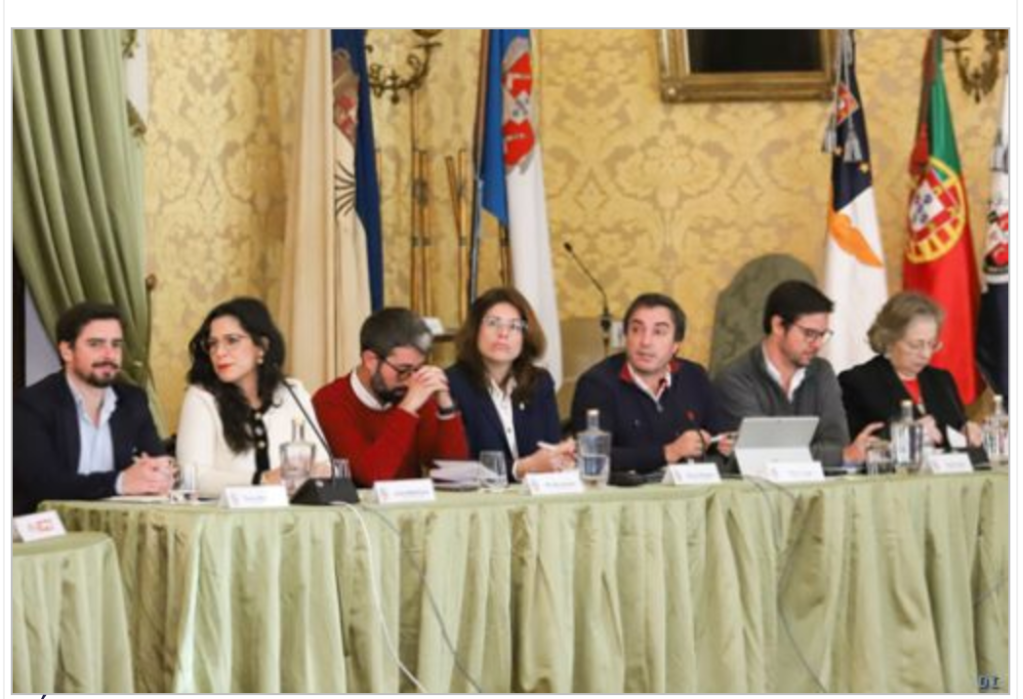
The municipality of Angra do Heroísmo will have a budget of €50.6 million in 2026, including €15 million in European Union funds.
“Housing is one of our top priorities. We want to build 40 new housing units in 2026 and 2027,” said the President of the Municipal Council of Angra do Heroísmo, Fátima Amorim (Socialist Party), speaking yesterday.
The municipality’s 2026 budget is broadly in line with that of 2025. Of the €50.6 million allocated, around €15 million corresponds to investments financed through the Recovery and Resilience Plan (PRR), particularly in the areas of Culture and Housing, as well as through the Operational Programme 2030.
“This is, in our view, a balanced budget that responds to the main needs of the municipality,” the mayor stated.
In the housing sector, the municipality is in the final stages of rehabilitating 326 of the 448 homes in its public housing stock, a project that will be financed at 100% by the PRR, provided it is completed by August.
Excluded from this funding were four applications covering 122 homes in the Lameirinho neighborhood, which were not approved under the PRR and will now be submitted to the 1.º Direito program, with an expected financing rate of 60%.
The municipality also plans to build, using its own funds, 40 new housing units—T3 and T4 typologies—in the parishes of Santa Luzia and Conceição in 2026 and 2027. These homes will be placed on the market at controlled prices.
“These are intended for families who are in urgent need of housing and who often cannot afford current market rents,” Fátima Amorim emphasized.
Among other priority investments, the mayor highlighted the expansion of the industrial park, with 40 new lots, the construction of a business center, and the expansion of StartUp Angra.
“This is about attracting more investment, whether from local companies or from outside the region, that can create qualified, better-paid jobs here,” she noted.
The flagship project for 2026 remains the construction of the new municipal market, already underway and budgeted at €12 million, with €2 million in co-financing from European funds.
“The project is progressing as planned and has a two-year execution timeline. There have been no delays,” Fátima Amorim said.
Also scheduled for 2026 are works to upgrade the school network—including an investment of over €500,000 at the Five Ribeiras School—along with improvements to the road network and water supply system. Investments are also planned in cultural programming, tourism promotion, and cooperation with local parish councils.
The Municipal Property Tax (IMI) will remain at the minimum rate of 0.3%, and there will be no increases in any municipal fees.
“We have maintained the rates in place since 2011 for water, sanitation, and waste services. Considering the projected inflation rate for 2026, this represents savings of €2.5 million for families,” the mayor underlined.
As for municipal debt, it stands at around €2 million in total, but only €770,000 corresponds to actual debt, with the remainder supported by the Institute for Housing and Urban Rehabilitation (IHRU) and the Regional Government of the Azores.
Opposition Abstains
This was the first budget presented by Fátima Amorim since her election earlier this year as President of the Municipal Council of Angra do Heroísmo for the Socialist Party.
The budget was approved by a majority in the Municipal Assembly, with votes in favor from the Socialist Party and six members of the Social Democratic Party (PSD), while the remaining PSD members, as well as the CDS–People’s Party and Chega, abstained.
The Socialist Party holds a majority in the Municipal Assembly with 24 members; the PSD has 12, the CDS–PP three, and Chega one.
In a press release, the PSD justified its abstention by stating that some of the proposals put forward by its councilors had been accepted, and pledged a mandate marked by “initiative and responsibility.”
“Although the guiding principles of the current administration do not align with our vision for the development of Angra do Heroísmo, it was this political project that earned the vote of the majority of citizens, and we will therefore be here to be part of the solution,” said municipal assembly member Délio Borges.
The Social Democrat added that the party had proposed “the decentralization of Municipal Assembly session venues” and “robust investment in video-surveillance systems” in various parts of the municipality, in response to recent acts of vandalism.
In Diário Insular, José Lourenço-director

 Novidades - The Islands and the Diaspora