

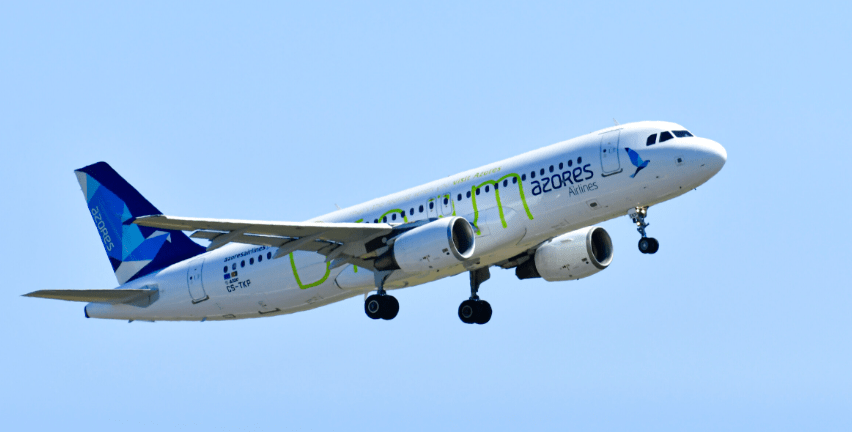
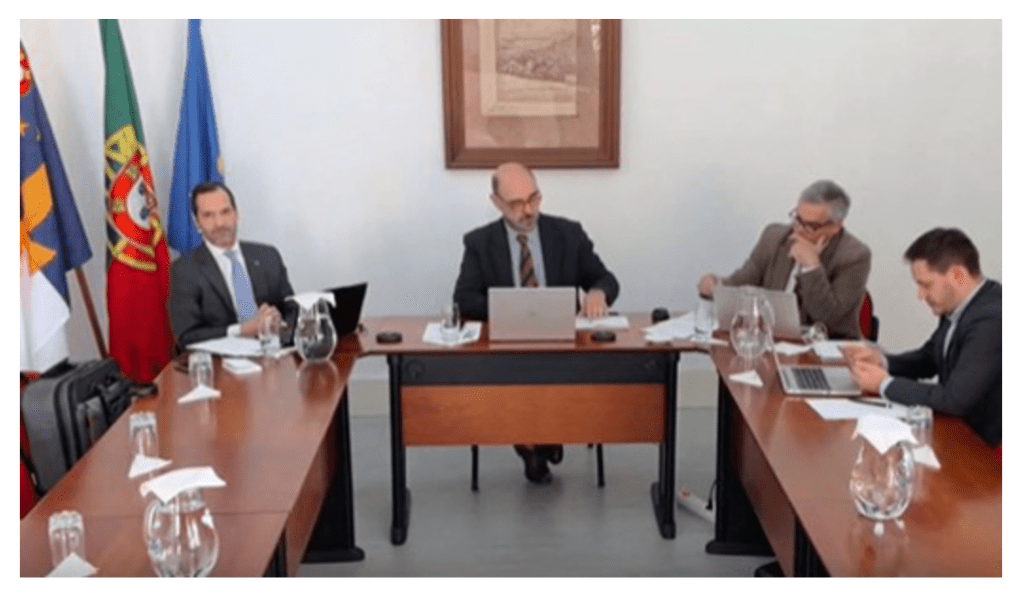
The newly appointed chairman of the Board of Directors of the SATA Group, Tiago Santos, appeared before the Parliamentary Committee on Economy of the Azores Regional Legislative Assembly, as part of the mandatory hearing preceding his assumption of office.
During the session, Santos assured lawmakers that the restructuring plan agreed upon with the European Commission is being fully implemented and acknowledged that, by 2026, the Group could approach positive net results. Tiago Santos will officially assume the presidency of the SATA Group on January 1, after serving as Chief Financial Officer since July 2024.
In his testimony, Santos explained that the restructuring plan is dynamic in nature and has been adjusted to reflect changes in the economic and operational context of recent years, without compromising the objectives agreed upon with Brussels. According to the incoming chairman, these adjustments have been recognized by the European Commission as fully compatible with compliance under the plan.
Regarding financial performance, Santos noted that the 2025 accounts have not yet been finalized but already show a significant improvement over 2024. Projections point to a positive swing of between €15 million and €20 million at Azores Airlines, and approximately €5 million at SATA Air Açores, while SGA is expected to return to positive net results.
Looking ahead to 2026, the designated chairman said the Group could come very close to achieving positive net results, particularly if funds associated with Public Service Obligations (PSOs) are included. Should the definitive award of PSOs to the TAP/SATA consortium be confirmed, the overall loss could range from €12 million to €15 million, bringing the Group close to break-even.
Asked by lawmakers about unprofitable routes, Santos confirmed that operational adjustments have already been introduced, including the cancellation of the London route. The strategy, he said, is to concentrate activity on the most profitable routes, particularly connections to mainland Portugal and to diaspora communities. In this context, Azores Airlines’ 2026 operations will rely on nine owned aircraft—one fewer than in 2024 and 2025—and will not make use of ACMI-leased planes.
Regarding SATA Air Açores’ fleet, Santos acknowledged the need to replace the aging Q-200 aircraft but noted that no equivalent alternative is currently available on the market. As a result, the company plans to extend the service life of these aircraft until new options become available, a process that could take five to six years.
On compliance with the restructuring plan, Santos highlighted a 56 percent increase in Azores Airlines’ EBITDA in October 2025, up from €13 million to €21 million. He characterized 2024 as a one-off deviation from the sustainability trajectory and emphasized that all targets set through December 2023 had been met.
Addressing the privatization of Azores Airlines, Santos described the process as complex but grounded in guarantees of transparency, with proposals evaluated by an independent jury. He cautioned, however, that public disclosure of certain information must remain limited to avoid jeopardizing the success of ongoing negotiations.
In Correio dos Açores – Natalino Viveiros, director
Translated into English as a community outreach program by the Portuguese Beyond Borders Institute (PBBI) and the Modern and Classical Languages and Literatures Department (MCLL), in collaboration with Bruma Publication and ADMA (Azores-Diaspora Media Alliance) at California State University, Fresno. PBBI thanks Luso Financial for sponsoring NOVIDADES.

 Novidades - The Islands and the Diaspora