

Terceira Turns to Influence, Identity, and the Power of Visibility

In an era when destinations compete not only with one another but with the endless scroll of digital attention, the island of Terceira is making a deliberate choice: to tell its own story, in its own voice, and to make sure that story travels far beyond the Azores.
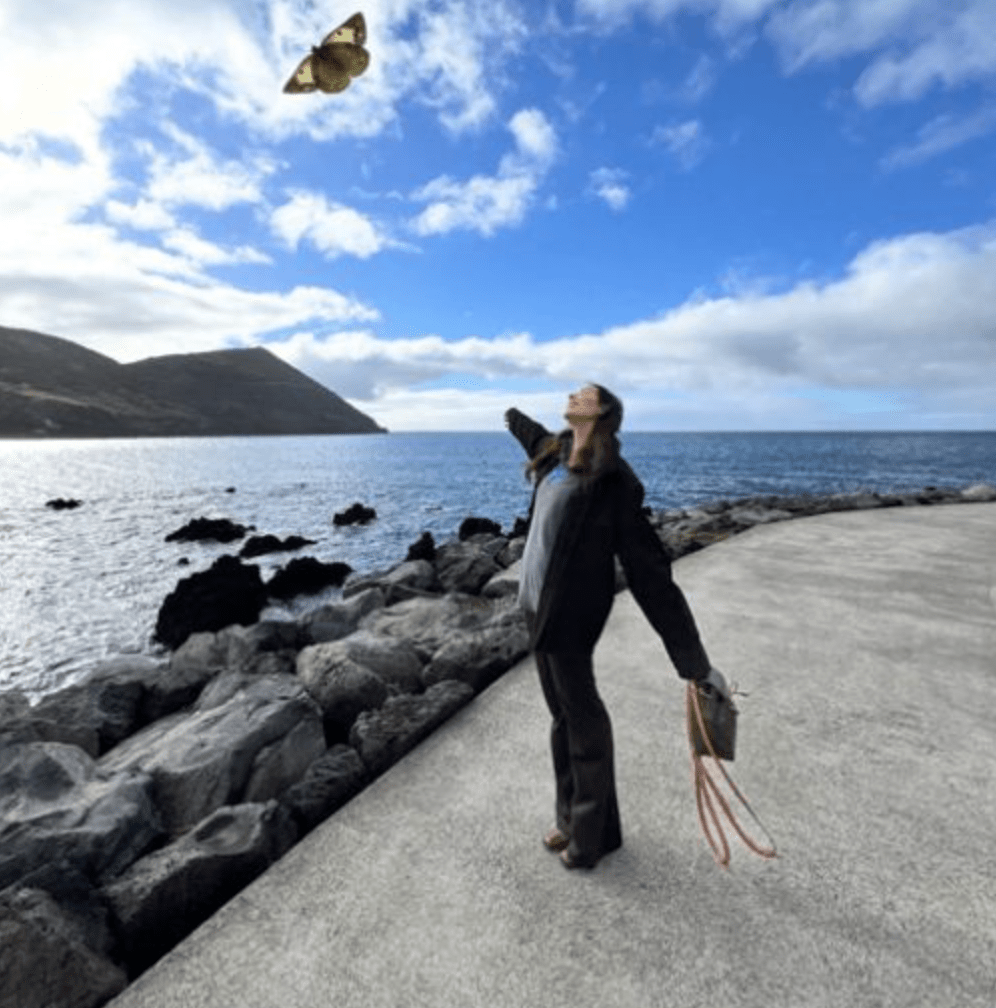
That strategy took visible form when the Chamber of Commerce and Industry of Angra do Heroísmo, alongside the municipalities of Angra do Heroísmo and Praia da Vitória, invited Portuguese actress and digital personality Sofia Ribeiro to serve as an ambassador for Terceira Island.
The title “ambassador,” local leaders are quick to clarify, is not ceremonial. It belongs squarely to the language of contemporary marketing and digital culture. Around the world, destinations increasingly rely on figures with large online followings to project visibility beyond their borders. Madeira, long a case study in successful tourism branding, has done this effectively—pairing global icons with recognizable national figures to extend its reach.
Terceira’s decision follows that logic, but with a local inflection. While the Azores are rich in celebrated artists, writers, and public figures, the goal here is not prestige alone. It is amplification. Social media, after all, is where scale happens.
Sofia Ribeiro was a natural choice. Her connection to Terceira was forged during the filming of the television series Senhora do Mar, shot on the island. She is warmly received by local residents, but more importantly, she commands a national audience of more than 1.1 million followers. For an island seeking to strengthen its presence in mainland Portugal, that reach matters.
The timing is strategic. In October, Portuguese visitors accounted for more than half of all overnight stays in tourist accommodations on Terceira. Yet the domestic market has been declining across the Azores for seven consecutive months—a troubling trend for a region where proximity, cultural affinity, and ease of travel should be advantages.
Local leaders argue that the solution is not to chase distant markets at any cost, but to reinvest in the one closest at hand. Madeira’s post-pandemic tourism recovery offers a clear lesson: the national market can anchor resilience in times of volatility. For Terceira, this market is especially important. Flights from mainland Portugal are frequent and operated by multiple airlines, and the cost of attracting a Portuguese visitor is significantly lower than courting travelers from farther afield.
That calculation matters. Tourism today is not only about beauty or authenticity; it is also about efficiency. Marketing budgets are finite, and acquisition costs—how much it takes to bring a visitor to a destination—must be weighed carefully. In this sense, Terceira’s influencer strategy is less about glamour than sustainability.
There are plans, too, to expand the ambassador model. While no additional names have been confirmed, there is clear interest in identifying a male figure to complement Ribeiro’s role, mirroring approaches used successfully in other destinations. For now, officials are focused on gauging public response and market impact before taking the next step.
The campaign builds on earlier investments, including support for the production of Senhora do Mar, which brought national attention to Terceira’s landscapes and urban spaces. That experience reinforced a core belief among local stakeholders: tourism is one of the most competitive industries in the world, and visibility must be constantly renewed. Destinations that disappear from view, they argue, are quickly forgotten.
Crucially, Terceira is not trying to compete on the same terms as other Azorean islands. It does not have the volcanic lakes of São Miguel, the dramatic cliffs of Flores, or Mount Pico’s iconic silhouette. What it has instead is a deeply human landscape—shaped by centuries of history, ritual, architecture, and food.
Terceira’s identity is anchored in its UNESCO-listed historic center, its bullfighting traditions, its Holy Spirit festivals, and a cuisine that reflects both Atlantic scarcity and communal abundance. These are not interchangeable assets. They form a cultural product that, if folded too neatly into a generalized “Azores” brand, risks losing its sharpness.
That is why the Chamber of Commerce and the municipalities have chosen to take the lead, even as they work alongside regional entities like Visit Azores. The feeling, locally, is that Terceira must hold its future in its own hands—shaping its narrative rather than waiting for others to do it.
In the end, the island’s bet is not just on an influencer, but on clarity: knowing who it is, what it offers, and why its story deserves to travel.
Translated and adapted from an interview by Diário Insular-Terceira island-José Lourenço-director
Translated into English as a community outreach program by the Portuguese Beyond Borders Institute (PBBI) and the Modern and Classical Languages and Literatures Department (MCLL), in collaboration with Bruma Publication and ADMA (Azores-Diaspora Media Alliance) at California State University, Fresno. PBBI thanks Luso Financial for sponsoring NOVIDADES.

 Novidades - The Islands and the Diaspora