

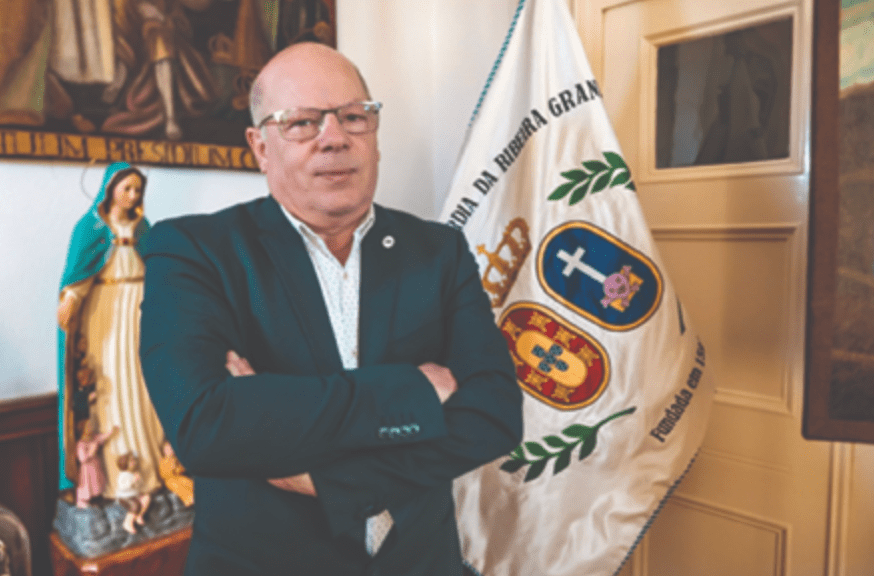
The Santa Casa da Misericórdia da Ribeira Grande is currently in a stable, balanced financial position, the institution’s ombudsman told our newspaper, attributing this equilibrium to “rigorous and prudent management.”
According to Ombudsman Nelson Correia, rising costs—“especially salaries for human resources”—have had a significant impact. Even so, he notes, “we have managed to absorb that pressure thanks to our own revenues and careful management, without compromising the quality of our social services.”
Asked to describe the institution’s current financial outlook amid an ever-changing social context, Correia explains that the main challenge is ensuring medium- and long-term sustainability of social responses at a time when costs continue to rise and public funding fails to keep pace with reality.
The broader picture of IPSS in the Azores
Regarding the financial health of IPSS (private social solidarity institutions) across the Azores, Correia acknowledges that many face serious difficulties, with some struggling to pay staff wages. “Fortunately,” he says, “our situation is solid,” largely due to diversified revenue streams and the ability to generate own-source income, reducing reliance on government support alone.
Rising costs and regional support
There is no doubt, he adds, that increases in personnel costs, energy, and food have placed additional pressure on the institution’s accounts. Still, careful management and own revenues have allowed the Santa Casa to maintain service quality.
While regional government support is important, Correia stresses that it does not fully cover personnel costs in the social sector. Sustainability, he explains, depends on revenues from the institution’s pharmacy, laundry services, urban and rural rentals, as well as funding obtained through awards and competitive grants.
He cautions that while Santas Casas are rooted in helping others, they cannot replace the government in certain areas without risking institutional decapitalization—sometimes diverting focus from the most vulnerable families and elderly people living in precarious conditions.
Areas of intervention and growing needs
The Santa Casa’s work focuses primarily on childhood and youth, senior care, social action, food support, and assistance to people in situations of heightened social vulnerability. It is, Correia notes, the Azorean Misericórdia with the greatest impact on children and youth.
Social needs in the municipality of Ribeira Grande have worsened in recent years, particularly in drug addiction, poverty, social exclusion, and housing, with a noticeable increase in families requiring regular assistance.
Support for people experiencing homelessness
The institution provides daily food support, social follow-up, and referrals for people experiencing homelessness, working in coordination with community services. Correia also expresses concern about the emergence of homelessness in Ribeira Grande, noting that the Santa Casa has already made hygiene facilities available to regional health and municipal authorities—though, so far, no response has been received from those entities.
The social canteen and the pharmacy’s role
The social canteen operates daily, providing hot meals to those in need—dozens each day, amounting to hundreds per month.
The pharmacy, Correia emphasizes, remains the central financial pillar of the institution’s social activities. Renovated in 2020 to improve accessibility and service space, it also includes a small museological display, enhancing both the pharmacy and the surrounding public area—an initiative that has increased foot traffic and strengthened its sustainability role.
Together, these elements form a portrait of an institution balancing financial discipline with an expanding social mission, steady in its accounts yet alert to the growing pressures shaping social care in the Azores.
In Correio dos Açores-Natalino Viveiros, director.
Translated into English as a community outreach program by the Portuguese Beyond Borders Institute (PBBI) and the Modern and Classical Languages and Literatures Department (MCLL), in collaboration with Bruma Publication and ADMA (Azores-Diaspora Media Alliance) at California State University, Fresno. PBBI thanks Luso Financial for sponsoring NOVIDADES.

 Novidades - The Islands and the Diaspora