

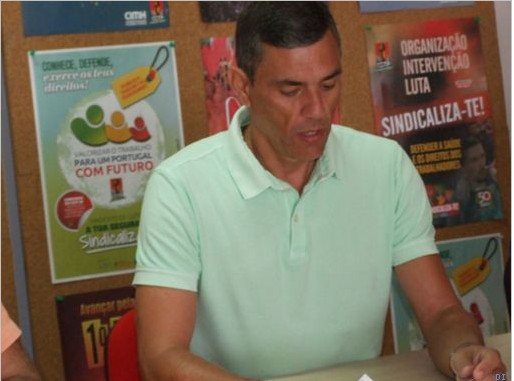
“I think that 2025, in general terms, was another bad year for Azorean workers and ended in an extremely worrying way, with the labor package proposal presented by the Government of the Republic.” These are the words of Vítor Silva, leader of the CGTP in the Azores, who believes that the coming year will be one of struggle on several fronts.
Referring to the labor package designed by the Government of the Republic, which led to a general strike, he stressed that what is at stake is “a set of more than 100 measures that, in general terms, will have very negative consequences for workers in our country and, above all, in a region like ours, which already has several structural difficulties, where the labor market ends up being more fragile.“
The set of changes, he stressed, will have to be stopped through workers’ protests. ”In the Azores, we will also have to contribute to this struggle,” he reinforced.
In the archipelago, the union leader added, there are more reasons for concern. “We have an increase in the cost of living that is all too evident in our region, extremely low wages, very long working hours, which have been accentuated in sectors such as tourism, for example,” he told DI.
“In addition to the already high cost of living, we have also recently witnessed a phenomenon here in the Azores, which is exorbitant housing prices. With extremely low wages, coping with such a high cost of living and such high housing prices is extremely difficult for those who live and work in the Azores,“ he continued.
As for next year, issues such as the fight for better wages remain on the CGTP’s agenda, also in the region. ”Below €1,000, wages do not cover the cost of living we have. Therefore, we want a general increase in wages so that they are above €1,000. Then, we will continue to fight for an increase in the regional supplement to the national minimum wage from 5% to 10%. This would mean that the minimum wage in the region would be €1,012 instead of €966,” he stressed.
According to Vítor Silva, another priority is the reduction of working hours to 35 hours for all workers in the Azores. “There has been much talk about the famous proposal to reduce the retirement age. What we are proposing here is that people can already have this reduction during their working life, this improvement in their quality of life, with a reduction in their working hours. We consider this measure to be extremely important,“ he stressed, adding the fight against precariousness.
”When we talk about precariousness, I think it is very important to explain what this word means. It means instability throughout one’s working life. It means that these people cannot think about building a life plan. It means that these people cannot resort to banking. And therefore, from this point of view, we are not combating the main problems that the Region has, which are poverty and social exclusion… Now it can no longer be disguised because it is staring us in the face,” warned the union leader.
“For anyone who goes out on the streets of the main cities in our region, poverty is evident, not to mention hidden poverty… Unfortunately, in the Azores, many workers, even though they have a permanent job, live below the poverty line; even though they work, they are poor. And so, from this point of view, these measures are also very important, even in terms of addressing another problem we have, which is the lack of labor. With the conditions we are offering, it is difficult to attract workers,” he analyzed.
“With the improvement of wages in general terms, with the increase in the regional increase from 5 to 10%, with the reduction in working hours, with the fight against precariousness, and with a better focus on professional training, we would be working here on these two very important vectors: combating poverty and social exclusion, ensuring that all working people are not poor, and at the same time attracting and retaining labor in our region,“ summarized Vítor Silva, who rejected ”an orange scenario, as the Regional Government has been painting in recent times.
In Diário Insular-José Lourenço, director
Translated into English as a community outreach program by the Portuguese Beyond Borders Institute (PBBI) and the Modern and Classical Languages and Literatures Department (MCLL), in collaboration with Bruma Publication and ADMA (Azores-Diaspora Media Alliance) at California State University, Fresno. PBBI thanks Luso Financial for sponsoring NOVIDADES.

 Novidades - The Islands and the Diaspora