

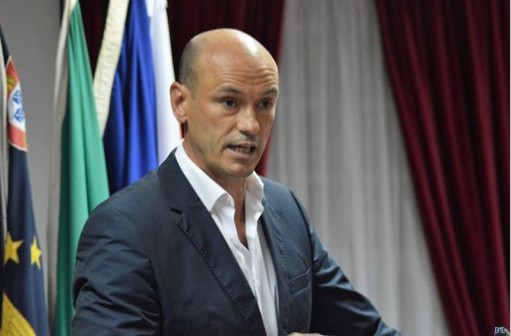
The president of the Angra do Heroísmo Chamber of Commerce and Industry (CCIAH), Marcos Couto, argues that next year should be marked by greater attention to the tourism sector, which is already showing signs of decline in the region.
“There is a clear downward trend, which must be viewed with great concern and which should lead not only to an increase in the work that needs to be done, but also to an improvement in the measures adopted to respond to market needs,” Marcos Couto told DI (Diário Insular newspaper). From the point of view of the head of the structure representing entrepreneurs, this “has not been done so far, not only in terms of structuring the offer, but also in terms of promotional work.”
“This is something that must be quickly reversed, otherwise we risk losing an activity that cuts across the economy and has an impact on society as a whole,” he stressed. Marcos Couto reinforced that the development of the sector requires strategy. “Tourism is one of the most competitive industries in the world. And we really have to create mechanisms that allow us to be more competitive, which clearly has not happened so far. There was growth that came from the pandemic and that continued, but then I would say that we sat back a little and waited for this to last forever, which it won’t,” he warned.
Looking ahead to 2026, Marcos Couto considered that the regional budget will be one of the most “challenging,” with the implementation of the PRR (Recovery and Resilience Plan) as a priority.
“We have a year in 2026 effectively marked by the implementation of the PRR, and that brings us great responsibilities.

We have to implement it by the end of the first half of the year. Added to this is the extra effort that has to be made in implementing PO 2030,“ he pointed out. In general terms, he noted, concerns remain about issues such as maritime and air transport, ”which continue to be a matter of the utmost importance and have not yet been fully resolved.”
The 2025 balance sheet, on the other hand, has several positive notes. “We have achieved what can be considered practically full employment in the region. In terms of unemployment, I would say that it is reserved for people who clearly already have various difficulties in fitting into the labor market,” said the president of the CCIAH.
He emphasized that this factor was accompanied by economic growth in the Azores. “It managed to be, albeit still slightly, higher than national economic growth, we are talking about two tenths above. Even so, it is important that this happens,” he said, also highlighting the relevance of investment under the PRR.
In Diário Insular-José Lourenço, director
Translated into English as a community outreach program by the Portuguese Beyond Borders Institute (PBBI) and the Modern and Classical Languages and Literatures Department (MCLL), in collaboration with Bruma Publication and ADMA (Azores-Diaspora Media Alliance) at California State University, Fresno. PBBI thanks Luso Financial for sponsoring NOVIDADES.

 Novidades - The Islands and the Diaspora