

At the time of writing, it is still possible to visit the Azores Regional Government website and access the Regional Directorate for Culture page, where you can find the biographical note on its former regional director, a leading figure in the archipelago’s cultural sector. Of course, in the other sections, it is the Secretary who appears. Fruit of the season. Of a season of total disrespect for cultural activity and the heritage that defines our islands, without a doubt.
This is always a complicated article to write. I am constantly afraid of sending a page for publication that will be out of date the next hour, because at any moment it may be necessary to decide that some poor soul needs to be appointed. Or the president may remember that it is advisable to have someone in charge of the Culture portfolio, in an archipelago that wants to sell itself as cultural. However, we are at the end of one year and the beginning of the next, so we need to take stock and wish for a better future. And that means remembering that 2025 was another horrible year for Azorean culture.
There is no memory of a time like this. The reign of this regional secretariat has been so severe that what was good has disappeared, and what was bad has emerged as the rule of law. The DRAC technical team remains staffed by professionals, even after many talented people were removed for being incompatible with the dictatorial policies in place. However, those who stayed there to do good work suffer from very strong ideological shackles. For the secretary, there is no need to spend money on regional directorates. She is state-of-the-art. And she does not even seem to know how to spell the word “heritage.”
So the ship sails on, amid scandals swept under the rug, ongoing lawsuits, and bad blood. Behind the scenes of the shadow secretariat, old voices can be heard, which, even though officially removed, remain ideologues of the cultural policy in force. Scorched earth for those who do not kiss the ring. Poor souls who frequent bookstores or curatorial spaces on the blacklist! And when a church roof collapses, don’t forget to push the blame onto the office next door.
In Rabo de Peixe, at the end of 2025, the Bom Jesus church fell victim to the concerted negligence of various cultural authorities, curiously interconnected through the regional directorate of culture. While it is true that, legally, there is no obligation for that entity to manage heritage that is not classified, there is at least the common sense to seek to protect what is considered necessary and to use the region’s resources to defend it. But for that, there needed to be someone technically capable of considering culture within the portfolio’s management. What we have is a glaring void in its management, along with all the other problems I never tire of listing elsewhere.
This is the year of the Portuguese Capital of Culture in the archipelago, as so many voices continue to assert, and what we see is the despair of those who want to work. We learned, too late and at the worst possible moment, that ultimately the ultimate responsibility for the delays and lack of control seems to lie with the municipal headquarters and the adjacent theater annex. The matter remains under scrutiny, and the sad fate that awaits us is nothing more than the result of a secretariat that did nothing to resolve the issue when it could and should have done so.
We have lost count of the cases of destruction of Azorean heritage that are reported daily, in the face of a technical team that either no longer exists or is unable to work under such internal pressure. At least once a week, we see someone responsible for culturally significant organizations seeking help. They ask for money on the street, begging to do even a little for the islands where they were born or chose to live.
We have become a laughing stock. I know I have written this before, but the truth is that the situation is not improving, nor is it likely to improve, and we must continue to spell out the harsh reality: we have fallen into widespread incompetence, coupled with unregulated navel-gazing. In a land where cultural facilities are deteriorating, should a department prioritize restoring a palace to house its office? It reminds me of how a company’s management starts by installing air conditioning in the management office, then finds the time and money to take care of the poor wretches who work from sunrise to sunset.
This 2026 begins with culture in the most pitiful state, almost bottomless. The exception is a few museums and libraries, as well as some cultural agents. The region trembles with anger. When it was necessary to defend herself, the secretary chose to say that everything was fine and that there was no rush to assign technical responsibilities. The year ends sadly for many people. And it begins with the prospect of unhappiness for many businesses in the cultural sector. Today, more than ever, it is necessary to give blood, sweat, and tears to make even a small difference in the reality of the island. For this coming year, the least we want is a little more respect, Madam Secretary. It is not a favor you are doing us. It is your job.
From my desk, where I write these lines, amid rain, wind, and fog, I wish you all a Happy New Year. To everyone: those who read me and those who don’t. Those who appreciate my writing and those who despise it. That’s how freedom is. Beautiful!
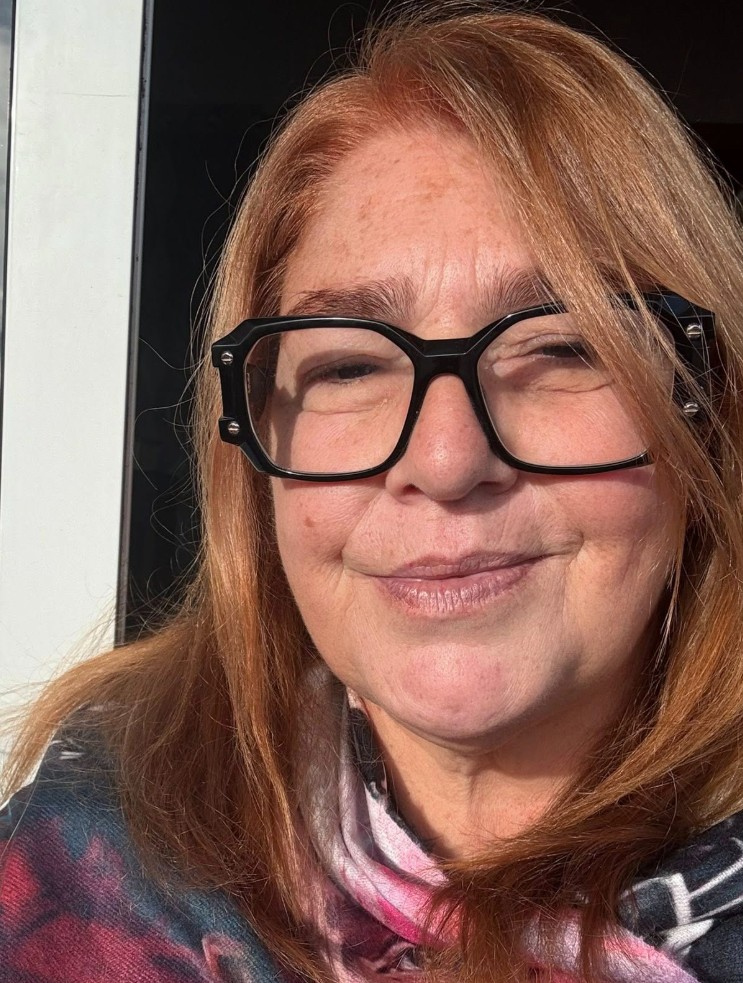
Alexandra Manes is from Flores Island but lives on Terceira Island in the Azores. She is a regular contributor to several Azorean newspapers, a political and cultural activist, and has served in the Azorean Parliament.
NOVIDADES will feature occasional opinion pieces from leading thinkers and writers in the Azores, providing the diaspora and those interested in the current state of the Azores with a sense of the significant perspectives on some of the archipelago’s issues.
Translated to English as a community outreach program from the Portuguese Beyond Borders Institute (PBBI) and the Modern and Classical Languages and Literatures Department (MCLL).
 Novidades - The Islands and the Diaspora